Four Saturday stops may look easy on a map. Then the first venue opens late, lunch takes an hour, and the last stop is across town. On a short trip, what matters is not how many places fit on a list but how much time you have between arriving and leaving without rushing.
Set the trip’s fixed points first
Start with departure and return times, accommodation check-in, and anything that begins at a set time. Add the trip from the station or airport, meals, and the time you will need to leave on Sunday. The hours left are your flexible sightseeing time. Two nights away rarely mean two full days, particularly when Friday evening and Sunday afternoon are spent traveling.
Pick a main reason for going before adding stops. It could be a concert, an exhibition, a day outdoors, or a long meal with friends. If you are going for a show, allow time to reach the venue, eat beforehand, and get back afterward. Think about the next morning, too: a late night may make an early start less appealing.
The time-blocking approach is useful here. Give an activity a broad part of the day rather than assigning a new destination to every hour. One substantial visit might fill the morning; leave the afternoon open for a walk, a smaller stop, or a rest.
Build around priorities, not a complete wish list
List the places that interest you, then sort them into essentials, options, and things to save for another visit. An essential stop needs a reason to happen on this trip: a time-limited exhibition, a scheduled performance, or somewhere you would regret missing. Optional stops work best when they are nearby and easy to drop.
As a starting point, plan one substantial activity per half-day, perhaps with a short stop in the same area. A two-hour museum visit and coffee nearby can make a comfortable morning. Add another large museum across town, and both visits may feel hurried. It is a guide, not a quota; a long hike or festival can easily be the only plan for a day.
For a trip built around live music, keep the show separate from the daytime plans. A record shop or a walk around the neighborhood may fit before the gig, but check opening hours and public transport rather than trusting the distances on a map. Use the venue’s published schedule and current transport information instead of planning around an unverified start time.
Allow for the time that maps leave out
A map tells you how long it takes to move between places, not how long the whole changeover takes. You may need to find an entrance, collect tickets, use a cloakroom, wait for a table, or walk from the transit stop. In an unfamiliar city, even a short transfer takes some orientation. Leave more room if luggage, accessibility needs, or the group’s pace will affect travel.
Separate reservations from preferences. A timed ticket or train departure cannot move; a bakery you would like to try can. Avoid putting fixed commitments too close together. If a guided tour finishes at 14:00, an appointment elsewhere at 14:30 leaves little time for a delay, let alone a pause.
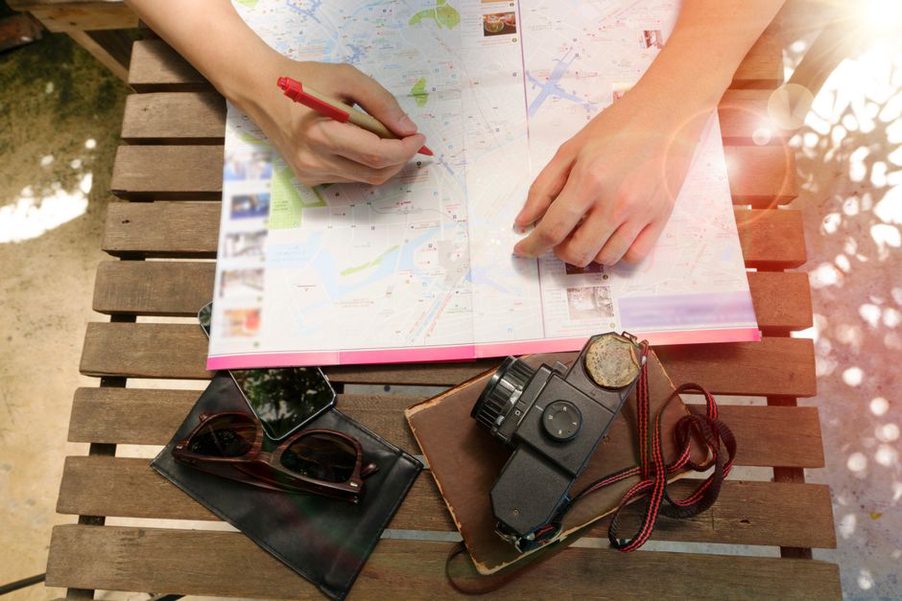
Check where your stops are, not just how long each one takes. Group places in the same district instead of crossing the city repeatedly. If two priorities are far apart, put them on different days or choose between them. Sometimes the walk through a neighborhood is worth more than another admission queue at the end of it.
Use a buffer you can actually spend
Leave an hour or two open on the busiest day, preferably between activities rather than at the end of the night. Do not fill it before you set off. It is there for a long lunch, changing weather, a visit you want to linger over, or a needed rest.
- Before a fixed event: make room for a meal and the trip to the venue.
- After a long visit: take a break before committing to another indoor attraction.
- Before departure: allow time to collect bags and reach the station or airport without depending on the last possible connection.
Check the constraints that could change the day
Even a loose itinerary needs a few checks: opening days, last admission, advance-booking requirements, and bag restrictions. Look at where you are staying in relation to the station and your main activity. If money is tight, add transport, admissions, and meals to the room cost. A cheaper room far away can cost more in fares and time.
For an outdoor afternoon, find one indoor alternative in the same area and decide which to use on the day. There is no need to write a second full itinerary for bad weather. Save your accommodation address and the route back before you lose reliable internet access; that way, a change of plans does not mean replanning on the street.
Make room for the people traveling with you, too. Agree on shared priorities, then decide whether every optional stop has to be done together. One person might spend an hour in a gallery while another takes a longer break, as long as they agree where and when to meet. Have that conversation before booking around one person’s pace.

Test the plan against a real weekend
Suppose you arrive Friday at 19:00 and leave Sunday at 16:00. Friday may have room only for check-in and dinner. On Saturday, a prebooked morning exhibition could be followed by lunch nearby, a free afternoon, and a concert in the evening. Sunday allows for breakfast and a local walk before you collect your bags. A second major attraction that requires a long trip across town is better kept optional than squeezed between checkout and the train.
Before you save the plan, mark each fixed booking on a map and check the travel time to the next one. If there are several hours between Saturday’s exhibition and the evening show, leave some of them unassigned. You can stay longer at the exhibition without turning dinner into a sprint.