
Put the kitchen counter you use every night on your cleaning schedule. Leave the spare-room shelf that still looks clean after a month off the weekly list. Giving both the same deadline adds work without making the house any easier to live in. Start where skipping a clean makes a difference: food residue on the counter, grit spreading past the front door, or a bathroom sink several people use every morning.
Set a standard you can recognize
Write down what “done” means for each recurring job. “Clean the kitchen” could mean wiping the counter or emptying the refrigerator. “Wash the dishes, remove food residue from the prep surface, and wipe the sink” gives you a clear place to stop. Leave the cabinet fronts and oven interior off the list unless they need attention.
Walk through your home and see what gets dirty first. Follow the path people take from the front door, check the floor around the table, and look at the fixtures in the busiest bathroom. Use your nose and hands, too: a dishcloth can smell sour and a cupboard handle can feel sticky even if both look fine. Notice what stays clean as well. A shelf behind glass probably needs less dusting than an open one beside a window you often open.
Sort jobs by what tells you it’s time to do them: after use for messes best handled right away, on a recurring day for dirt that builds up predictably, and when needed for jobs with an obvious signal. An overflowing bin doesn’t need a calendar reminder.
Give different jobs different rhythms
After use: Tackle spills before they spread or dry
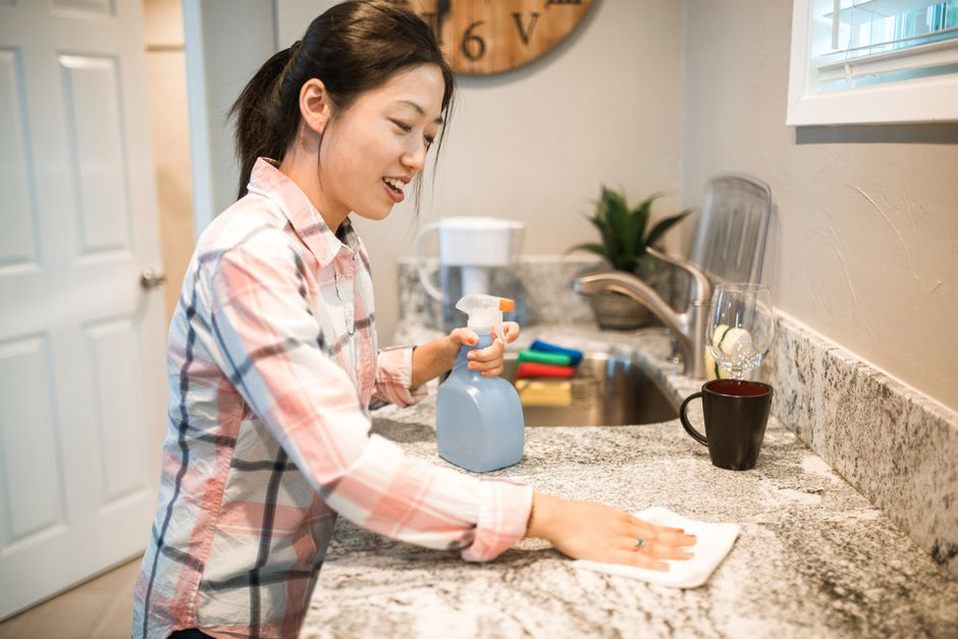
Wipe up sticky spills before anyone tracks them through the house. Clean food-contact surfaces after preparing food, especially if they’ve come into contact with raw meat, poultry, seafood, eggs, or their juices. Keep a separate cloth for the bathroom. Hang used cloths to dry or put them straight in the wash, depending on how dirty they are. None of this needs to wait until Saturday.
For the usual dinner mess, tie the cleanup to something you already do, like putting away the leftovers. Wash the dishes and wipe the area where you prepared the meal. If no crumbs or grit made it onto the floor, leave the broom where it is.
Once or twice a week: Clean the busiest areas
Start with the main bathroom and the floors you use most. Clean the toilet and sink, then tackle visible dirt around the shower or bath and on the bathroom floor. For the rest of the floors, start with the entry and eating area. You don’t need to move every chair or vacuum under every bed. Damp-clean hard floors where needed, following the flooring manufacturer’s instructions; not every surface can take a wet mop.
One bathroom clean a week may be enough if the room gets little use. A shared bathroom might need a second, shorter clean just for the toilet and sink. If the dog is shedding, you might vacuum the rug by the door several times a week and leave the other floors on their usual schedule. Give the busy spot more attention before you add another whole-house cleaning day.
Occasionally: Rotate jobs that can wait
Pick one small job: dust a set of blinds, wipe fingerprints off a few cupboard doors, or vacuum under the sofa if you can move it safely. Put a limit on the job before you start: “one window,” not “all the blinds.” If you keep running out of time, pick a smaller section next time rather than extending the session to finish the room.
For some jobs, the dirt itself is a better reminder than a date. Wash the entry mat when vacuuming no longer gets it clean. Wipe a refrigerator shelf as soon as something leaks; there’s no need to clean the whole fridge. Jobs that affect safety or equipment care are different. Follow the manufacturer’s instructions for tasks such as emptying the dryer lint screen rather than treating them as optional extras.
Build a sample week around time you already have
Choose a time you can spare most weeks, not the free afternoon you had once. If it’s hard to find an uninterrupted half hour, do the bathroom and floors separately. Here’s a starting schedule for a small home with one heavily used bathroom:
- After the last meal you make at home: Wash the dishes and wipe the prep area. Sweep if there’s food or grit on the floor.
- Wednesday, 10–15 minutes: Clean the toilet and sink, change the hand towel if needed, and spot-clean the floor. If the shower needs more work, give it a slot of its own instead of rushing through the whole bathroom.
- Saturday, 15–25 minutes: Vacuum or sweep the entry and the main paths through the living and eating areas. Damp-clean sticky or marked spots on hard floors that can take it.
- Every other Saturday, if there’s time: Pick one small job from the rotation, starting with whatever has the most buildup. If nothing needs attention, skip it.
Treat those times as limits to try out, not estimates for every home. If you spend twenty minutes picking up shoes, cables, and toys before you even get the vacuum out, start with the clear walking routes. A shoe tray or a basket for things that need putting away may save more time than a different vacuum. You can clean a clear patch of floor without tidying the whole room first.
Make each session easy to start and stop
Keep supplies handy so getting them out doesn’t become a chore of its own. A few washable cloths, a cleaner suited to the surface, and whatever you like to use on the floors will cover most jobs. Keep toilet tools separate from kitchen supplies. Leave products in their original labeled containers, out of reach of children and pets, even if that means walking a little farther to get them.
When you’re cleaning several surfaces in a room, start high so dust and crumbs fall onto a floor you haven’t cleaned yet. Switch to a fresh cloth or a clean section when the one you’re using gets dirty. Use a dedicated cloth or disposable material for the toilet, and don’t take it to the sink afterward. If the floor needs cleaning, do it last. Otherwise, stop once the surfaces on your list are done.
Soap or detergent and water are usually enough for routine cleaning if the surface allows it. If you need to disinfect, for example when someone is sick, choose a product labeled for both the surface and the job. Remove visible dirt first and follow the label instructions on ventilation, how long the surface must stay wet, and whether you need to rinse it afterward. Never mix cleaning products. If you’re short on time, do fewer jobs rather than cutting the product’s contact time.
Decide what happens when you miss a day
If you miss Wednesday’s bathroom clean, there’s no need to double up on Saturday. Move the job to the next free slot if it needs doing now; otherwise, pick it up on its usual day. The same goes for the floors: one pass, not two. Leave a skipped rotation job at the top of the list or swap it for something that needs attention sooner.
Keep a short list for weeks when you’re low on time or energy. Wash the dishes and utensils you’ll need for the next meal, clean the prep surface, and tackle any soiled spots on the toilet or sink. Take out rubbish that’s leaking, smells bad, or is attracting pests, and wipe up spills someone could slip on. Dusting and routine vacuuming in a rarely used room can wait. Visible mold, recurring dampness, or signs of pests mean there’s a problem to address beyond wiping more often.
If you share your home, put the short list next to the regular schedule. “Wednesday bathroom: toilet and sink; mirror optional” tells everyone more than “Wednesday bathroom” on its own. A single line on the fridge or in a shared calendar can show when the job is due and what counts as done. Nobody needs to log every spill they wipe up.
Review the schedule after two ordinary weeks
See what got dirty before its next clean, what was still fine when its turn came, and which jobs kept taking longer than planned. If the entry is gritty by Thursday, give it a quick sweep rather than moving the whole Saturday floor session. If nobody’s used the spare bathroom, check it before the next guest instead of cleaning an unused sink every week.
Before adding a reminder, look at where the mess comes from. Crumbs under one chair might warrant a quick sweep after dinner. Grit all through the hallway might be easier to deal with by moving the mat to where people actually step. Building work, shedding season, and stretches of wet weather can all mean more cleaning for a while. Mark any extra job as temporary so it doesn’t linger after the mess is gone.
Make one small change so you can see if it helps. If Saturday vacuuming takes too long but the bedroom floors still look clean by the following weekend, change the calendar entry to “entry, kitchen, and living-room paths.” Try doing the bedrooms on alternate Saturdays for a month. On the first Saturday you skip them, put the vacuum away after the last hallway pass. You don’t have to fill the time you just got back.