The carpet in the basement rehearsal room at Kauppakatu 14 squelched when you walked on it. Not from a leak—just years of spilled beer worked into the fibers until the thing was more liquid than solid. The space heater gave out every January without fail, and nobody had bothered with soundproofing because nobody had the money. Between 2008 and 2012, this single concrete box in Jyväskylä hosted at least six thrash metal bands on a rotating schedule. They shared amplifiers, drum kits, and the occasional vocalist when someone quit mid-set. The arrangement wasn't ideological. It was arithmetic: a dedicated lockout cost more than any of them made, so they pooled what they had. What emerged from that arithmetic was a density of creative exchange that shaped the city's heavy music output for half a decade. Drummers taught each other the precise kick-drum patterns for a convincing Exodus-style gallop. Guitarists traded photocopied tablature for Forbidden and Coroner songs. When one band wrote a riff that cleared the room, three others heard it by Tuesday and came back with something faster, darker, or more technically unhinged.
This kind of informal, resource-sharing setup repeated across Finland's mid-sized cities—Tampere, Turku, Oulu, Kuopio—and formed the operational backbone of a thrash metal revival that peaked between roughly 2007 and 2015. The original 1980s wave had largely skipped Finland. Stone and a few others made noise, but thrash never dug in the way death and black metal later would. This second generation built something different. It wasn't a scene imported from Stockholm or the Bay Area and grafted onto local soil. It grew from conditions specific to Finnish musical life: municipal youth centres that handed out free rehearsal slots, a national network of public music institutes that had trained a generation of technically sharp teenagers, and a cultural tolerance for loud, uncompromising art that traced back to the country's long entanglement with extreme metal.
Municipal Support and the Geography of Sound
The role of local government cultural funding in the Finnish thrash resurgence gets overlooked constantly. Most municipalities ran nuorisotalo programmes—youth centres—that allocated weekly rehearsal slots to any group of teenagers who filled out a basic application. The gear was battered. Peavey PA systems from the early 1990s, drum kits with resonant heads missing, bass amps that smelled like an ashtray. But it was free. For bands whose members were still in lukio or grinding through mandatory military service, this erased the single largest obstacle to regular practice. In Helsinki, the Nosturi venue—before its 2019 closure—pulled double duty as a rehearsal complex and informal meeting ground where younger thrash musicians crossed paths with veterans from the black and death metal scenes.
Geography shaped the sound as much as economics. Finland's population density meant a band from a town of 30,000 could pull a respectable local crowd if they were the only thrash act within fifty kilometres. This encouraged a decentralised network of small, fiercely loyal scenes instead of a single dominant hub. Axegressor, from Lappeenranta, released their debut Command independently in 2009 and built a regional following through steady gigging at youth centres and small clubs. They never needed to move to Helsinki. The resulting sound stayed regional too—bands absorbed different influences depending on which older musicians lived nearby and which records happened to circulate through the local second-hand shop.
At the centre of this network sat the physical spaces where thrash found a regular home, documented in more detail in the evolution of Finland's underground thrash venues. These were rarely purpose-built concert halls. Converted cinema basements, student union buildings, the back rooms of rock-oriented bars whose owners got talked into a Wednesday night booking. The conditions were primitive—low ceilings that trapped heat until the air turned unbreathable, monitors that fed back if you looked at them wrong—but they offered something irreplaceable: a consistent stage where a band could learn to perform under pressure without a safety net.
The Language of Independent Releases
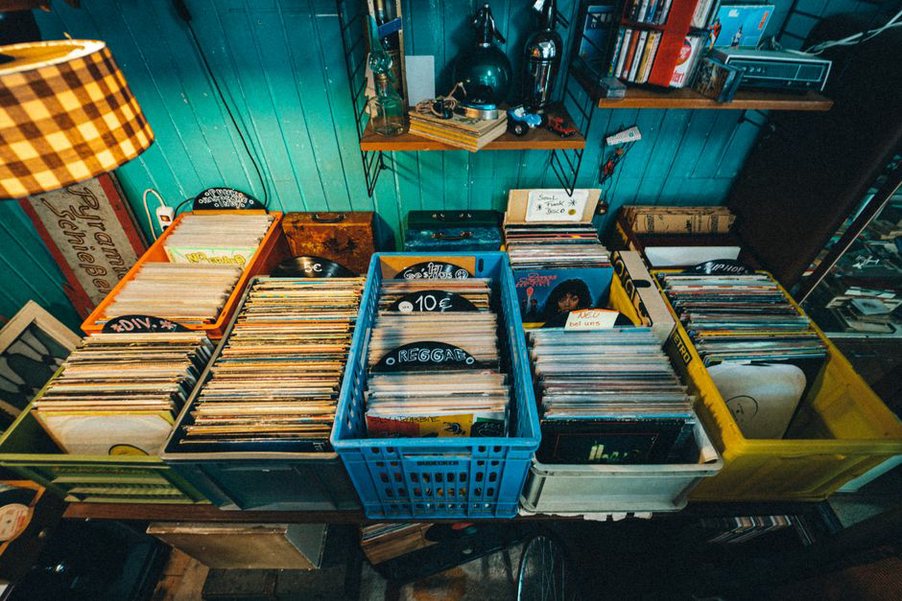
The late-2000s Finnish thrash scene defined itself through physical objects as much as through sound. Independent CD-R releases circulated through distros, gig merch tables, and direct trades. Hand-stamped covers, photocopied inserts, the smell of printer ink still fresh. Labels like Helsinki's Full Contact Records and Tampere's Svart Records—the latter broader in focus but willing to dip into thrash—operated on shoestring budgets, pressing 300 to 500 copies that sold out through word of mouth and forum posts on Imperiumi and the English-language Thrash Unlimited message board.
These releases developed a specific aesthetic vocabulary. Cover art leaned toward hand-drawn grotesquerie: nuclear wastelands, mutated skulls, skeletal warriors in black ink. A deliberate rejection of the airbrushed digital perfection dominating larger metal labels. The music itself got recorded fast, often in a single weekend at studios like D-Studio in Klaukkala or Astia Studio in Lappeenranta, where engineers understood that thrash needed a raw, live-room sound rather than clinical isolation. Guitars were double-tracked but rarely over-processed. Drum sounds favoured the natural resonance of birch-shell kits—a Finnish specialty—over sample replacement. The result was a sonic signature that stood apart from the more polished productions coming out of Sweden and Germany at the same time.
The independent ethos stretched beyond recordings. Small-scale promoters stitched together package tours linking Finnish bands with like-minded acts from Estonia, Latvia, and Russia, creating a Baltic-Nordic circuit that operated below the radar of major booking agencies. A typical run might hit Tallinn, Riga, and two Finnish cities. Bands slept on floors and shared backline to keep costs minimal. These tours rarely turned a profit, but they built the connective tissue that turned isolated local scenes into something resembling a coherent regional movement.
Festival Culture and the Thrash Revival
Finland's summer festival infrastructure gave thrash bands a platform beyond the underground. Tuska Open Air in Helsinki and Nummirock in Kauhajoki had long programmed extreme metal, but the late 2000s brought a sharp increase in thrash-specific bookings. Jalometalli in Oulu, running from 2002 to 2016, became the definitive gathering point. Its lineups mixed legacy acts like Nuclear Assault and Whiplash with a deep undercard of Finnish bands, some of whom played to their largest-ever crowds on the festival's secondary stage.
The festival environment bred competition that pushed the music forward. Sharing a bill with international headliners raised the stakes for stagecraft, sound quality, and basic professionalism. Bands accustomed to ragged, beer-soaked club shows suddenly had to deliver tight, well-rehearsed sets in front of sound engineers who worked with touring professionals daily. The adjustment wasn't always graceful, but it accelerated the scene's maturation. By 2012, a Finnish thrash band could reasonably expect to hold its own against mid-tier European acts—a benchmark that had felt distant five years earlier.
These events doubled as marketplaces. The merch area at Jalometalli was a bazaar of demo tapes, patches, and vinyl pressings where collectors from across Europe hunted obscure Finnish releases. The physical exchange of music—cash handed directly to the musician who recorded the album—reinforced the direct artist-audience relationship the scene valued above commercial intermediaries. A band could sell out an entire pressing of a new demo over a single festival weekend and use the proceeds to fund the next recording session. That happened regularly.
The Bass as Structural Foundation
Finnish thrash set itself apart from contemporaneous scenes through an unusual emphasis on bass guitar presence, both in composition and in the mix. This wasn't accidental. Many of the key players had backgrounds in progressive rock or fusion before committing to thrash, and they brought a harmonic sensibility that treated the bass as a counter-melodic voice rather than root-note reinforcement for the guitar. Cliff Burton's melodic approach loomed large as an influence, but it got filtered through a distinctively Finnish lens—more melancholic, more modal, indebted to the minor-key traditions of Scandinavian folk music.
The technical and creative contributions of these musicians are examined thoroughly in an exploration of Finnish thrash bassists and their foundational role, but the broader cultural impact matters here. The prominence of bass in the local sound raised the bar for rhythm section interplay across the entire scene. Guitarists learned to leave space in their riffing rather than filling every frequency. Drummers developed kick patterns that locked with specific bass phrases instead of simply marking time. This collective musical intelligence, built through years of shared rehearsal spaces and collaborative songwriting, became one of the most recognisable signatures of the Finnish approach.
European Exchange and Identity Formation
The European touring circuit served as both proving ground and mirror. Playing in Germany, the Czech Republic, and the Netherlands exposed Finnish bands to audiences with deep knowledge of the genre's history and exacting standards for live performance. A sloppy set in Hamburg or Prague could damage a reputation in ways a sloppy set in Jyväskylä simply couldn't. The pressure was productive—it forced bands to rehearse more rigorously and to think about stage presentation as part of a larger artistic statement.
At the same time, touring abroad clarified what was distinctively Finnish about the music. Audiences and promoters responded to qualities the musicians themselves had taken for granted: the unusual melodic sensibility, the willingness to slot odd time signatures into songs without losing momentum, the lyrical fixation on isolation and cold that seemed to emanate naturally from the climate. These weren't affectations. They were genuine expressions of a specific cultural and geographical context. Recognition from outside validated them as strengths rather than quirks, and bands returned from their first European tours with a sharper sense of their own artistic identity.
Zines, Forums, and the Written Record
The scene documented itself. Paper zines with names like Finnish Thrash Terror and Northern Aggression circulated at gigs and through mail order, filled with interviews conducted in rehearsal rooms, hand-drawn cover art, and exhaustive demo reviews. Print runs were tiny—fifty copies counted as a success—but they created a historical record that would otherwise not exist. The writers were often musicians themselves, which gave the coverage an insider's technical vocabulary. A review might spend three paragraphs analysing the guitar tone on a particular track before getting around to mentioning whether the songs were any good.
Online, the Finnish-language Imperiumi forum and the international Thrash Unlimited board served as primary gathering points. Band members posted show announcements, traded gear advice, and engaged in the kind of deeply nerdy genre taxonomy that thrives in any healthy music scene. The forums also handled the practical logistics of the underground: who had a van available for a weekend tour, which studio was offering discounted rates, whether anyone in Tampere could put up a visiting band from Sweden. This digital infrastructure, primitive by later standards, was essential to a scene that operated without professional management or label support for most of its existence.
The Legacy in Local Venues
The most tangible lasting impact of the thrash revival on Finnish music culture shows up in the venues and booking practices that outlasted the peak years. Several small clubs that had been reluctant to book metal in the mid-2000s established ongoing relationships with heavy music promoters because thrash audiences proved reliable. They bought drinks. They showed up on weeknights. They rarely caused the kind of property damage that made venue owners wary of punk and hardcore shows. This opened doors for subsequent generations of death metal, black metal, and crossover bands who benefited from infrastructure that thrash had helped build.
Recording studios that cut their teeth on thrash productions developed reputations that attracted a wider range of heavy music. Engineers who had learned to capture a convincing live-room drum sound on a tight budget carried that expertise into other genres. The DIY distribution networks—distros, mail-order lists, the practice of including a printed catalogue with every shipment—provided a template that independent artists in adjacent scenes adapted for their own purposes. These weren't glamorous contributions. They were the practical, ground-level mechanisms through which a music scene sustains itself beyond any single trend or moment.
The rehearsal spaces are still there. Some of them. The basement on Kauppakatu was eventually condemned, but the bands that practiced there scattered to other rooms, other cities, other projects. The amplifiers changed hands, the drum kits were sold and replaced, and the songs written in those cramped concrete boxes continue to circulate on vinyl pressings and in digital archives maintained by collectors who understand that a well-kept Discogs entry is its own form of cultural preservation. The thrash revival didn't transform Finnish music on a commercial scale—it was never meant to. What it proved was that a small, dedicated community could build a self-sufficient artistic ecosystem using municipal rehearsal rooms, independent releases, regional touring circuits, and the stubborn belief that playing fast, precise, aggressive music to fifty people in a basement was a worthwhile way to spend a Saturday night.