Stone’s 1988 self-titled album remains the key domestic reference point for Finnish thrash: technically alert riffing, abrupt rhythmic turns, and English-language songs that never softened their aggression. Alongside acts such as National Napalm Syndicate, Stone showed that Finland’s heavy-music infrastructure could support thrash at a serious level, even if the style remained smaller than the country’s better-known death, black, gothic, and power-metal currents.
The late-2000s revival was therefore not a beginning, but a return shaped by a new generation. Young musicians encountered 1980s thrash through records, reissues, local metal communities, and live bills, then built their own demos, releases, touring routes, and audiences. The history below separates that earlier foundation from the late-2000s to mid-2010s scene that brought Finnish thrash back into view.
Late 1980s: Stone establishes a Finnish reference point
Stone formed in Kerava in the mid-1980s and became the central name of Finland’s original thrash wave. Its self-titled debut arrived in 1988, followed by No Anaesthesia! in 1989, Colours in 1990, and Emotional Playground in 1991. The band mattered for more than its early arrival. Its songs paired precise, often intricate guitar work with arrangement changes that allowed progressive instincts without sacrificing thrash velocity.
That catalogue gave later musicians a local precedent beyond imitation of Bay Area or German bands. Stone showed that Finnish players could use thrash for musicianship and idiosyncratic songwriting. For basic background on the group’s place in the country’s music history, the Wikipedia overview of Stone is a useful starting reference, best supplemented by the records themselves and contemporary Finnish press archives.
National Napalm Syndicate also belonged to this first period, bringing a more openly crossover-minded and politically charged edge. Its presence matters because Finnish thrash was never solely a polished technical exercise. Punk energy, hardcore brevity, and a willingness to play rougher rooms were part of the local vocabulary from the start.
Why the first wave did not become a straight line
By the early 1990s, international metal tastes were shifting quickly. Grunge, alternative rock, death metal, black metal, and later melodic forms drew attention in different directions. Stone disbanded in 1991. Thrash remained in Finnish record collections and rehearsal spaces, but it was no longer the most visible banner for young heavy bands.
That gap matters. The later revival grew from a culture in which classic thrash survived as records, memories of shows, and shared reference points—not as a continuously dominant national movement.
Mid-1990s to mid-2000s: preservation rather than a unified scene
During the 1990s and early 2000s, Finnish metal gained international recognition across several styles. Thrash elements persisted in speed metal, death metal, hardcore, and traditional heavy metal, yet there was no nationwide surge comparable to the original 1980s moment. Musicians and listeners still kept its language active through covers, tape trading, record collecting, and small local bills.
Physical formats carried particular weight. Original LPs, CDs, dubbed cassettes, and later reissues offered more than music: liner notes, cover art, personnel credits, and label identities helped younger listeners trace the networks behind classic records. The revival generation inherited a global canon that included Metallica, Slayer, Exodus, Kreator, Sodom, Sepultura, Municipal Waste, and others. Finnish names such as Stone provided a closer historical anchor.
The result was not stylistic uniformity. Some developing groups favored raw rehearsal-room recordings and punk-driven tempos; others pursued tightly played songs with melodic lead work. They shared an attachment to riffs, acceleration, palm-muted attack, and a live energy that resisted the heavily edited sheen heard in some contemporary metal production.
2007–2009: revival conditions take shape
By the late 2000s, the international thrash revival had made the genre easier for younger players to identify with. It did not automatically create a Finnish scene, but it made one easier to recognize. Online forums and early social-media pages let bands circulate rehearsal clips and demo announcements beyond their home towns, while independent labels and small promoters offered practical routes to physical releases and support slots.
Finland’s established metal culture supplied useful infrastructure: rehearsal rooms, youth centers, clubs willing to host loud support bills, specialist record shops, and audiences accustomed to genre-specific events. A band could begin locally, press a small CD or cassette run, and reach listeners abroad without a major-label campaign.
Much of the period’s activity was decentralized. Helsinki and its surrounding cities remained important because of population, venues, and label access, but bands also emerged from smaller places. Geography mattered less than the connections between promoters, fellow musicians, independent distributors, and fans willing to travel for club shows.
Those practical conditions are explored in more detail in the account of DIY ethics in Finnish thrash metal from 2008 to 2015, particularly the role of self-financed recording, handmade merchandise, and direct contact with audiences.
2010–2012: demos become identities
At the start of the new decade, several Finnish bands moved beyond their earliest recordings and developed clearer public identities. A demo was no longer just an audition document. It could establish a logo, a preferred recording texture, a visual language, and a set of songs strong enough to earn future bookings. Split releases and EPs helped keep costs manageable while linking groups with adjacent scenes and collectors.
Lost Society became the best-known breakthrough of this generation. Formed in Jyväskylä in 2010, the band signed with Nuclear Blast and released its debut full-length, Fast Loud Death, in 2013. Its rise did not represent every strand of Finnish thrash, but it made a young, riff-forward Finnish band visible beyond the underground. The group’s early work leaned on rapid tempos, shouted gang vocals, and a direct performance style familiar to listeners of classic and revival thrash.
Other acts worked on smaller scales and balanced their influences differently. Some approached thrash through crossover; others placed melodic heavy-metal leads over dense downpicking or favored a deliberately raw old-school sound. “Finnish thrash” worked as a scene label, not a promise that every band would sound alike.
What listeners can hear in this period
- Riff clarity: guitars are generally separated clearly enough for rapid figures to register, even on rougher recordings.
- Rhythmic discipline: fast songs depend on coordinated stops, accents, and transitions rather than speed alone.
- Classic-metal lead vocabulary: harmonized lines, brief neoclassical touches, and expressive solos often sit alongside hardcore-derived force.
- Dryer production choices: many recordings avoid excessive ambience, keeping pick attack and snare impact prominent.
- Local language around global forms: English lyrics were common, while rehearsal culture, venues, visual references, and working methods remained distinctly Finnish.
2013–2014: national exposure and European routes
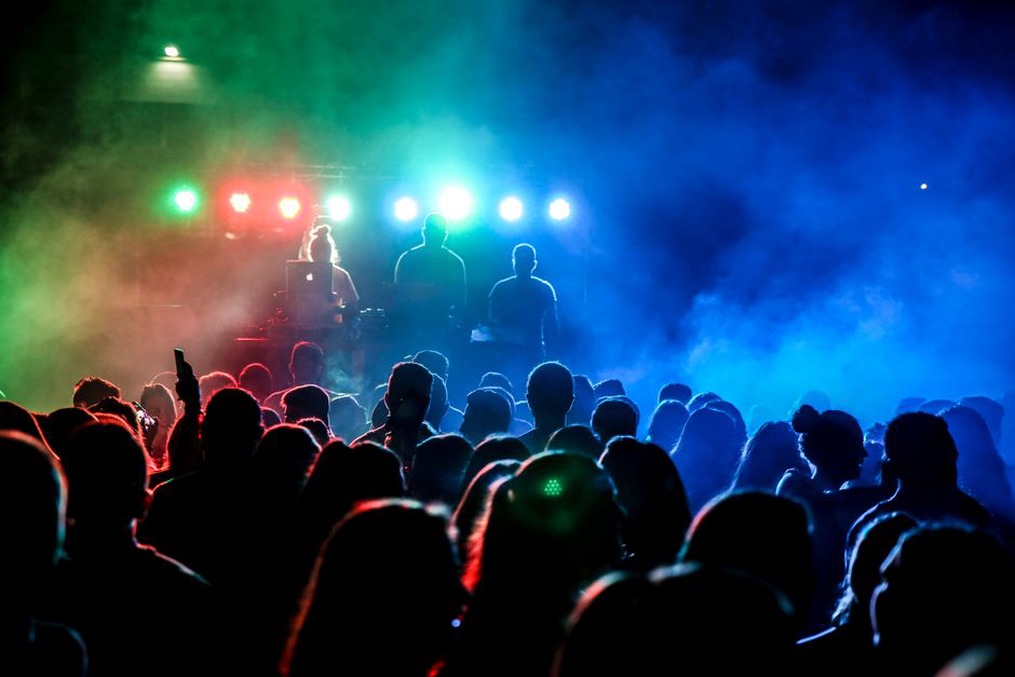
Lost Society’s 2013 debut marked how far a Finnish thrash band could travel from youthful rehearsal culture. A label-backed album brought wider press coverage, larger bills, and European touring opportunities. The band’s appearance at Tuska Open Air Metal Festival also put contemporary thrash in front of a broad Finnish metal audience rather than only the dedicated club circuit.
Festival appearances were not the sole measure of a scene’s health. Large events brought visibility, but thrash depended on smaller rooms as well: bar stages, youth-center shows, local festivals, and multi-band nights where audiences found new groups through support slots. A major festival could be a milestone; recurring club activity gave bands the repetitions needed to tighten sets and sustain local ties.
European touring posed another kind of test. It required dependable equipment, economical travel, the ability to perform consistently across consecutive dates, and relationships with promoters in unfamiliar cities. For an independent band, a modest run of shows could matter as much as a prestigious domestic appearance, introducing its name to new networks of labels, zines, venues, and record buyers.
The line between underground persistence and wider exposure was not fixed. Bands regularly moved between those levels: a group might self-release one record, open for a touring act, play a regional festival, and then return to a local bill. The scene did not depend on a single career model.
2015: a mature revival, not a finished story
By the middle of the 2010s, Finnish thrash had reached a more settled position. The revival’s most visible bands had shown that fast, classic-minded material could find sizable audiences, while lesser-known groups continued to record and play without expecting commercial expansion. The style was no longer novel, which gave musicians room to decide whether to preserve the old-school template, add progressive complexity, intensify crossover influences, or write more hook-driven material.
Band continuity became especially important. Thrash relies heavily on ensemble precision, so a change of drummer, guitarist, or vocalist can affect a group’s practical capacity as much as its artistic direction. Rehearsal time, transport, day jobs, education, and recording costs all influenced whether promising projects stayed active. The broader history of these personnel shifts is documented in the survey of line-up changes in Finnish thrash metal during the 2000s and 2010s.
For collectors, 2015 is also a useful boundary when tracing the revival on physical media. Compare an early demo with a band’s first professionally distributed album. Check the credited lineup, recording location, label details, and artwork variations, then verify matrix markings and catalogue numbers on any claimed first pressing. Those material details often say more about a band’s actual progression than an undated online upload.