
When cymbals swallow the guitars, a fast thrash riff loses its impact onstage. For Finnish bands playing small rooms in the late 2000s, speed was only part of the job. A drummer’s count-in, a bassist locking onto the kick and a guitarist leaving room for the vocal all helped the crowd hear the song. As revival-era groups gained experience on club bills, support slots and larger stages, they could make those choices more deliberately. Thrash’s familiar look did not need an overhaul; the playing had to remain clear as the rooms changed.
Before the revival: a stage vocabulary already existed
Finnish thrash did not begin with the late-2000s generation. Stone, formed in the 1980s, remains a useful reference point for the country’s earlier thrash identity. Younger bands also drew on an international stage vocabulary: clothes that allowed movement, low-slung guitars, headbanging and, above all, playing that carried the show. There was room within those conventions. A tight instrumental break could hold attention without props; a vocalist could turn a short pause into the cue for the next rush.
What changed in the late 2000s and early-to-mid-2010s was where younger groups could put that vocabulary to use. Recordings, concert footage and shared bills offered models to draw on, while local venues gave bands a place to test their own approach. Finland’s established metal scene meant there were audiences and promoters familiar with heavy music, but resources varied. Early on a mixed bill, a thrash act might have little setup time and limited control over the lights or house sound. It still had to make itself understood quickly.
The small-room performance: momentum over spectacle
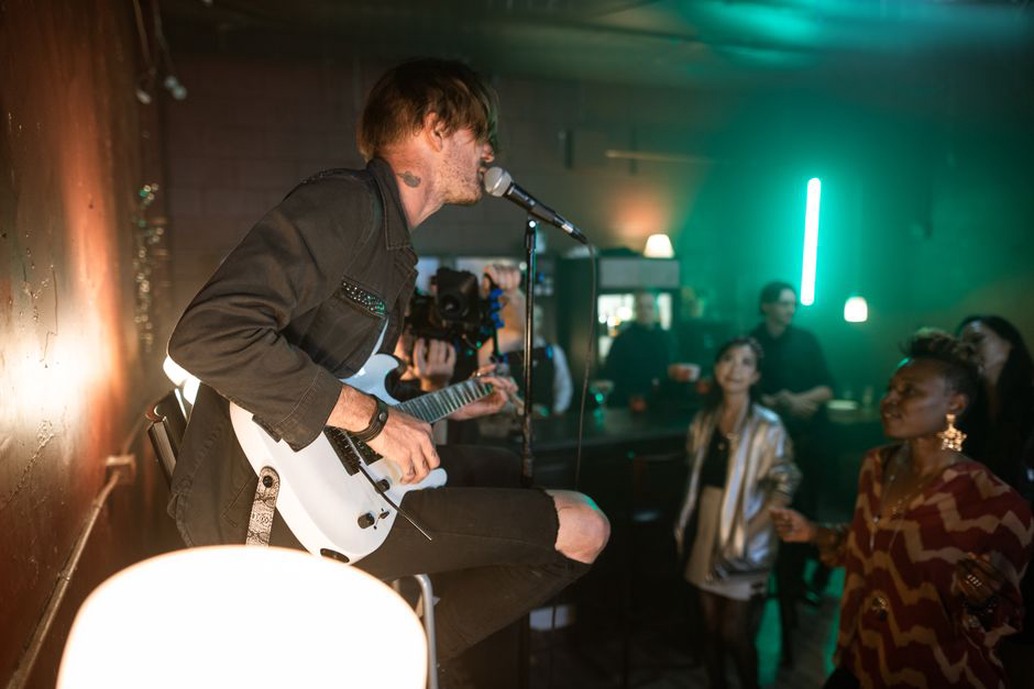
In a compact club, proximity did some of the work. Players could see the front row respond to a tempo change, and the crowd could follow a solo without a screen or raised platform. Such sets rewarded short transitions: retuning between songs could sap momentum on a multi-band night. A count-off, a brief swell of feedback or a drum pickup often did more than a long introduction.
These are tendencies, not a description of every Finnish concert. A photograph can show a stance or a piece of equipment, but not the pacing of a set. A clip of a chorus may tell us nothing about the silence before the next song. The constraints of a small room nevertheless help explain the value of clear cues: a sudden stop, a shouted line or a riff repeated long enough for newcomers to catch it.
What the front row could actually read
- Stops and restarts: a coordinated break made precision visible as well as audible, especially when a song shifted between fast passages and heavier grooves.
- Body cues: a raised drumstick or a guitarist turning toward the rhythm section could signal a shared entrance without elaborate staging.
- Vocal handoffs: stepping away from the microphone during an instrumental passage let the solo or riff take focus.
- Short crowd prompts: a clear call before a chorus could reach listeners who did not yet know the songs; constant talking was more likely to break the pace.
Headbanging mattered, but movement alone was no measure of a performance. Dense arrangements demand concentration. A player staying put through a rapid rhythmic shift might look less animated than someone crossing the stage while giving the crowd a clearer song.
Records gave audiences a map of the set
A demo or early album changed what listeners brought into the room. Someone who recognized the opening riff could anticipate a difficult passage and respond with the band. Lost Society and Axegressor offer distinct examples in the Finnish revival-era story: each made recordings part of its public identity, then had to make that energy work live. Neither stands for every local group. An act with a small independent release could face a very different crowd from one whose records had wider distribution, even at the same club.
Playing those songs live also brought studio choices into the open. One guitarist cannot simply reproduce two recorded guitar tracks; the arrangement may need a defined bass part, a second guitar or fewer layers. A solo needs a rhythm foundation that remains audible when the lead guitar drops out of it. Those musical decisions can become visible as players turn to mark an entrance, face a bandmate through a difficult change or step forward when a riff can carry the song on its own. The sound behind this aggression is discussed further in Finnish Thrash Metal: How Aggression Took Shape in the Revival Era; onstage, the arrangement had to survive the room.
From local bills to larger stages
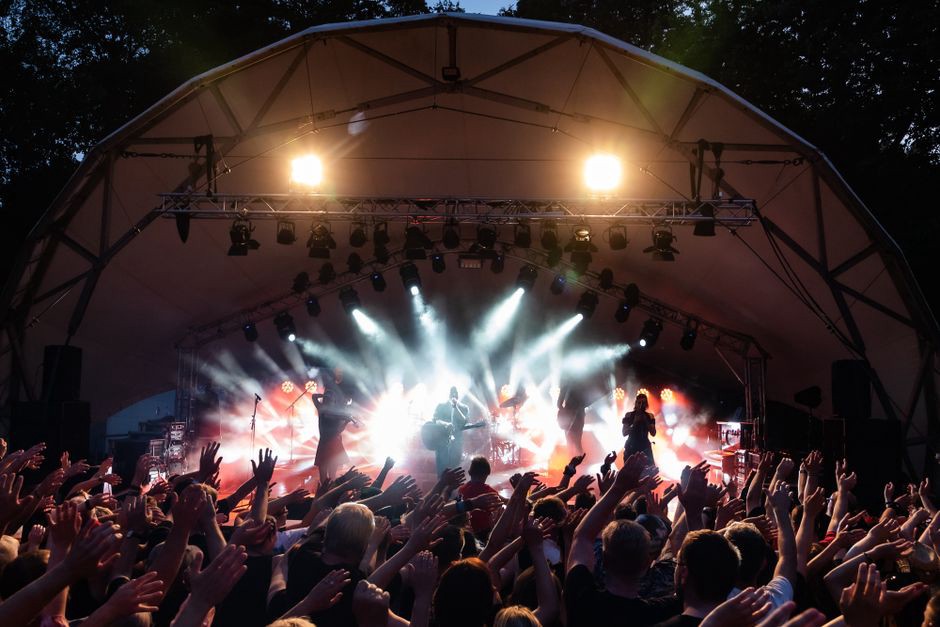
More space did not necessarily mean more theatre. In a club, looking up from an instrument could connect a musician with nearby faces. Farther back in a wide hall, that gesture might barely register. Wider spacing between players, more legible movement and unmistakable song openings became useful. A vocalist had room to address the crowd before a fast section, while a count-in gave the band a clear start on a spread-out stage.
Festival sets and European dates brought practical demands too. Short changeovers favoured a workable stage plot and gear that could be set up quickly; unfamiliar backline and acoustics called for adjustment. This does not imply that every Finnish thrash band toured abroad or played a major festival. It marks a difference in scale: a song that worked through close contact in a club needed stronger musical and visual cues for listeners across a field or wide hall.
What tended to change with distance
Set construction mattered more when many listeners were hearing the band for the first time. An opener with an immediate rhythmic identity could establish the pace; a contrasting mid-set groove kept fast songs from running together. Movement read better when it followed the arrangement: stepping forward for a chorus, then leaving space for a lead break. Communication worked best when it was brief. A song title, a short introduction or a direct cue could reach a crowd without stalling the set.
These adjustments coexisted with older thrash habits. Denim, patches, band shirts and practical shoes still signalled belonging, but clothes tell only part of the story. Standing near a monitor or keeping two guitars far enough apart for their parts to be heard could affect the show more than a coordinated look. Many of the important changes would be hard to spot in a photograph.
Reading the evidence without inventing a stage history
No single visual archive follows every Finnish thrash act from rehearsal space to festival stage. A poster confirms a billing, not how the band played. A setlist records planned repertoire but may miss changes made on the night. Promotional photos present an image rather than candid stage movement. Live recordings offer more to work with, though camera angles and microphone placement can favour one musician and obscure another.
To compare performances, start with footage from venues of different sizes and stick to what it shows. Is the tempo clear at transitions? How do musicians mark a stop? How much time goes to speaking, tuning or restarting? An undated clip, or one with an uncertain venue, cannot establish an early-to-late change. Repeated attendance and familiar audience responses tell another part of the story, explored in Fan Loyalty and Community in Finnish Thrash Metal.
A song’s first seconds can be especially revealing. Take a verified early club recording and a reliably dated later performance by the same band. Does the song begin with a spoken count, a drummer’s stick cue or everyone striking together? Before the first full riff, that choice shows how the musicians gathered their own attention and the crowd’s.