
Stone’s self-titled debut came out in 1988, leaving Finnish thrash with a nationally visible record before the later underground had taken shape. The bands that followed did not break through in the same way. For some, a first album changed things; for others, it was a run of shows or recordings reaching listeners outside Finland. Calling every release a milestone of equal weight misses those differences.
Here, a breakthrough means a documented change in reach or position: a significant release, a place on wider bills, or sustained attention beyond a band’s home area. It need not mean mainstream success. The dates mark turning points for individual bands, not a moment when the whole scene moved together.
1988–1991: Stone makes Finnish thrash visible
Stone formed in Kerava in the mid-1980s and released Stone in 1988. Its rapid, tightly arranged songs put the band at the front of Finland’s early thrash wave. No Anaesthesia! followed in 1989, and Stone made four studio albums before splitting in the early 1990s. For later musicians, those records showed that Finnish players could work in the idiom without presenting themselves as an American or German act.
Stone was no template for every band that followed. Its increasingly intricate playing differs from the dirtier approaches heard elsewhere in the Finnish underground. The band also has a history beyond thrash: guitarist Roope Latvala later became widely known through Children of Bodom. That career may bring listeners back to Stone, but the original records deserve attention on their own terms. The Stone band history is a starting point for discography and personnel dates.
What counted as an early breakthrough?
A nationally released LP could outlast a local gig reputation. Fans in another city could find it, learn the songs and identify the players; later listeners could do the same without having seen the band live. That makes Stone’s 1988 debut a different kind of marker from its formation. The record remains a dated point of reference for the first wave.

1988–1992: A.R.G. establishes a harsher counterpoint
Kuusamo’s A.R.G. belongs beside Stone in an early-wave timeline, not beneath it as a lesser copy. Its late-1980s and early-1990s recordings took a more abrasive route. The 1989 album Entrance captures that approach at full length; One World Without the End followed in 1991. Stone may be a common introduction to Finnish thrash, but A.R.G. makes it harder to mistake one band’s sound for the whole country’s.
A.R.G.’s importance does not depend on a claim to broad popular recognition. Its albums document another regional and musical possibility. Heard side by side with Stone, they reveal different balances of precision, speed and aggression—more useful than asking either band to represent every Finnish act of the period.
1990s: Survival, separation and the long gap
There was no clean handoff between the first-wave LPs and the revival-era debuts. Finnish thrash bands did not all remain continuously active through the 1990s, and metal audiences had plenty of other sounds to follow. Nor were those years empty: musicians, recordings and audiences persisted, even if prominent release dates were less concentrated.
That gap matters when hearing the next wave. Revival bands could draw on familiar thrash elements—palm-muted riffs, quick rhythmic changes, shouted vocals and prominent guitar leads—without being direct continuations of Stone or A.R.G. A shared sound does not establish shared members, a common organisation or an unbroken local lineage.
2007–2009: New names put the revival on record
The late 2000s brought another set of records to date and compare. Helsinki band Dead Shape Figure released its debut, The Grand Karoshi, in 2008. Its sharp, technical attack merits more than a retro-thrash label: the band used thrash’s speed while making its own choices about arrangement. The album also gave listeners beyond its local gigs a substantial recording to follow.
Tampere’s Axegressor released Command the same year. Its more direct, old-school approach makes it a useful counterpart to Dead Shape Figure, not proof of a single revival sound. Together, the two debuts point to something broader than either band alone: several new groups were putting substantial records out, and they did not sound alike. Axegressor followed with Next in 2009, beginning a recorded run rather than leaving Command as an isolated release.
Lost Society formed in Jyväskylä in 2010, after that first cluster of albums. Its rise followed a different timetable. A formation date tells us when a band began, not when people outside its immediate circle had a substantial release to hear.
Three markers worth keeping distinct
- Formation: the start of a band, not evidence of a public audience.
- First substantial release: a dated recording that listeners can hear and compare with its peers.
- Wider reach: activity beyond home-area gigs, which needs evidence of its own; a record’s existence is not enough.
2013–2015: Lost Society reaches a wider audience
Lost Society’s debut, Fast Loud Death, arrived in 2013. Its fast, exuberant thrash and youthful presence helped make the group one of the Finnish revival’s most recognisable names beyond its local scene. Terror Hungry followed in 2014. Two albums in consecutive years gave new listeners an active band to keep up with, rather than a promising debut with no immediate successor.
Greater visibility is not the same as having invented the revival. Dead Shape Figure and Axegressor had already released important albums in the late 2000s, and bands with less recognition did not cease to matter. Lost Society’s early albums carried a newer Finnish name to another group of listeners. Building a scene and becoming one of its most readily identifiable exports are different achievements.
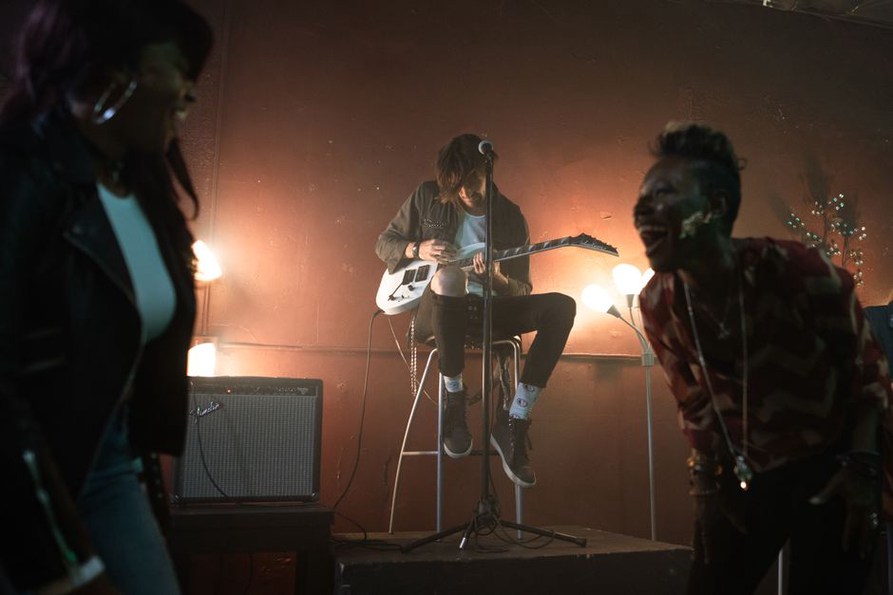
Rehearsal spaces, local bills, distribution and the routine work of keeping shows going also mattered. An album-by-album account cannot fully document the musicians and organisers behind that work. The account of Finnish thrash collectives and their changing networks follows connections that release dates alone cannot show.
Reading the milestones without forcing a straight line
These breakthroughs mark different things. Stone left an early recorded landmark; A.R.G. documented a contrasting first-wave sound. Dead Shape Figure and Axegressor put distinct late-2000s debuts on record, while Lost Society reached wider listeners with its early-2010s albums. None makes other Finnish thrash bands a footnote, and the sequence does not imply a single chain of influence between the players.
For a listening chronology, start with each album’s original release year in a dependable discography, then note the year of the copy you own separately. Later editions and reissues can blur the order. Copies of The Grand Karoshi and Command may carry different later pressing dates; both albums belong at 2008 in their bands’ timelines.