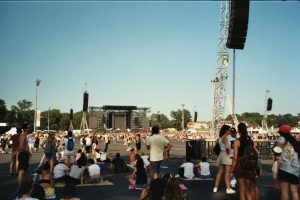
“Thrash night, doors at 20:00” makes sense to venue regulars. Someone searching for a band by name, city or date may struggle to find it. For a small Finnish thrash band, being findable often comes down to plain upkeep: spell the name consistently, give the correct address for a public show, and make sure an old announcement does not look more current than the new one.
A band is not a shop. It may have no public premises, regular opening hours or permanent phone number. Its local presence online is scattered across venue calendars, festival programmes, record-shop notices and its own show pages. Those listings need to agree well enough that a listener looking for live thrash in a Finnish city can identify the gig and check the details.
Make the event page the reliable reference
Give each confirmed public show one maintained page or listing with the essential facts in text, not just on a poster. Readers can copy a date or address from text, and search engines can index it. Name the band, venue and city; give the date and start time, specifying whether that means doors or the band's set. Use the venue's official name and the street address it supplies, and add ticket information once announced.
Keep those facts consistent across the band's channels and the venue calendar. A shortened venue name on a flyer is rarely a problem; conflicting dates are. If plans change, update the maintained listing first, then mark earlier announcements as changed rather than leaving two apparently valid versions online. After the gig, label it as a past event. The archive can still serve listeners and scene researchers without looking like an upcoming show.
What a useful show listing needs
- Searchable names: the band's established spelling and the venue's official name.
- Unambiguous timing: day, month, year and, where international readers may need it, the time zone.
- Location: city and verified venue address, not just a neighbourhood nickname.
- Status: confirmed, postponed, cancelled or completed, as appropriate.
- Access details: age limits, accessibility information and ticket arrangements when confirmed by the organiser.
A short description can distinguish an album-release performance from an ordinary club date and tell an unfamiliar reader that the band plays Finnish thrash metal. There is no need to repeat the city and genre in every sentence. First, help the listener work out whether this is the show they meant to find.
Use place names accurately, not expansively
Place names belong where there is a real connection. A band can state its home city; a tour page can name cities with booked shows. Neither needs pages claiming a presence in every nearby town. Such pages do little for readers and can bury the concert details that matter.
Finland's bilingual place names call for care. A venue or organiser may use Finnish, Swedish or both in its official material. Keep the venue's chosen name, adding an established alternative city name if it helps someone locate the show. Do not invent translations for venue names. If the band's logo uses stylised lettering, put a readable spelling beside it so a listener can search for the name they heard from the stage.
Venues have their own version of this problem. A small venue's website should give its public address and explain where the entrance is, especially when the performance room is inside a larger building. Current opening or event hours are more useful than a fixed timetable left up after the programme changes.
Choose listings that can be maintained
A venue with a staffed public location may qualify for a business profile on a map or local search service. Claiming an eligible profile lets its operator correct the address, category and hours. A band rehearsing at a private address should not publish it as a business location just to appear on a map. Services have different eligibility rules, and the musicians' privacy matters as much as accuracy.
Beyond maps, look for regional event calendars, festival schedules and venue pages that reach the show's audience. Send confirmed details only, and keep track of where they appear. A spreadsheet recording each listing's title, organiser contact, publication date and update status makes it easier to catch stale results after a cancellation. Independent promotion in the late-2000s-to-mid-2010s Finnish thrash scene often left scattered traces. The practical lesson for anyone publishing show details now is to use outlets where corrections are still possible.
Directories vary in usefulness. A calendar with a clear venue, date and lineup helps more than a broad directory that copies a band biography but cannot update gig details. If an old listing has the wrong address, ask its publisher to fix it before making a near-duplicate.
Give searchers enough context to recognise the band
A concise band page can answer several questions without turning into a sales pitch. Give the home city if it is public, describe the sound plainly, and list verified release titles and formats. Separate upcoming gigs from past performances. Date or remove outdated membership and contact details; an undated biography can easily be mistaken for a current one.
Posters, recordings and later recollections do not always agree. An archive page should distinguish a documented show from an unverified claim. The account of Finnish thrash bands moving from rehearsal rooms to European stages shows why a band's geographic story extends beyond its hometown. Playing a city once, though, is not the same as having a local base there.
Images help visitors recognise a flyer or release, but should not be the only source of essential details. Give event graphics brief, descriptive alternative text, with dates and names in the adjacent page text. A title such as “Band Name at Venue Name, City — 12 October” tells a searcher more than another page called “Upcoming Shows.”

Check what search results actually show
Search for the band name with its city, the venue name with the show date, and the event title without the band's own site name. You may find an outdated calendar entry, a misspelt lineup or a social post appearing ahead of the corrected venue page. Check on a phone as well as a desktop: a mobile snippet may cut off the year or conceal a changed status.
Ranking is not the only test. For a small show, the more useful question is whether someone can find the right date and location without running into contradictions. Website analytics, if available and accompanied by an appropriate privacy notice, can show whether people visit event pages. Venue staff may also hear the same questions about directions or times. Both can point to details that need clearer wording.
After a cancellation, search the band-and-venue combination again. If the original announcement still appears, add “Cancelled” to its visible heading and place the status beside the date in the page text. The old listing can remain part of the concert record without sending anyone to a show that will not happen.