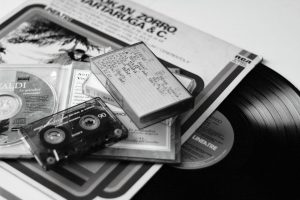
“Released in 2011” sounds settled. “The cassette insert gives 2011 as the release year; the recording date is not stated” tells a reader both where the date came from and what remains unknown. That difference matters in an independent music archive. Someone may be using the page to identify a pressing, trace a band’s history or decide whether to contribute a scan. They should be able to tell documented details from interpretation.
Put verifiable details before atmosphere
Start a band page with what identifies the band: its name, documented location and active period, and the releases or performances relevant to the entry. Use names as they appear on the material at hand. If a demo cover spells a name differently from a later release, keep the difference rather than silently standardising it.
Readers of Finnish thrash history will know what “fast, old-school riffs” suggests, but the phrase will not identify a particular recording. A release entry is more useful when it gives the format, track list as printed, label or self-release credit, and edition examined. Put listening impressions in a separate note: a prominent bass line, for instance, or a shift from a rapid rhythm to a slower section. Readers can then assess the identification and the interpretation on their own terms.
Do not delete a qualifier just to make a sentence sound firmer. If no independent confirmation of a show has turned up, write “The surviving flyer lists three bands,” not “Three bands played.” The flyer establishes the advertised bill, not that every act appeared. That distinction is especially important when the evidence consists of scattered posters, physical releases and recollections.
Use wording that matches the evidence
| Evidence available | Careful website copy | Claim to avoid |
|---|---|---|
| A date printed on a cassette insert | “The insert gives 2012 as the release year.” | “Recorded and released in 2012.” |
| A concert flyer naming a venue and bands | “The flyer advertises a show at the venue.” | “All listed bands performed there.” |
| A musician’s later recollection | “In a later interview, the musician recalled…” | “This is exactly how the session happened.” |
Such wording is not evasive. It lets visitors judge the evidence, and it leaves room to update a claim if stronger material turns up.
Show what an entry is based on
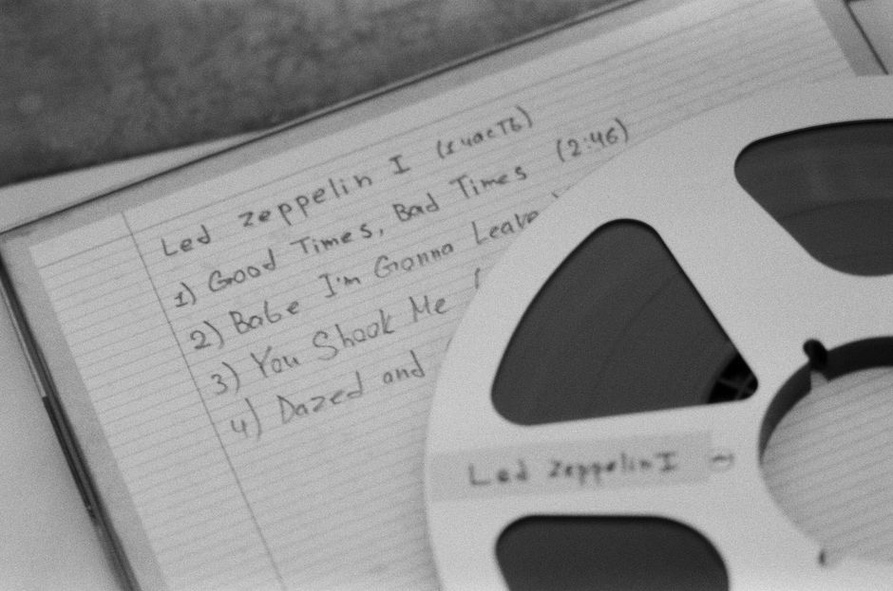
Give readers a way to trace significant claims, even when the archive cannot reproduce the source. Say what you examined: a cassette insert, label catalogue, dated flyer, contemporary interview or authorised recording. Name the edition when it matters. Two versions of a release may have different artwork or track sequences, making “the CD booklet” more helpful than “the album notes.”
Keep source details close to the claims they support. “Sources: flyers and interviews” at the bottom of a long page leaves the origin of a date unclear. “The venue and advertised bill come from a flyer dated 14 May; whether the running order changed is unknown” does the job in place. Every paragraph need not carry a formal citation, but a reader should be able to follow important assertions back to evidence.
Original material and later transcriptions also need different treatment. A track list read from an insert is not quite the same as one entered by a collector years afterward; if you have only the transcription, say so. A contemporary review can show how a release was received at the time without necessarily establishing who played on it or how it was produced. Naming a source helps only if the copy stays within what that source can show.
Make uncertainty readable
Too many “possibly” and “perhaps” clauses can make an entry difficult to use. Mark the uncertain part instead: “The sleeve names four members; the drummer on the recording is unconfirmed.” If sources disagree, put the conflict in plain sight: “The insert gives one year, while the later label catalogue gives another.” Do not average the dates, choose the neater account without explanation or tuck the discrepancy into a footnote.
For an entry with several open questions, a short “What remains unverified” note can tell contributors what evidence would help. It also shows that the gaps have not been overlooked. A single routine uncertainty is usually better handled where it arises.
Write for the visitor’s immediate task
A collector comparing copies needs format and edition details. A listener needs a discography they can read without guesswork. Someone with a concert flyer needs to know how to submit it and whether the archive may publish the scan. Put those answers where each visitor is likely to look, rather than sending everyone to a general “About” page.
- On a release page: identify the edition examined, list confirmed tracks, and explain uncertain credits.
- On a concert entry: distinguish an advertised event from a confirmed performance and give the source of the date.
- On a submission page: say which materials are welcome, what information to include, and whether sending a file grants publication permission.
- On a contact page: explain which corrections the archive can assess and what evidence would help.
Headings shape a reader’s understanding before they reach the body text. “Advertised lineup” is more accurate than “Lineup” if a poster is the only source. “Release information printed on this edition” is safer than “Official details” when a sleeve cannot settle every question.
Links and page titles need the same precision. “Discography” should lead to release information, not a jumble of recordings, merchandise and unrelated news. A descriptive title helps distinguish a demo entry from a band overview when names are similar. For concert discovery, Making Finnish Thrash Shows Easier to Find Locally discusses how to present information for people searching for local shows. A historical entry must still say whether it records an advertised show or a confirmed performance.
Describe the archive’s role without claiming authority it does not have
An independent archive need not present itself as an official band history. Tell readers who maintains it, which period and materials it covers, and how entries are assembled. If the work draws on a private collection, donated scans and contemporary publications, say so briefly. That gives a fair account of both its strengths and its gaps. “Independent research project” is a description; “definitive history” is a claim the evidence may not bear.
Treat “complete discography,” “first performance” and “only surviving copy” with similar care. “Releases currently documented in this archive” may be all you can establish. The earliest flyer you have found is not proof of a band’s first show. The limits of a collection are not necessarily the limits of the scene.
Credit sources without exposing contributors unnecessarily. Name a collection or contributor when permission has been given. If someone prefers anonymity, describe the material and how it was checked instead. Permission to inspect a recording or photograph is not permission to distribute it. A rights note can say whether an image appears with permission, a small excerpt is used for identification, or the archive provides description only.
Make corrections visible and manageable
Make the correction route easy to find. Ask for the page, the disputed wording, a proposed correction and supporting material if available. A contributor should not have to send a rare original if a legible photograph of the sleeve or flyer will establish the point.
Keep a brief note for consequential changes: “Updated the track order after checking a scan of the cassette insert.” It tells readers what changed without exposing private correspondence. If an earlier assertion was wrong, call it a correction rather than quietly replacing the text. Minor spelling fixes, on the other hand, generally do not need a public log.
A contribution form should separate what the contributor knows, what material they can provide and what the archive may publish. Someone may help verify a date but not want their scan displayed. State that choice clearly: “Submitting an image for review does not automatically grant permission for publication.”
Keep promotional language out of factual fields
Enthusiasm has a place in criticism and scene writing, but “legendary” tells a catalogue reader little about a demo’s format, sound or circulation. If its reputation matters, tie that account to documented reception. A listening note can still be vivid: “The opening track moves from a clipped guitar figure into a faster section” says more about the recording than “a masterpiece of aggression,” and a listener can check it.
Be specific when asking for contributions, too. “Help us preserve the scene” may be sincere, but visitors need to know whether you want release photographs, flyer details, corrections or oral recollections. A precise request respects their time and makes the resulting information easier to verify.
Edit sentences for one clear claim at a time
Archival sentences get muddy when they combine provenance, interpretation and an unsupported conclusion. Instead of calling a demo rare, crediting it with a band’s European reputation and praising its classic sound in one breath, identify the release and its source first. Discuss documented circulation and musical characteristics separately. If no evidence links the recording to a wider reputation, leave that claim out.
Watch the verbs. A poster advertises a bill; a dated review shows that a publication discussed a release; an interviewee recalls an experience. “Suggests” and “confirms” make different promises, too. The right verb can save a paragraph of qualification.
Check the page as someone encountering it for the first time
Read the entry without your research notes. Is it clear which item the page describes, where its key dates came from and which details remain uncertain? Check captions and headings as closely as the body. A careful paragraph will not undo a prominent heading that calls an unverified flyer “the band’s debut show.”
Then test the practical instructions. Is the correction address current? Does the archive actually accept the file types listed on its submission page? If a page gives a last-reviewed date, it should reflect a real review, not an automatic update. Visitors can test these small promises.
For a final check, put the source of the page’s most important factual sentence beside it in an editing note. If the sentence says “The band released the demo in 2010,” but your evidence is only a sleeve printed with “2010,” change the public copy to “The demo sleeve gives 2010 as its release year.” The entry remains useful, and the evidence is in view.