“Post about the gig” leaves a small Finnish thrash archive with too many questions. Which gig? Has the date been checked? Who can supply the flyer, and who will approve the caption? Those answers matter more than the choice of scheduling tool. An inaccurate show date can pass from a social post into search results, collector notes, and later histories.
Marketing work needs a short chain of accountable decisions: what the archive can document, what it should publish, who will prepare it, and who will check it. Promotion should follow the historical record, not set its deadlines.
Separate archive work from distribution work
Research, writing, and distribution often use the same material, but they are different jobs. Checking a concert date against a flyer and a contemporary listing is research. Explaining the concert’s place in a band’s touring history is editorial work. Preparing a newsletter announcement is distribution. Separate them, and it becomes easier to see where a task has stalled.
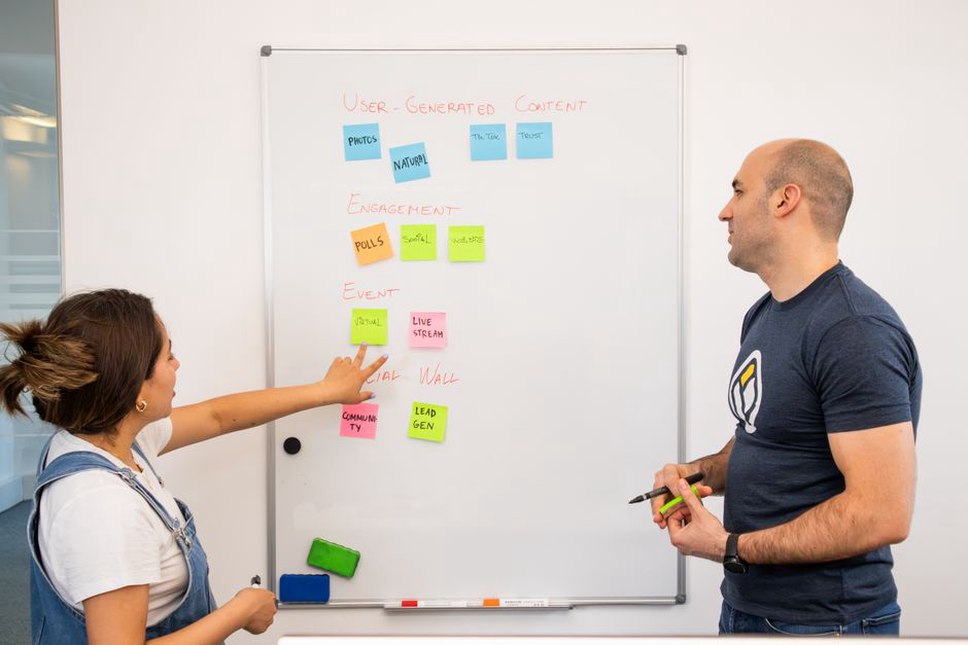
A compact board can use five states: Ideas, Evidence needed, Ready to produce, In review, and Published or closed. “Evidence needed” matters in a historical music project. It stops a promising lead from becoming a finished story just because a publication slot is approaching. Name the gap on the card: a release year to corroborate, permission to reproduce artwork, or a venue to identify on a scan.
Give each card an output rather than an ambition. “Improve awareness of Finnish thrash” has no clear finish line. “Draft a newsletter paragraph pointing readers to the verified discography entry, with one sentence on why the recording matters” does. Include an owner, due date, source material, approval needs, and destination. After a week away, a contributor should still be able to open the card and know what to do next.
Choose work by evidence, reader value, and available time
A small team cannot promote every entry equally. Start with pages or collections that answer a reader’s question and have enough documentation to support a public explanation. A well-sourced account of a local band’s independent releases may be more useful than a thin page about a better-known name. Audience interest matters, but the archive must be able to stand behind what it publishes.
For each proposed task, ask:
- Evidence: Are the claims supported? Are any images or recordings cleared for the proposed use?
- Reader purpose: Will this help someone identify a release, understand a scene connection, or find a documented event?
- Effort: Can the team finish it without putting off a more important correction or research job?
- Timeliness: Is there a reason to publish now, or did the team simply set a deadline?
No scoring system is needed. In a weekly meeting, those questions can help settle whether to tackle a corrected discography entry, a short post about a newly documented source, or a newsletter mention of an existing feature. They also give the team a reason to decline a campaign around an unverified anniversary. If the date is uncertain, research it first or leave the anniversary alone.
Keep a small active queue
The backlog may hold dozens of leads; the active queue should hold only what named people can finish and review during the current cycle. For a team of three, that might be one substantial article update, one distribution task, and one maintenance job. Watch for half-finished work piling up rather than treating that example as a fixed rule.
Leave room for corrections and new evidence. A collector, former participant, or reader may send a better scan or question a venue attribution. A calendar packed with planned posts leaves little time to check those contributions. A well-supported correction can do more for the archive than another promotional message.
Write tasks with a definition of done
A task should name the deliverable and the conditions for publishing it. Suppose a feature follows the route by which an independently released Finnish thrash demo reached listeners outside its hometown. “Write demo story” conceals several jobs. Try: “Draft 600–800 words using verified release details and credited interview notes; distinguish documented distribution from recollection; obtain image permission; have a second editor check names, dates, and captions.” The word range helps with planning. The checks determine whether it is ready to publish.
Split work when it belongs to different people or involves different kinds of waiting. Scanning a cassette insert, requesting permission, transcribing an interview excerpt, drafting copy, and checking facts may all belong to one project, but each needs an owner and status. Otherwise the writer appears late when the real hold-up is an unanswered permission request.
Keep a short checklist for recurring distribution work. A newsletter item might need a descriptive subject line, an accurate summary, a link to the archive page, a mobile check of that page, and a final proofread of band names. The checklist is there to catch repeat mistakes, not make a short message into a major production.
Assign one owner and a separate reviewer
Small teams share responsibilities informally, and a task can become everybody’s concern but nobody’s job. Give each one an owner who moves it forward. That person can ask a colleague for a scan or translation, but remains responsible for the next step and the board update. When possible, have someone else review publication-ready material—especially dates, release formats, quoted recollections, and image credits.
Review need not involve a committee. A workable division might be:
| Task | Owner | Review focus |
|---|---|---|
| Discography update | Research editor | Formats, titles, dates, and cited evidence |
| Feature announcement | Communications editor | Faithfulness to the published feature |
| Flyer reproduction | Image coordinator | Identification, permission, and credit |
| Site correction | Page editor | Whether the correction appears everywhere needed |
If only one person is available, wait a little before publishing and check the source against the draft rather than proofreading from memory. Say plainly what uncertain evidence establishes. A flyer shows that a concert was advertised; by itself, it does not prove every listed band performed.
Plan distribution from the finished record
The archive entry should be ready before it goes on a distribution calendar. Working the other way around invites rushed claims about festivals, European tour stops, and release anniversaries. Keep one calendar for research and editorial publication, then a smaller one for telling readers about work that has passed review.
A finished entry can support several distinct messages without repeating the whole article. A newsletter can explain why a documented recording matters. A short social post can highlight one verifiable detail and point to the full entry. A page update can clarify a credit or add a source note. Point those tasks back to the authoritative page, where later corrections should be made first. For a closer look at useful formats for existing research, see the archive’s guide to repurposing material for a Finnish thrash archive.
Every channel need not be mandatory. A careful newsletter and one social account are better than several accounts carrying stale or unchecked information. Give each a job: the website holds the durable record; the newsletter alerts interested readers to substantial additions; social posts point to specific findings or invite documented corrections. That makes it easier to decide which distribution tasks are worth the time.
Keep source notes and permissions attached to tasks
As drafts change hands, historical claims can lose their sources. Each research task needs a place for source notes: a catalogue reference, scan identifier, interview record, or citation in the team’s system. Note what the source supports. “Date appears on flyer” says more than “confirmed,” which hides how the conclusion was reached.
Track permissions separately. Having a photograph, flyer, recording, or scan does not automatically mean the archive may publish it. Record who supplied the item, who created it if known, what use has been approved, and how it should be credited. If permission cannot be resolved, the written entry may still be publishable without the asset. Do not let an attractive image set the publication date or prompt unauthorized sharing of recordings.
Name working files consistently: band or event identifier, item type, approximate or verified date, and version. Mark uncertain dates as uncertain in the file name or accompanying record. Otherwise an estimate in a scan folder can quietly become a fact in a draft caption.
Run a brief weekly check, not a perpetual meeting
A 20-minute weekly review can keep the board useful. Start with tasks waiting for approval or evidence, since they may block other work. Then settle what will be published, what needs correction, and what should leave the active queue. Assign owners to the next few tasks before closing. A disputed historical point needs a separate research session with the sources at hand.
Keep meeting notes to decisions, owners, and unresolved questions. That record helps when someone later asks why an item was delayed or a claim was qualified; it need not capture every conversation. If a task stays blocked for several meetings, state the missing evidence or permission and move it out of the active queue until something changes.
Make room for unplanned corrections
When a reader sends a possible correction, create a task before changing the page. Record the exact claim, the page affected, the evidence supplied, and any other pages that repeat the detail. Once verified, update the authoritative entry and any derivative captions or announcements still accessible. If the change affects a significant interpretation, a brief dated editorial note can show readers what changed. A minor typo does not need a public campaign.
Measure workload and usefulness, not posting volume
A full calendar may hide an overloaded team. Watch how many tasks are in progress, how long they wait for review, which ones repeatedly stall, and how often published work needs avoidable corrections. Use what you find to change the process. If image permissions delay every feature, ask earlier. If band names often need correction after publication, add a name check before approval.
Audience measures help when they answer a question. Search queries showing confusion over a demo title may point to an unclear entry. Newsletter replies with verifiable additions may matter more to an archive than a higher open rate. Traffic cannot show whether readers understood the difference between an announced concert and a documented performance; the questions and corrections they send can help reveal that.
Once a month, look at completed tasks that added little lasting value. A post that only repeats a page title may not need to recur. An update resolving an ambiguity about release format may deserve time even if it draws less immediate attention. Remove recurring tasks kept on the calendar only out of habit.
A workable two-week cycle
A two-week cycle gives a small archive some structure without pretending research is predictable. At the start, choose one substantial editorial outcome and a few smaller tasks. The team might update a verified discography entry, prepare a newsletter note about it, and check an older page for inconsistent credits. The entry remains in “Evidence needed” until its release details are checked; the newsletter copy should not move ahead until the revised page is approved.
Midway through, review blockers rather than demanding that every task be finished. A missing scan may arrive, while a permission request may remain unanswered. Move the distribution date instead of filling the gap with an unsupported claim. At the end, close completed cards, record new evidence for later, and carry forward only tasks with a named next action.
For the next cycle, start with a card labeled “Check venue credit on existing show entry.” Attach the current page and the source that raised the discrepancy, then name the person who will compare them. Close the card only when it has a corrected, reviewed credit or a source note explaining why the existing wording remains qualified.