
If the sofa is too dim for reading, a brighter ceiling light may only make the middle of the room brighter. Sit in your usual spots after dark—where you read, watch television, or talk with guests—and notice where light is missing or shining into someone’s eyes. The aim isn’t to light every corner equally. It’s to put useful light where you need it.
Map the dark spots before buying anything
Check the room in daylight and again at night. A window may light one end of the sofa while leaving the bookcase in shadow. After dark, an overhead fixture can make the center bright while a corner still feels dim. Jot down where you need to see clearly and where a soft glow would be enough.
Think of lighting as three jobs: general light for moving around, task light for reading or close work, and accent light for a shelf, artwork, or dark corner. A fixture can handle more than one job, but a single ceiling light rarely handles all three well. These are the general, task, and accent lighting categories used in lighting design.
Start with what bothers you most. If you squint over a book, fix the reading light first. If a bare bulb appears in the television screen, deal with the reflection before adding more light. Otherwise, you may end up with more lamps and the same problem.
Put light close to where you use it
Give reading its own lamp
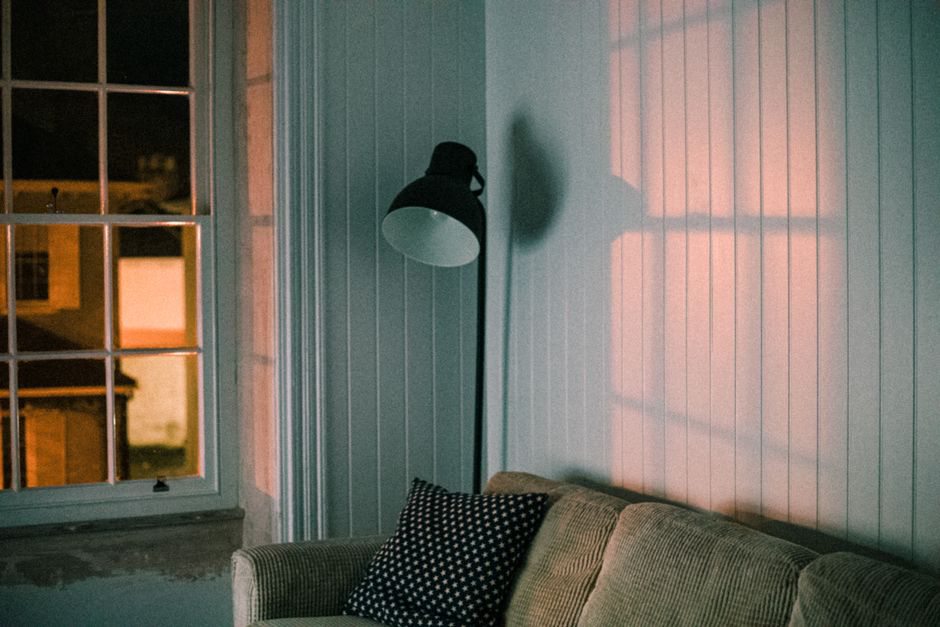
A floor lamp beside a chair or a table lamp near the sofa can light a book without flooding the room. Aim it across the page, not into your face. The best side depends on where you sit and how you hold the book, so try it from the seat before settling on a position.
A shade or adjustable head should direct light onto the page while hiding the brightest part of the bulb from view. Check while leaning forward and sitting back: a lamp that looks fine from across the room may show a bare bulb at sofa height. If there’s no room for a side table, a stable floor lamp with a compact base may fit better.
Sorting photographs or reading small print calls for the same approach, though a desk needs more precise placement. Our guide to lighting a home desk without glare or shadows covers that setup.
Lift dim corners gently
A lamp in a dark corner can ease the contrast between the seating area and the rest of the room. Give its shade space to cast light onto nearby walls instead of tucking it behind a tall cabinet. A shaded table lamp on a sturdy console or an upward-facing floor lamp can both work.
A lamp aimed at a pale wall or ceiling produces a broad, indirect glow. Dark finishes absorb more light, so it may have less effect beside a deep-colored wall. Before buying a stronger bulb, move a lamp you already own and see what changes.
Choose bulbs for the job, not just the fixture
Bulb packaging lists lumens and watts. Lumens describe light output; watts describe power use. Compare lumens when you want roughly the same brightness from a replacement, and check the fixture’s maximum permitted wattage. Never exceed that rating, even if the bulb fits. The lumen as a measure of visible light output is more useful than matching old wattages when comparing modern bulbs.
Color temperature, measured in kelvins, also changes the feel of a room. Warm white bulbs around 2700 K generally suit relaxed evenings. You may prefer a somewhat cooler white for a task lamp, but very warm and very cool bulbs in neighboring fixtures can look mismatched. If several lamps are on together, try similar color temperatures first; use placement or dimming to vary their brightness.
Check that a bulb is dimmable before pairing it with a dimmer, and that the dimmer suits that bulb type. An incompatible pairing may flicker or dim unevenly. For an enclosed shade, use a bulb rated for that enclosure if the manufacturer requires one; trapped heat can shorten an unsuitable bulb’s life.
- For reading: use a shaded, directed light that reaches the page from beside or slightly behind the seat.
- For general evening use: place moderate light in two or more spots rather than relying on one very bright fixture.
- For a dark display shelf: keep the accent light modest so the objects are visible without becoming the brightest thing in the room.
Control glare around screens and windows
A bulb reflected in the television can be distracting even when the room feels comfortable. Sit where you normally watch and check the screen while it’s off; reflections show up more clearly on the dark surface. If you see a lamp, shift it, turn its shade, or move it farther to the side. You may not need to dim the whole room.
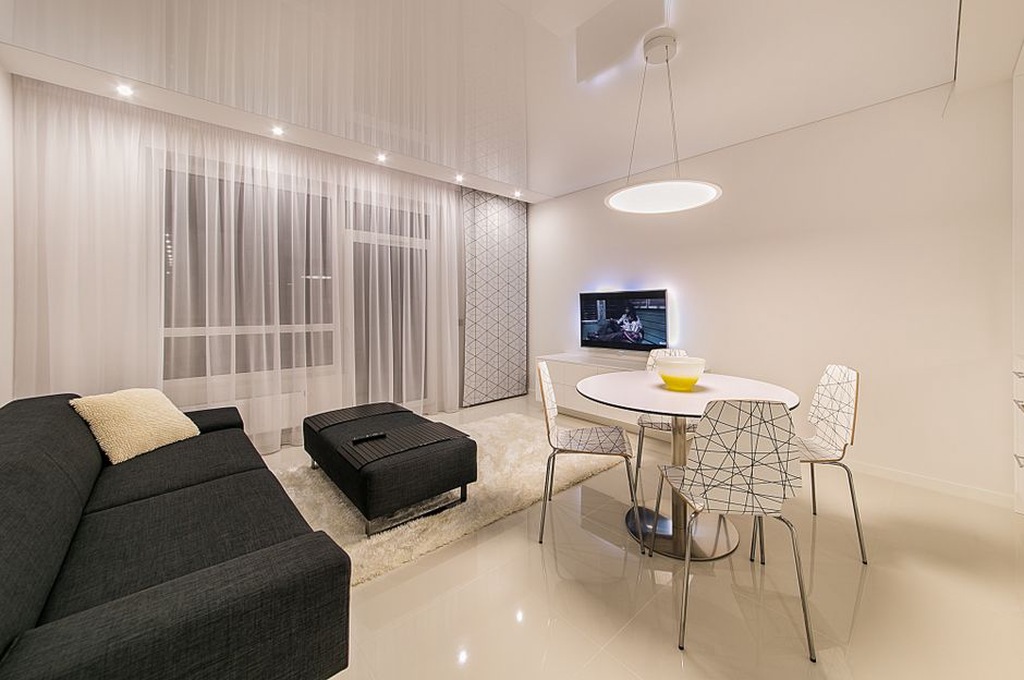
A little diffuse light behind or beside the television can soften the contrast between a bright screen and a dark wall. Keep the source out of direct view. You’re lighting the area around the screen, not the screen itself.
By day, direct sun can wash out the screen or make a chair uncomfortably bright. Sheer curtains soften strong daylight; blinds give you more control over its direction. Heavy curtains help when you need the room darker, but leaving them shut all day may mean switching on lamps unnecessarily. Try adjusting the coverings as the light changes before altering the fixtures.
Make better use of the light you already have
Dust on a bulb or shade can cut the light reaching the room. An opaque shade may also send most of it upward or downward instead of toward your seat. Switch the fixture off, let it cool, and clean it according to the manufacturer’s directions. If it’s safe to do so, compare how the lamp works with and without the shade. Its shape or material may explain why a bright bulb does so little nearby.
Pale walls and light-colored curtains reflect daylight and lamplight. A mirror can brighten a dim spot if it reflects a window, but it can double the glare if it reflects a bare bulb. Hold it or prop it temporarily where you’re considering hanging it, then check the view from each seat before securing it.
Furniture placement matters too. Moving a reading chair closer to a window may help by day; moving a side table toward the sofa may finally put its lamp within reach. Keep cords clear of walking routes and never run them under rugs, where damage may go unnoticed. The available outlet should be part of your placement decision.
Add control without making the room complicated
Separate switches make it easier to change the lighting for reading, conversation, or television. A plug-in dimmer can help with a compatible lamp; a smart bulb can add scheduling or adjustable brightness if you want those features. Neither is essential. An accessible switch may be all you need to stop reaching behind the sofa each night.
Change one thing at a time so you know what helped. Move a lamp and live with the position for a few evenings before changing a bulb or adding another fixture. Then run through these checks:
- Read for ten minutes in your usual seat. Is the page clear without the bulb in view?
- Look at the television from each regular seat. Do any lamps reflect in the screen?
- Walk through the room with only the lamps you normally use at night. Can you see steps, corners, and routes around furniture?
- Switch on all the lights you’d use together in the evening. Do their colors and brightness look comfortable side by side?
Leave a clear route around a new floor lamp, particularly near doorways or where children or pets play. Choose a stable base, keep fabric shades away from heat sources, and follow the fixture’s instructions for bulb size and type. If a switch, socket, or hardwired fitting is damaged or behaving oddly, ask a qualified electrician to assess it rather than trying a brighter bulb.
Tonight, try moving one shaded lamp beside the seat where you need it most. Turn off the ceiling light, sit down with a book, and adjust the lamp until the page is bright enough and the bulb is out of sight.