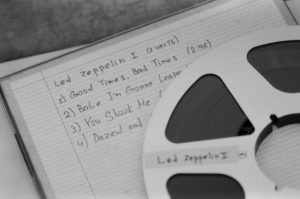
A Finnish thrash release often began in a rehearsal room: a rough recording, a small run of CDs, cassettes, or vinyl, and a label run by people who also booked shows, traded records, or played in bands. That modest scale was not a shortcoming. Between the late 2000s and the mid-2010s, independent labels gave local groups a practical route from private practice spaces to physical releases circulating in Finland and reaching specialist listeners elsewhere in Europe.
These labels did more than add a logo to an album sleeve. They helped turn recordings into identifiable releases: deciding whether a demo deserved a reissue, arranging mastering and artwork, funding manageable manufacturing runs, and sending copies to distributors, reviewers, radio programmes, promoters, and underground contacts. Their role mattered in a genre where the cassette-trading legacy, collectible formats, and trust built through live shows remained important.
What “independent label” meant in this scene
In Finnish thrash metal, an independent label did not follow a single business model. Some were small formal companies with distribution connections and catalogues covering several metal subgenres. Others were run alongside regular jobs, with each new title funded by previous sales. A band might establish its own imprint for an early cassette, CD, or digital release, then work with an outside label on a later album.
What these operations shared was proximity to the scene. Label operators often knew the audience because they belonged to it. They knew which underground shops stocked imported thrash, which festivals attracted collectors, which fanzines and webzines still took demos seriously, and which overseas labels might be open to a split release or stock exchange. For a new band, that local knowledge could matter more than a broad, impersonal promotional push.
Labels as curators rather than gatekeepers
Major-label priorities tend to centre on scale, predictable sales, and quick growth. Small thrash labels often had other reasons to release a record. A title could strengthen a coherent catalogue, document a promising regional band, or introduce an established underground name to new listeners. The label’s identity acted as a form of selection: listeners who trusted one release were likely to investigate the next.
This was especially useful during the revival-minded late 2000s. Finnish bands drawing on 1980s speed, sharp riff writing, raw vocals, and hand-made visual aesthetics did not need to chase the mainstream metal market. An independent label could frame that commitment to classic thrash as an artistic decision while leaving room for local production character and individual songwriting.
Turning recordings into durable objects
Physical media carried particular weight in this period. A carefully assembled tape, CD, or LP was more than merchandise at a show; it marked the completion of a defined statement. For listeners outside Finland, a physical copy could be the first dependable encounter with a band whose live set they might never see.
Labels made practical decisions that shaped the result:
- Format: cassette editions remained affordable and suited demos, while CDs and vinyl often fitted albums, reissues, and collector-focused titles.
- Pressing size: a modest run reduced financial risk and allowed demand to be tested without leaving a label with expensive unsold stock.
- Artwork and layout: covers, lyrics, credits, and photographs gave a release an identity and preserved basic documentation for later listeners.
- Sound preparation: labels could help arrange mixing, mastering, or manufacturing-ready files so a recording translated properly to its intended format.
- Cataloguing: catalogue numbers, release credits, and accurate track information made a record easier to trace in collections, reviews, and archives.
These details are easy to overlook when music can be accessed in a few clicks, yet they shaped how the scene remembered itself. A release with readable credits and a clear edition history is easier for collectors and researchers to distinguish from an unfinished demo upload or an undocumented rehearsal recording.
Risk-sharing between label and band
Independent releases were often built through negotiation rather than a standard industry contract. One label might pay for manufacturing while the band supplied finished masters and artwork. Another might split costs and copies, while a third handled distribution alone. Resources varied widely, but the relationship usually involved sharing practical risk.
| Release task | Possible label contribution | Possible band contribution |
|---|---|---|
| Recording | Advice, limited budget support, studio contacts | Studio time, preparation, finished performances |
| Manufacturing | Order placement and upfront payment | Shared costs or pre-orders where agreed |
| Artwork | Layout, production specifications, visual direction | Concept, artist selection, approval |
| Promotion | Press servicing, distributor notices, label channels | Band biography, photos, interviews, show activity |
| Sales | Mail order, stores, distribution partners | Merch table sales and direct audience contact |
The strength of this arrangement was flexibility. A new group did not have to carry every administrative and manufacturing task alone, while a label could support a band whose music and work ethic suited its catalogue. The limits were plain as well: small budgets could mean delays, short print runs, and limited advertising. Independent support did not remove uncertainty; it helped bands continue within realistic limits.
Distribution made a local release international
For Finnish thrash bands, specialist networks often carried records across borders more effectively than large export campaigns. Independent labels exchanged stock with counterparts abroad, supplied niche mail-order catalogues, and placed titles with metal-focused distributors. A record could move from a Finnish release show to collectors in Germany, Sweden, the United Kingdom, southern Europe, and further afield through a chain of small, attentive businesses.
That circulation produced useful feedback. Reviews, overseas orders, and contact with promoters showed bands that listeners beyond their home city were paying attention. It could support a later European run of dates, a festival appearance, or work with a foreign label. A label did not create those opportunities on its own, but distribution made a band easier to find and easier for promoters to assess.
Small editions also encouraged careful collecting. Scarcity should not be romanticised; it can frustrate listeners. Still, physical releases developed a concrete social life as fans compared pressings, searched for early demos, brought records to gigs for signatures, and shared recommendations through trusted contacts. The object and the community reinforced one another.
Labels and the live ecosystem
The link between labels and concerts was often direct. A label operator might attend local club bills, keep in touch with promoters, help arrange a release event, or make sure records reached a band’s merchandise table. A successful launch show did not need a large crowd. It needed the right listeners to hear the group, meet the musicians, and buy the release in the setting that gave it meaning.
Festival culture extended that reach. Metal festivals and smaller scene gatherings brought bands, labels, vendors, and listeners together despite the distances between their home towns. A distributor table could introduce a regional act to people already interested in underground thrash, while a well-timed performance gave the record a live counterpart. The connection between venue work and wider touring is explored in the account of Finnish thrash moving from club shows toward larger stages.
Independent labels also preserved a useful division of labour. Musicians could concentrate on rehearsals, song arrangements, and performance while someone else handled invoices, stock counts, shipping, press copies, and manufacturing correspondence. The work was rarely glamorous, but steady administration helped bands maintain momentum between shows.
Visual identity and historical continuity
Classic thrash has always involved more than fast tempos. Logos, cover art, typography, lyric sheets, and photographs set expectations before the needle drops or the disc begins. Finnish independent labels often treated these elements as part of the release rather than disposable packaging. Their editions could place a contemporary band in a recognisable lineage without pretending the past could simply be reproduced.
That mattered in a scene where listeners paid attention to details: whether an album carried the force of a live rhythm section, whether the cover matched the music’s intensity, whether credits named everyone involved, and whether the edition felt properly considered. A well-produced independent record signalled commitment even when the recording remained abrasive or deliberately rough-edged.
Visual and material choices also helped distinguish legitimate editions from undocumented copies. Clear credits, consistent catalogue information, and approved artwork give collectors a basis for identifying what a label and band intended to release. Respect for that chain of authorship helps explain why DIY was more than a low-budget substitute for conventional industry practice; the roots of DIY culture in Finnish thrash metal productions lie in control, mutual support, and accountable presentation.
Limits of the independent model
Independent labels could not guarantee press coverage, tour funding, or long-term financial security. Shipping costs, manufacturing minimums, and the time spent packing orders could consume much of a small operation’s capacity. Digital platforms widened access, but they also crowded the field, making focused selection and personal recommendations more important.
It would also be misleading to treat every Finnish thrash release as part of a label-centred system. Some bands self-released effectively, some worked with labels outside Finland, and some records remained local by choice. The scene endured because several routes existed at once: band-run releases, small domestic labels, foreign partners, promoters, venues, zines, and listeners willing to support music directly.
How to trace a label’s contribution
For collectors and historians, the release itself is the best starting point. Check the sleeve, booklet, label face, or official digital credits for the imprint name, catalogue number, manufacturing details, year, and distribution acknowledgements. Compare those details across editions before assuming that a reissue, a promotional copy, and an original pressing are identical.
When documenting a Finnish thrash title, record the exact format and edition information alongside the music: note whether it was a cassette demo, a CD album, a vinyl reissue, or a split release. Then identify the label credited on that particular edition instead of assigning every version to the same company. That small habit preserves the work of independent labels and gives future collectors a clearer record of how each release entered the scene.