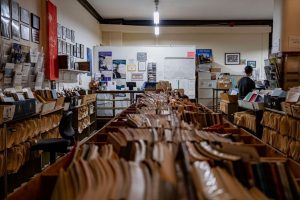
For a Finnish thrash band, reaching a larger stage was rarely a straight progression from the rehearsal room to a major bill. In the late 2000s and mid-2010s, most groups developed their live skills in small venues: short sets, borrowed backline, rushed changeovers, and crowds that often included members of the other bands on the bill. A well-received independent release could help open doors, but touring depended on practical ties with promoters, local scenes, labels, drivers and fellow bands prepared to share the risk of the road.
The phrase “from clubs to arenas” needs qualification. Finnish thrash groups were not generally arena headliners during this period. Larger stages came through support slots, multi-band metal events and festival bills, where a club-tested band could play to far more people than at its own headline shows. That distinction matters. A forty-minute afternoon festival set could carry as much weight as a packed local club date.
The club circuit as a working foundation
Finland’s metal infrastructure offered emerging bands a network of places to play rather than a single ladder leading to bigger rooms. Helsinki, Tampere, Turku, Jyväskylä, Oulu, Lahti and smaller regional centres supported different mixes of youth centres, cultural spaces, student events, bars, dedicated rock clubs and municipal halls. Venues came and went, but the basic opportunity remained: bands could perform before they had substantial press coverage or an established catalogue.
Early bills were often stylistically mixed. Thrash groups might share a night with death metal, traditional heavy metal, hardcore, crossover, speed metal or blackened acts. Limited booking options played a part, but so did the overlapping social world of Finnish underground metal. Listeners commonly followed several subgenres, while local musicians knew one another through rehearsals, record shops, gigs and online forums.
For a thrash band, a club set tested the essentials. Fast palm-muted riffs, sharp stops, shouted choruses, pointed solos and rhythmic precision only worked if transitions remained audible in difficult acoustics. A demo could capture aggression; a crowded small room quickly revealed loose timing, poor drum monitoring, buried vocals or a set list that moved at one pace for too long.
What smaller rooms taught bands
- Set construction: An opening song had to establish momentum at once, while the middle of the set needed shifts in tempo or groove to keep similar riffs from blurring together.
- Economy on stage: Long tuning breaks and elaborate introductions broke the flow. Bands learned to prepare instruments, cables and cues beforehand.
- Audience reading: A local crowd might know one song—or none. Clear choruses, direct communication and visible commitment helped unfamiliar material connect.
- Reliable performance: Promoters and touring partners remembered punctual load-ins, cooperative behaviour and bands that completed their allotted sets without trouble.
- Merchandise as contact: Physical demos, CDs, patches and shirts were more than income. They gave listeners something to take home and helped make the next show possible.
Early recordings and local concerts therefore developed side by side. Independent releases gave promoters something concrete to assess and gave audiences songs to recognise. Live performances, in turn, turned a small release into a reputation. For background on that formative recording culture, the blog’s history of Finnish thrash metal’s late-2000s underground revival traces the conditions from which many of these working bands emerged.

Touring was logistics before it was scale
The romantic image of touring can hide the ordinary decisions that shaped Finnish underground runs. Distances between cities are considerable, especially on routes heading north. Winter weather, limited budgets, work or study commitments, vehicle maintenance and equipment costs all affected what a band could realistically do. A group might play a short Finnish run around a release, add selected dates in nearby countries, or accept an overseas opportunity only when suitable support and affordable travel were in place.
In this setting, a “tour” did not always mean a long, uninterrupted sequence of dates. It could be a few weekend shows, a carefully planned regional run or several appearances around a festival. That model suited independent bands whose members often had jobs or studies outside music.
The practical anatomy of a small tour
| Tour element | Why it mattered |
|---|---|
| Shared transport | Splitting fuel, ferry and vehicle costs could make otherwise marginal dates viable. |
| Backline coordination | Borrowing cabinets or drums reduced freight, but required clear advance arrangements and compatible equipment. |
| Local promoter contact | A knowledgeable local partner could provide a suitable bill, realistic timetable and information about the room. |
| Merch planning | Physical releases and apparel helped offset travel costs, provided that stock was manageable and properly counted. |
| Rest and routing | Long drives before an early load-in affected performance; sensible routing was a musical concern as well as a financial one. |
Finland’s geography also made the Baltic Sea part of the touring equation. Links through Sweden, Estonia and the wider Nordic and Baltic region could be useful, but ferry timetables and costs demanded careful planning. For a small band, a badly timed crossing could wipe out the financial value of a show. The most workable trips often relied on reciprocal arrangements: Finnish bands joined bills abroad, while visiting groups received support when they came to Finland.
That reciprocity strengthened the European underground without the resources of major-label touring. Bands exchanged contacts, shared bills and circulated recordings through their own networks. Progress abroad came less through one decisive break than through repeated proof that a group could attract interest, perform consistently and be a dependable partner.
Support slots and festival bills: the real bridge to larger audiences
Club headline shows mattered, but they did not automatically bring large crowds. The clearest move toward bigger stages came when Finnish thrash bands appeared alongside established national or international acts. Support slots put a group in front of listeners who might never have sought out a new local thrash release. They also came with tighter conditions: limited set times, professional stage crews, fixed soundcheck procedures and little room for delay.
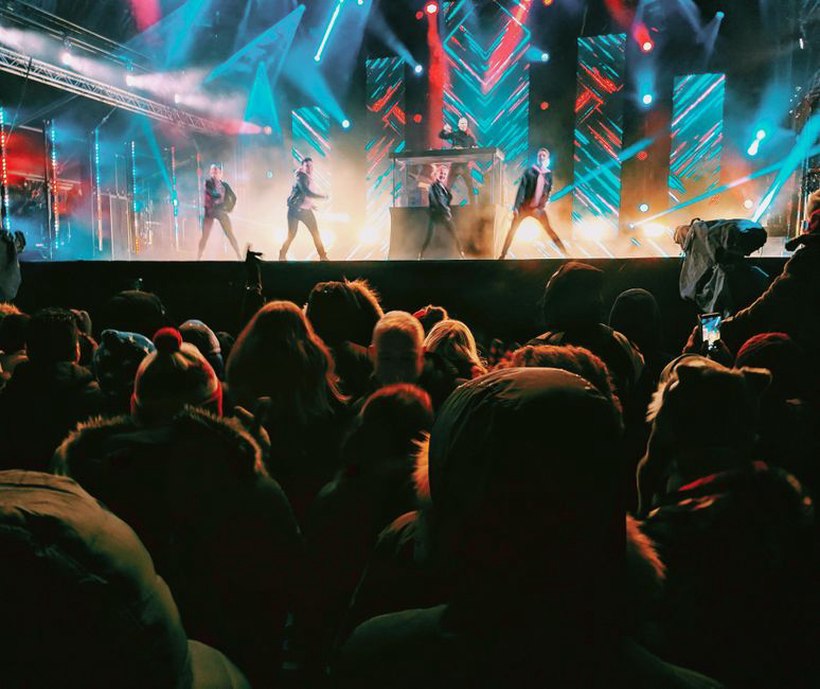
Large rooms changed the musical experience. In a small club, riffs and cymbals reach the audience almost immediately, and the crowd is physically close. At a festival stage or an arena-scale support show, distance, barriers and amplified sound create a different relationship. Musicians need broader visual cues, disciplined pacing and arrangements that remain clear through a larger PA. A fast thrash song that works in a low-ceilinged club may need a more defined introduction, cleaner vocal entries or a carefully placed stop to register across a wide outdoor field.
That did not require bands to soften their identity. The strongest performances carried club intensity into a larger setting through precision rather than spectacle. Tight downpicked rhythms, audible bass, decisive drum accents and choruses that could be understood on first hearing all travelled well. Finnish thrash’s connection to classic 1980s forms—speed, controlled aggression, technical confidence and memorable riff writing—gave bands tools for both settings.
Festival appearances also had documentary value. A small-band slot on a broad metal bill could put a name in front of foreign fans, independent labels, zine writers and fellow musicians in a single day. Exposure, however, was never automatic. A festival set could prompt interest, but turning that interest into lasting support required records that remained available, follow-up dates and continued contact with listeners.
The arena idea: visibility, not a simple measure of success
Large-scale events hold a strong symbolic place in metal history, but they can distort the record of a local scene. A band opening at a major venue is not the same as a band selling that venue under its own name. Both can matter, yet they represent different levels of commercial reach, bargaining power and audience ownership.
For Finnish thrash acts of this era, a major support slot could be a concentrated test of readiness: arriving on time, fitting a short programme into a demanding production schedule, using the stage effectively and making an impression on people who had come primarily for another act. It offered visibility within a wider metal community, not proof that the band had left the underground behind.
The distinction also prevents club culture from being dismissed as a preliminary phase. Smaller rooms remained where new material was tested, scene friendships renewed, foreign visitors welcomed and local listeners able to see bands at close range. Even groups that reached larger bills often returned to clubs because those rooms remained central to their audience and finances.
Records, aesthetics and the live identity
Touring was tied to a band’s visual and recorded identity. Cassette-era references, hand-drawn logos, stark cover art, denim-and-patch aesthetics, physical formats and devotion to classic thrash technique created a recognisable cultural language. These were not interchangeable fashion choices. They signalled an affinity with older metal traditions while placing a newer Finnish generation within an international underground.
At the merchandise table, that language became physical. Someone seeing a band for the first time could buy a demo, EP, album or shirt and carry that encounter to another city or country. For collectors, different editions and independent releases document a group’s movement from early songs to a fuller live repertoire. Buying official copies at shows or through legitimate band and label channels provides direct support without relying on unauthorised distribution.
Lyrics and stage presentation mattered too. Finnish thrash had no single thematic formula: some bands focused on social criticism, horror, warfare, personal pressure or old-school genre imagery. What linked many live sets was directness. Thrash rewards songs that establish their core riff, refrain and rhythmic impact quickly, especially when a band has only half an hour to win over unfamiliar listeners. The relationship between lyrical material and the genre’s wider expressive traditions is explored in the blog’s examination of storytelling in Finnish thrash metal.
How to reconstruct a tour history responsibly
Live history is easy to overstate. Posters disappear, social-media event pages change, venue calendars are incomplete, and later recollections can merge several dates into one memory. For collectors and researchers, a cautious method is more useful than an impressive-looking but unreliable itinerary.
- Start with primary artifacts. Official posters, ticket stubs, venue programmes, band announcements and photographs with identifiable context are stronger evidence than unsourced list entries.
- Cross-check the date and bill. Compare a band’s announcement with venue records, promoter material or contemporary coverage whenever possible.
- Separate confirmed appearances from planned ones. A posted date may have been cancelled, moved or played with a changed lineup.
- Record uncertainty plainly. If only the city or month is established, do not invent a precise day, venue or support act.
- Preserve context. Note whether the performance was a headline show, festival slot, release event, support appearance or shared local bill.
A useful personal archive can be simple: scan both sides of a ticket, photograph a poster without obscuring its text, keep official set lists only when their origin is known, and add a brief note identifying the venue, date and performers. Those details preserve the difference between a basement-room debut, a regional weekend run and a short appearance on a major metal bill—the real steps by which Finnish thrash moved through its live circuit.