Finnish thrash in the late 2000s and early 2010s wore its 1980s loyalties openly: sharp down-picked riffs, tightly locked drums, shouted choruses, denim-and-patch aesthetics, and a preference for physical releases. Yet the revival was never as narrow as that image suggests. Within a relatively compact scene, musicians stretched the form through unusual arrangements, melodic writing, progressive structures, and production choices that left more room around the instruments than a blunt retro label would imply.
This experimentation rarely meant abandoning thrash. More often, it came from applying pressure within the style. A band could keep the fast palm-muted guitar work and direct verse-chorus attack, then turn into an off-kilter break, an extended instrumental section, harmonized leads, or a much slower ending. Those choices separate exploration within thrash from simple genre-hopping.
Experiment within a revivalist framework
Finland’s thrash resurgence emerged in a heavy-music culture already familiar with adjacent styles. Death metal, melodic metal, hardcore, classic heavy metal, punk, and progressive rock all formed part of the local listening vocabulary. Young thrash musicians encountered those influences in record collections, rehearsal rooms, small festivals, and mixed-bill club shows rather than as distant theoretical categories.
In this setting, “experimental” does not necessarily mean avant-garde technique, electronics, or a rejection of songcraft. It can mean giving familiar thrash devices an unexpected role. A riff may return as a motif instead of functioning as a disposable verse figure. A solo may extend an arrangement’s tension rather than arrive as an obligatory interruption. Clean guitar, acoustic texture, or a melodic bass introduction can establish contrast before the distortion comes back.
The independent conditions of the period mattered as well. Demos, EPs, self-financed albums, and releases on smaller labels gave groups space to try ideas without having to meet radio expectations or fit a major-label campaign. Practical constraints remained—recording time, available equipment, and the need to build an audience all affected the finished work—but the demo and early-album stage could still be fertile ground for stylistic trial.
Where the experimentation can be heard
Riff design beyond constant velocity
Classic thrash is associated with relentless momentum, but speed is not its only musical resource. Finnish bands often used contrast to make fast passages hit with greater force. A song might begin at a measured pace, build tension through muted single-note figures, and then break into a faster riff. Elsewhere, a rapid section might stop for a half-time passage built on a heavier, more spacious guitar pattern.
That approach changes how a song is composed. Rather than treating every riff as interchangeable fuel for a mosh-friendly tempo, players can give each section a clear purpose: introduction, escalation, disruption, reprise, or resolution. Meter changes, syncopated accents, and stops between phrases become structural tools. The music remains recognizably thrash while avoiding the feeling of racing through identical blocks.
Melody as tension, not decoration
Melodic lead guitar had long been part of metal, and Finnish musicians worked within a strong regional tradition of fluent lead playing. In more exploratory thrash writing, melody often complicates the emotional temperature of aggressive material. Twin-guitar harmonies, minor-key themes, and carefully voiced arpeggios can lend a reflective or dramatic edge while the rhythm section continues to drive with thrash intensity.
That does not place every melodic passage in melodic death metal or power metal. Placement and function matter. In thrash, a lead phrase can sit above a churning riff, cut across a violent rhythmic pattern, or return after a chaotic middle section as a familiar signpost. When it is integrated into the rhythm writing rather than added as ornament, it alters the song’s shape.
Progressive habits in compact songs
Progressive influence is often easiest to spot in longer tracks, but length is not the only indicator. Finnish thrash groups could bring progressive habits into concise songs through recurring themes, shifting rhythmic emphasis, unconventional transitions, and arrangements without one obvious chorus. A short track may contain several distinct riffs linked by a clear musical relationship rather than a standard verse-and-chorus cycle.
This writing demands a great deal from performers. Fast thrash already depends on close coordination; irregular phrase lengths and sharply timed transitions add another challenge. The strongest results retain physical impact. An intricate section that lacks purpose can feel like a technical detour. One that builds anticipation for the return of a central riff expands the song without blunting its attack.
Production as an experimental decision
Production does more than document a performance. During this period, it could be part of the musical experiment. A raw mix may emphasize aggression and rehearsal-room immediacy, while a clearer production can reveal contrapuntal guitars, bass movement, cymbal detail, and layered vocal parts. Neither approach is inherently more authentic; the important question is whether the sound serves the arrangement.
Several contrasts are especially useful when listening to underground thrash recordings:
- Dry rhythm guitars can make abrupt stops and angular riffs feel more severe.
- Audible bass can turn a mid-tempo bridge into a distinct melodic event rather than a pause between guitar riffs.
- Controlled room ambience can give tom-heavy passages scale without softening their punch.
- Selective vocal layering can make a refrain feel communal while leaving verses direct and abrasive.
- Dynamic space lets a quiet opening or sparse breakdown register before the full-volume instruments return.
These details matter to collectors comparing formats. A cassette demo, a first CD pressing, and a later vinyl edition may present the same performance with different emphasis because of mastering decisions, source limitations, or format characteristics. Documentation should separate confirmed edition differences from assumptions based on playback equipment or informal recollection.
Useful reference points: Stone and the next generation
Stone remains an important historical reference because its 1980s work showed that Finnish thrash did not need to be a narrow copy of American templates. The band combined technically alert riffing, melodic awareness, and structural movement in ways later musicians could regard as a local precedent. It did not prescribe one sound, but it made stylistic ambition compatible with thrash identity.
Late-2000s and early-2010s groups faced a different challenge. Revival culture rewarded obvious signs of loyalty to older thrash, while bands still needed a recognizable musical character. Some pursued increasingly polished musicianship; others leaned into punkier abrasion, darker harmony, or arrangements closer to progressive metal while retaining thrash’s rhythmic core. Lost Society’s early emergence pointed to another route: energetic, technically capable, crossover-minded thrash delivered with the confidence of a younger generation, although the emphasis differs across individual songs and releases.
The broader band histories behind these approaches are addressed in the rise of Finnish thrash metal bands, which places individual groups within the development of the scene. These traits are easier to hear when considered alongside changing line-ups, rehearsal resources, and access to recording opportunities instead of as isolated stylistic gestures.
Live performance: what survived the room
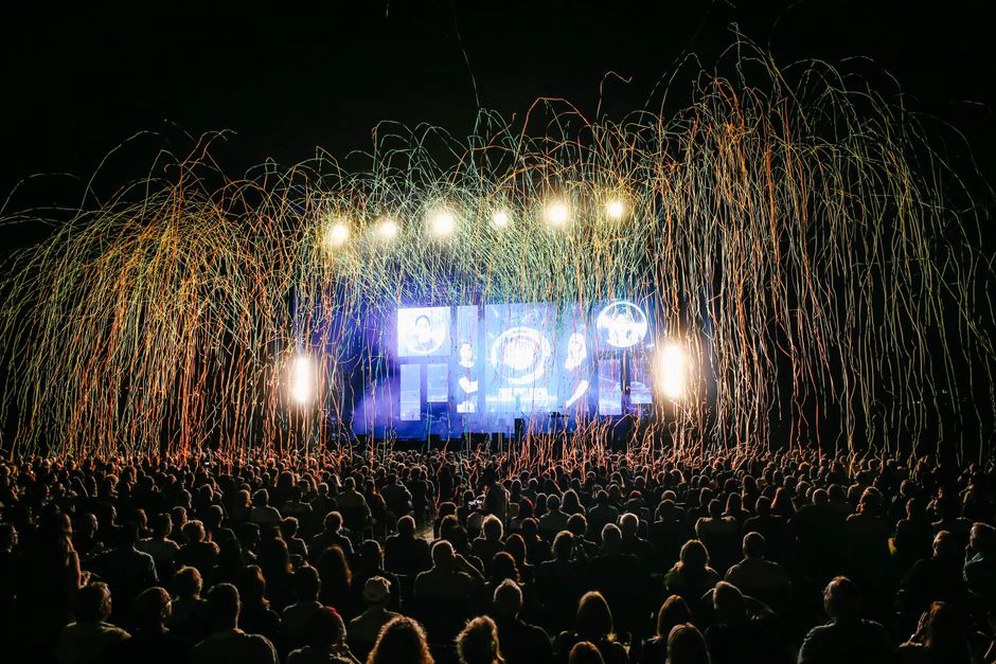
Small-club performance was a serious test for ambitious arrangements. A passage that made sense after overdubs still had to work at stage volume, with limited monitoring, quick instrument changes, and an audience reacting in real time. Musicians had good reason to keep difficult material legible: a decisive cue before a tempo change, a memorable central riff, or a rhythm section that clearly signals a return after a solo.
Experimental writing was not necessarily less physical onstage. Tempo shifts could provoke stronger crowd movement than uninterrupted speed, and a well-timed pause could make a returning riff feel larger. The relationship between set construction, performance energy, and club conditions is explored in Finnish Thrash Metal Live: Stage Presence, Setlists, and Club Culture. In a crowded room, the most effective unusual arrangements were often those listeners could feel before they could explain them.
How to listen for the experimental layer
A focused listening method helps distinguish real compositional choices from the surface signals of retro production. Begin with the full track rather than skipping straight to a solo or chorus, then follow how its musical material returns and changes.
- Identify the anchor riff. Listen for the figure that gives the song its central identity.
- Map the departures. Note whether slower sections, lead passages, or tempo changes develop the anchor riff or merely replace it.
- Follow the bass and drums. Check whether they simply reinforce the guitar rhythms or introduce independent movement and altered accents.
- Assess the transition. A surprising change works best when it creates tension, contrast, or a clear point of return.
- Compare studio and live versions where official recordings exist. This can show which details were fundamental to the arrangement and which relied on studio layering.
A compact vocabulary for describing records accurately
| Term | What to listen for | What it does not automatically mean |
|---|---|---|
| Progressive | Motivic development, unusual transitions, irregular phrasing, structural variety | Long songs or constant complexity |
| Melodic | Memorable lead themes, harmonies, shaped minor-key lines | Softness or reduced aggression |
| Crossover-inflected | Punk/hardcore attack, concise riffs, gang vocals, direct rhythmic impact | A lack of instrumental skill |
| Atmospheric | Dynamic space, clean textures, sustained chords, deliberate ambience | Keyboard-led music or a departure from metal |
| Technical | Demanding synchronization, dense riffing, precise changes, advanced lead work | Strong songwriting by itself |
For archival listening, keep release details tied to the specific recording: format, label or self-release status, catalogue information where available, and whether a live version is official. Then describe one audible moment precisely—perhaps a half-time bridge that reworks the opening rhythm or a harmonized lead that returns after the solo—instead of calling a record experimental without musical evidence.