A Finnish thrash song can hit hard without turning into a blur. Its aggression often comes down to audible choices: a tightly muted guitar figure, a snare crack placed against the beat, a bass line that supports rather than vanishes beneath the riff, and vocals that work as percussion as much as language. During the late-2000s to mid-2010s revival, that clarity let Finnish bands use a familiar thrash vocabulary without merely copying the past.
Speed and abrasion have always mattered in thrash, but neither is enough on its own. Finnish groups working in the style often treated aggression as an arrangement question: when should a riff sprint, when should it stop, when should a chorus widen, and how much roughness can a song absorb before it loses its shape? The strongest recordings from the period create pressure and momentum while keeping their guitar phrases memorable and their section changes clear.
Aggression as Construction, Not Just Tempo
Fast tempos are a familiar part of thrash, especially in passages built on continuous down-picked rhythms and rapid hi-hat or ride patterns. But speed is only one source of force. A mid-tempo riff can feel heavier than a faster one when the band leaves space around a chord, locks its accents together, and lets the drums emphasize the stop-start motion. Finnish thrash often found its weight in that tension between forward rush and sudden restraint.
The basic toolkit was recognizable: palm-muted low-string riffs, chromatic movement, minor-key tension, brisk eighth- or sixteenth-note picking, pointed lead-guitar breaks, and forceful vocals. What counted was how those parts related to one another. If every instrument attacks at full density for an entire song, the impact soon levels out. A tightly locked verse, a broader chorus, a half-time break, and a return to a fast riff with a slight melodic change can make the aggression feel earned rather than constant.
The mechanics of a hard-hitting thrash arrangement
- Accent placement: Riffs feel physical when guitars, bass, and kick drum agree on where the weight falls.
- Rhythmic contrast: A gallop, a straight chug, and a half-time section produce different kinds of force even at similar tempos.
- Economical repetition: A riff needs enough repetition to establish its identity, while altered ending notes or drum fills keep it from becoming inert.
- Controlled dissonance: Chromatic intervals and brief atonal phrases create unease when they sit inside a clear rhythmic pattern.
- Purposeful leads: A solo can be chaotic, melodic, or both, but it should raise the song’s tension rather than interrupt it.
This attention to arrangement also helps explain why Finnish thrash could exist alongside the country’s better-known melodic death metal, black metal, doom, and traditional heavy-metal scenes without resembling any of them too closely. The musicians shared an appetite for precision and strong playing, while thrash placed the emphasis on kinetic riffing, punk-derived urgency, and direct physical contact with an audience.
From the 1980s Foundation to the Revival Generation
Finnish thrash did not begin with the late-2000s revival. Stone, active in the 1980s, provided an important domestic reference point through technically capable, riff-led thrash that could hold its own beside international records of the time. National Napalm Syndicate represented another side of the early Finnish underground, showing the rougher, more extreme end of the country’s metal network. Their role is covered in greater detail in this study of influential Finnish thrash musicians, including Stone and National Napalm Syndicate.
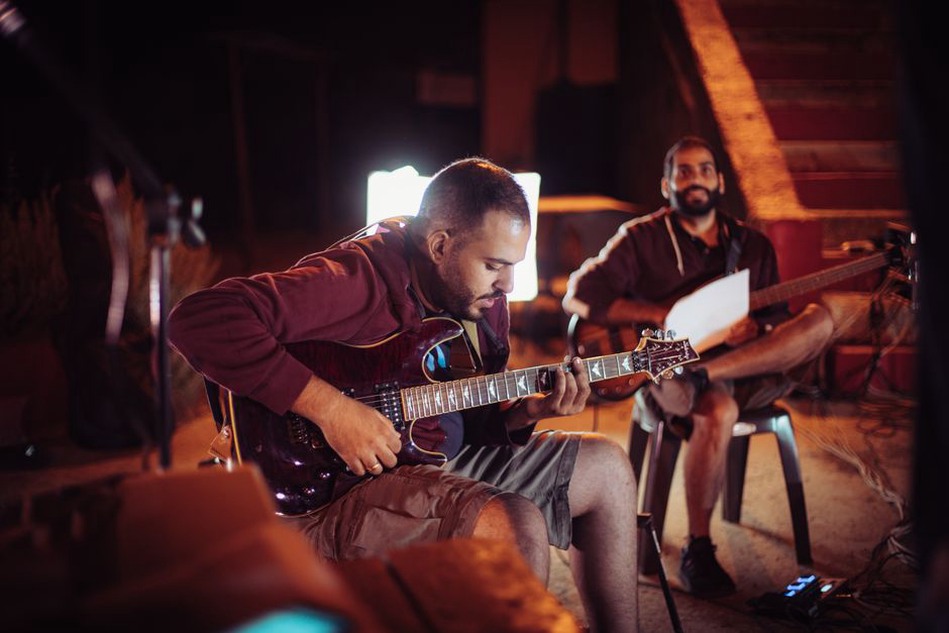
For later bands, the earlier era was not simply a catalogue to reproduce. Classic thrash offered a working language: the precision of Bay Area riffing, the harsher attack associated with German thrash, crossover urgency, and the structural possibilities of traditional heavy metal. Finnish musicians drew on those elements according to their strengths. Some favored crisp, technical guitar work; others went for a rawer, more punk-inflected attack. Either approach could sound convincing when played with commitment.
The revival developed within a wider international movement. Physical formats, small labels, rehearsal-room demos, online communication, and touring networks helped listeners find younger bands that openly acknowledged the 1980s. Finland did not produce one fixed national sound. Instead, it produced local approaches tied together by disciplined playing, underground infrastructure, and intense live performance.
Voices, Words, and the Human Edge
There was no single approved vocal style in Finnish thrash. Singers barked, shouted, rasped, snarled, or used a relatively clear high register. What mattered was rhythmic authority. Strong vocal lines lock into the riff’s accents, sometimes landing slightly ahead of the beat to sharpen the urgency and sometimes stretching across a bar to create friction with the instruments.
English was common because it connected Finnish groups to international thrash traditions and wider European audiences. Finnish-language material, where used, could bring a different rhythmic feel and a stronger local character. Neither language was inherently more authentic. Delivery, phrasing, and the intelligibility of the words mattered more.
Lyrical themes shaped the music’s aggression as well. War, social pressure, environmental ruin, alienation, political hypocrisy, intoxication, horror imagery, and personal confrontation all appeared across thrash. The most effective writing relies on specific images and forceful verbs rather than broad declarations of anger. A vocal performance hits harder when the lyric gives it something concrete to attack.
Guitar Tone: Sharp Edges Rather Than a Wall of Blur
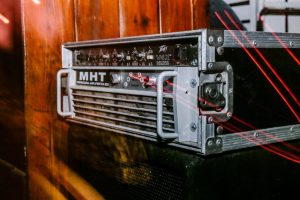
Thrash guitar tone is often mistaken for a search for maximum distortion. Too much gain can bury the details that make a riff forceful: pick attack, muted-string articulation, chord changes, and the difference between open notes and rests. Many Finnish thrash recordings from the period benefited from saturated but relatively dry, defined tones. The guitars carried enough weight for fast rhythms while leaving the picking audible.
Double-tracked rhythm guitars added width, but only when the performances were disciplined. Small differences between the left and right takes give a recording life; noticeable timing drift softens the attack. Bass mattered just as much. A tone with low-end body and some midrange edge could reinforce the rhythm while retaining its own place in the mix, especially during transitions and slower breaks.
| Element | Contribution to aggression | Common risk |
|---|---|---|
| Rhythm guitar | Defines the riff’s attack and momentum | Too much gain masks articulation |
| Bass guitar | Adds impact and clarifies the riff’s contour | Being mixed too low removes punch |
| Kick drum | Turns picking patterns into physical propulsion | Over-triggered sound can feel detached |
| Snare drum | Marks the song’s central удар and transitions | An overly softened snare reduces urgency |
| Vocals | Adds command, menace, and rhythmic punctuation | Constant yelling without phrasing becomes flat |
Production decisions were especially important on smaller independent releases. A polished result was not automatically stronger; a sterile mix could strip away the dangerous edge of a performance. Raw sound, meanwhile, was not proof of underground credibility. Good DIY or low-budget recordings still needed balance: listeners had to hear the riffs, follow the structure, and feel the rhythm section operating as a unit.
Live Aggression and the Social Space of Thrash
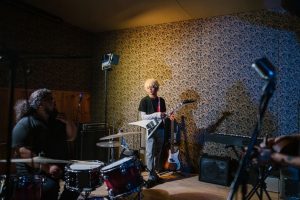
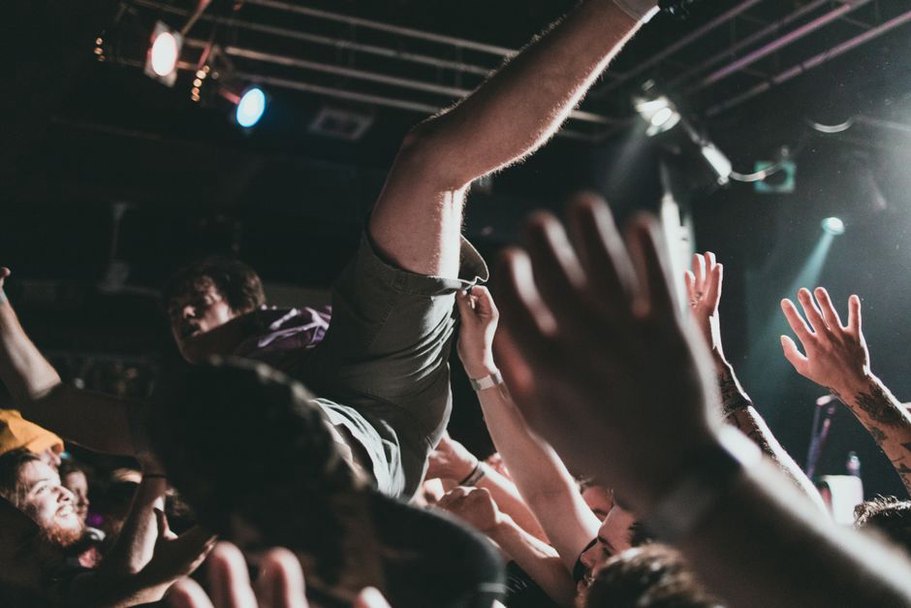
Thrash is easiest to read in a small venue. The feedback between players and audience quickly shows whether a band can hold a fast tempo, recover after transitions, and make a breakdown land without studio editing. In Finnish club settings, aggression could become communal rather than merely theatrical: a compact crowd, a low stage, little distance between musicians and listeners, and a set built around recognizable riffs encouraged an immediate response.
Moshing, headbanging, shouted choruses, and conversations at the merchandise table were part of that experience, not separate from the music. They tested the arrangements. A riff that set people moving usually had clear accents and a memorable rhythmic profile. A chorus shouted back from the floor was often simple enough to register after one or two listens. Those reactions could influence how bands refined songs before recording them.
European touring broadened the exchange. Finnish groups sharing bills with acts from Sweden, Germany, the Baltic region, Central Europe, and elsewhere met audiences with different expectations of speed, stagecraft, and set pacing. Festival appearances could bring exposure, but club dates and support slots often provided the more useful education: loading gear, playing unfamiliar rooms, sharing backline arrangements, and earning attention before the crowd knew the songs.
Why set pacing matters
A convincing live set does not need every song to be the fastest one available. Bands often make a greater impact by sequencing tempos and textures with care. Opening with a decisive, recognizable riff establishes confidence. A heavier half-time song in the middle of the set can reset the room. A brief guitar lead, bass introduction, or cleanly executed pause gives the audience time to anticipate the next attack. The final song benefits from a riff that lands immediately, rather than an arrangement so intricate that its force disappears in a noisy room.
Independence, Physical Releases, and the Value of Evidence
The independent nature of the era is central to its music. Demos, self-financed EPs, small-run CDs, cassettes, vinyl editions, and locally organized shows allowed bands to document material before a major industry framework became involved. These releases were more than containers for songs. Credits, recording information, artwork, catalogue numbers, and acknowledgements preserve evidence of who played, where sessions took place, and how a group presented itself at a given moment.
Collectors and researchers should treat that evidence carefully. A demo title may circulate online with conflicting dates, track names, or artwork scans. The most reliable starting points are the object itself and contemporary documentation: liner notes, band statements, distributor catalogues, show flyers, dated interviews, and reviews published at the time. Later database entries can help, but they should not replace primary material when the facts conflict.
A simple archival record for a Finnish thrash release should include:
- Band name, release title, and exact format.
- Label name or a clear indication that the edition was self-released.
- Catalogue number, matrix information, or other identifying markings where present.
- Track listing transcribed from the physical item.
- Credits, recording location, and production details exactly as printed.
- Source and date for later corrections or added context.
This care is particularly useful for short-lived projects and limited editions. It keeps a scene’s history from being reduced to its best-known albums while avoiding the opposite mistake of treating unverified recollections as settled fact.
The Limits of the Revival Label
Calling a band part of a “revival” can be useful, but it can also hide important differences. The term usually points to a visible return to classic thrash forms: prominent riffs, old-school logos or cover art, physical releases, and an openly acknowledged 1980s lineage. It says little about whether the music is crossover-oriented, technical, melodic, blackened, death-thrash, or as rooted in traditional heavy metal as in punk.
Finnish bands of the late 2000s and early 2010s occupied that full range. Lost Society, for example, brought youthful energy and a direct attack to an international audience, while other projects stayed locally focused or worked along the borders between thrash and neighboring extreme-metal styles. The value of the scene lies partly in that unevenness. Bands did not need identical aesthetics to share venues, listeners, recording practices, and a commitment to riff-based intensity.
To build a grounded picture of the period, compare different forms of aggression rather than looking for a single national formula. Put a raw demo beside a carefully produced album. Compare a fast opener with a slower closing track. Listen for whether the bass shadows the guitar or pushes against it, and note how the singer changes phrasing in a chorus. When cataloguing a physical release, preserve the printed details before adding interpretation: the catalogue number and exact credits often offer firmer evidence than retrospective labels.