
Put Stone’s 1988 debut beside Lost Society’s Fast Loud Death from 2013 and the shared thrash vocabulary is easy to hear: clipped riffs, sudden shifts in emphasis, urgent vocals. The records are hardly interchangeable. Stone’s intricate arrangements came out of Finland’s first thrash generation. Lost Society entered a scene where those records sat alongside American and German thrash, modern studio production and festival stages. “Traditional versus modern” helps describe the distance between the albums, but it does not divide them into separate kinds of Finnish metal.
Some Finnish bands recorded during thrash’s first international surge; others encountered it as an established tradition. Mokoma complicates that timeline. Formed in the 1990s, the band grew heavier and more thrash-oriented over subsequent releases without simply recreating an 1980s sound. In each case, the meeting of old and new is heard in riffs, rhythms, vocals and production, rather than in one conspicuously new feature bolted onto an old-style song.
What counts as the traditional foundation?
Speed is only part of classic thrash. Much of its force comes from the fit between a sharply articulated guitar riff and the drum part driving it forward. Palm-muted low strings make a short figure percussive; an open chord at the end releases the tension. Shift an accent, shorten the phrase or drop into a slower section, and the same basic tools produce a different effect. They remain audible in Finnish thrash even as guitar tones and recording methods change.
For musicians coming of age in the late 2000s and early 2010s, that vocabulary had several sources. American thrash offered sharply defined riffs and changes of pace; German thrash offered forceful models of speed and vocal attack. Earlier Finnish records provided a local precedent, though no single national sound. Stone, for example, showed how demanding precision and unexpected turns could work inside aggressive music. A younger band could draw on that example while using tones and arrangements shaped by later metal.
“Old school” works better as a description of a choice than of an entire band. A compact, fast song with a shouted refrain may recall early thrash, while its tightly edited drums and layered guitars sound unmistakably later. Both observations can be true.
Where the newer influences enter
Weight, groove and space
Modern metal offered ways to make a thrash riff heavier without making it faster. A slower, low-register pattern locked tightly to the drums can carry physical weight; a short pause before the return to full speed may do more than another bar of rapid picking. “Groove” is useful here when it names an audible change in pulse: forward-driving eighth notes give way to accents with space around the beat.
Mokoma shows why a Finnish band associated with thrash need not fit a revivalist model. Its heavier recordings retain thrash’s rhythmic attack while making room for other metal textures and Finnish-language vocals. Language affects the music as well as the lyrics: Finnish syllable stress and consonants influence where a line falls against the guitar. It is not simply English-language thrash phrasing with different words.
Lost Society took another route. Its early recordings put the speed, brashness and direct impact of classic thrash up front, with the clarity and force of a 2010s metal release. The production does not erase the older influences. Nor does an old-school riff tell the whole story of how a record was made.
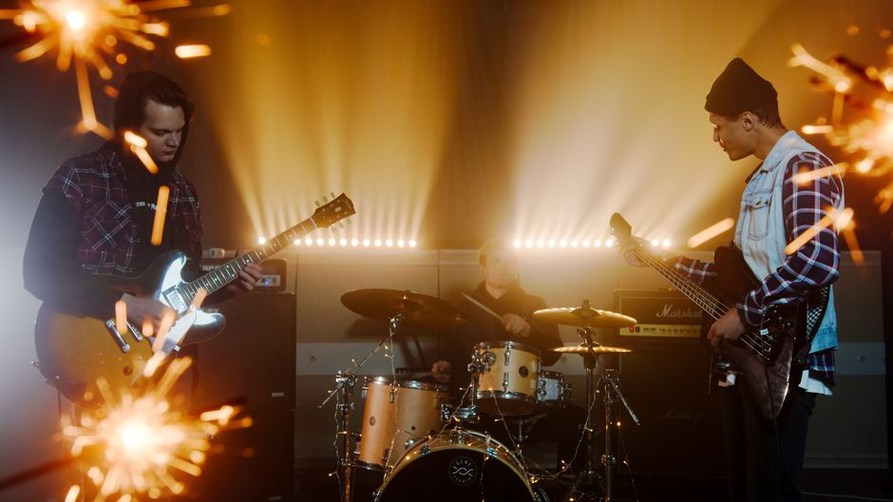
Production as an arrangement choice
Production changes what a listener can follow. Separation between instruments makes a fast bass-drum pattern easier to hear beneath competing guitar parts. Controlled distortion keeps rapid picking distinct; too much low end blurs it. A rougher recording, meanwhile, may better convey a band pushing together, even if individual notes are harder to pick out. Rather than asking whether a release sounds “authentic” or “modern,” ask what its sound allows the riffs to do.
That matters when comparing a band’s rehearsal recording, self-released demo and studio album. Similar riffs may come across with different accents. Cleaner production might reveal complexity that was there all along, or make a simple refrain hit harder against tightly controlled verses. The release date alone cannot tell you which happened.
Fusion happens within songs, not just across discographies
Often the best comparison starts with a single song. Listen for the point where its governing rhythm shifts. Rapid picking and a skank beat may give way to short, low-register accents, before the opening riff returns over a different drum pattern. Older and newer approaches are not necessarily separate layers; they can change how the same riff feels.
Three details help pin down that interaction:
- Riff length: Short repeated figures bring immediate force; longer phrases leave room for the turns associated with more technical metal.
- Drum placement: A snare accent or a change in kick-drum density can make a fast guitar pattern feel either rushing or more grounded.
- Vocal space: A shouted line that follows the riff closely has a different effect from one that stretches across pauses or answers the guitar between phrases.
These are ways to listen, not rules for sorting bands. Intricate riffs are not automatically modern, and concise choruses do not necessarily come from the 1980s. Early thrash could be complex; later musicians could choose simplicity. What matters is the balance struck on a particular recording.
The scene behind the sound
Venues and release formats shaped Finnish thrash in the late 2000s and early 2010s. Local shows let bands test whether carefully built passages still carried at live volume. A transition that sounds clear in a studio mix may need a stronger rhythmic cue onstage; a brief break on record can give a room a chance to respond together. That helps explain the lasting value of speed paired with rhythmic clarity, even as guitar tones grew denser.
Independent releases made room for different approaches. A demo might establish a band’s identity before a full-length album, while a later recording could refine familiar material rather than mark a sudden change in style. Better production or distribution did not necessarily mean the band had adopted new musical priorities.
Festivals and European tours also put Finnish groups before listeners who knew thrash from several countries. An immediately recognizable riff, a sharp change of pace or energetic stage delivery could communicate across those audiences without making every Finnish act sound alike. On a mixed metal bill, a thrash group might also reach people drawn mainly to death metal or other heavier styles. That creates a setting for exchange; claiming that one band adopted another’s sound would take more evidence than a shared stage.
Recordings cannot show every live decision. Layered guitars may give an album its weight, but a smaller touring lineup has to carry the composition differently. Bass placement, drum accents and the choice of guitar line at a transition become crucial. Those decisions bring traditional thrash economy into contact with modern metal’s taste for density.

Avoiding the idea of one Finnish thrash sound
Nationality tells us where these musicians worked, not how they had to sound. Stone’s legacy, Mokoma’s development and Lost Society’s early-2010s recordings each relate to thrash tradition differently. Ranking them from “pure” to “modern” misses both the experimentation in earlier Finnish metal and the deliberate use of familiar thrash forms by later bands.
Neighbouring styles complicate the picture further. Harsher vocals may suggest extreme metal; a blunt, brief passage may carry some punk energy. Neither detail establishes a band’s whole lineage. The connections between punk and Finnish thrash are clearest in pace, directness and performance attitude, not in treating the genres as interchangeable.
Visual cues need the same care. Denim, bullet belts, hand-drawn logos and artwork recalling earlier thrash can signal an affinity with the past. They say little on their own about editing, tuning or groove-oriented song structures. Polished cover art, likewise, does not mean a band has abandoned traditional riff writing. Sound, presentation and release circumstances offer different kinds of evidence.
How to compare the records without flattening them
Start with matched passages rather than broad labels. Pick a fast section from an earlier Finnish thrash record and one from a later release. Does the guitar sustain notes or stop sharply between them? Where does the snare fall? Can you hear the bass following the guitar or moving away from it? Then compare the slower sections, where available. Those details say more about continuity and change than speed alone.
Check the release information, too. An album’s year tells you when listeners could encounter that recording, not when every riff was written. Credits can establish who played and produced it; an earlier demo may reveal how an arrangement changed. Pressings or digital editions can differ in mix or track sequence, so name the version before treating it as representative. Otherwise, two collectors may be describing different presentations of the same material.
For a short listening sequence, try a track from Stone’s self-titled debut, then a heavier Mokoma recording, then a track from Fast Loud Death. Jot down the main riff accent, the point where the tempo or rhythmic feel changes, and how much room the vocals leave for the instruments. Those notes give you something concrete to compare without making any one record stand for the whole Finnish scene.