
A Finnish thrash release in the late 2000s was often a chain of personal commitments rather than a conventional product. The band paid for studio time, someone prepared the artwork, a small imprint arranged duplication or pressing, and copies moved through gigs, mail orders, and musicians’ networks. That scale did not indicate a weak scene. It was the working infrastructure that let recordings exist without major-label backing.
For thrash bands active between the late 2000s and mid-2010s, the independent market included small labels, artist-run imprints, distributors, promoters, record shops, and dedicated listeners. Its value was as much about control as reach. A band could decide how raw or polished a record should sound, retain its visual identity, issue a limited physical edition, and build an audience gradually rather than reshape itself for a wider market.
What “label” meant in a small Finnish thrash context
It is misleading to picture every independent label as a staffed company with a stable catalogue and formal departments. Some Finnish metal imprints maintained ongoing rosters and distribution relationships; others were one-person operations sustained by enthusiasm, practical knowledge, and contacts. A label might pay for a pressing, coordinate manufacturing, send promotional copies, and secure a place in a mail-order list. It could also be a name on the back sleeve chosen by the band to give a release administrative and visual coherence.
That flexibility mattered. Thrash belonged to a wider Finnish underground where death metal, black metal, hardcore, speed metal, and traditional heavy metal often shared bills, rehearsal-room acquaintances, and collectors. Rather than serving one narrow genre, an imprint could use those overlaps to place a fast, riff-driven thrash record before listeners already buying related material.
The historical lineage was clear. Finland’s earlier metal culture had already shown that extreme music could develop outside mainstream industry structures; the Wikipedia overview of Finnish music places heavy metal among the country’s significant modern musical currents. Revival-era thrash labels inherited that habit of self-organization while working with affordable digital layout, online announcements, social-media contact, and faster international communication.
Physical formats were part of the label’s work
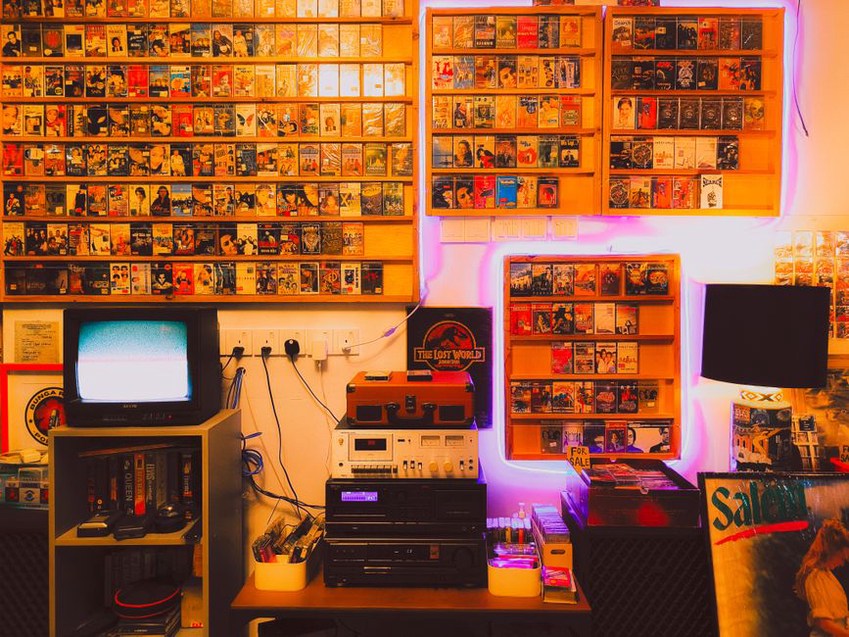
CDs remained practical: durable, comparatively affordable, and easy to sell at shows. Cassettes carried a stronger symbolic and collector-oriented appeal, making them suitable for demos, short runs, rehearsal material, and deliberately old-school presentation. Vinyl had archival appeal and prestige, but its higher cost and longer production cycle made it a greater risk for a small operation. The question was whether the expected audience justified the format, not simply whether it looked desirable.
Why limited editions made sense
Short editions were not automatically marketing devices. They were a way to manage uncertainty. A carefully judged run kept scarce money from being tied up in unsold stock while giving listeners a tangible object worth keeping. Numbered copies, alternate covers, lyric sheets, patches, and coloured vinyl could add to the appeal, but the recording and its documentation remained central.
- Demo tapes could establish a band’s first identity and circulate cheaply among committed listeners.
- EPs allowed a label to test demand without the financial exposure of a full album.
- Albums gave groups a stronger basis for reviews, booking pitches, and European contacts.
- Reissues could rescue small-run material after an audience had grown, provided rights and source material were properly handled.
For collectors, these distinctions help trace a release history. Format, catalogue number, matrix information, credits, and original sleeve details can distinguish a first pressing from a later reissue. They also show the actual division of labour: who recorded the material, who handled the artwork, which imprint issued it, and whether distribution was credited separately.
Distribution was a network, not a single route
Finnish geography made local scenes important but dispersed. A band in one city could not depend on nearby foot traffic alone, while an overseas listener might never encounter its music without a mail-order catalogue, review, or recommendation. Small labels worked around this through reciprocal arrangements: trading stock with other distros, sending packages abroad, supplying specialist shops, and bringing copies to gigs.
Digital platforms changed discovery but did not make physical editions irrelevant. A stream or download could introduce the music; a cassette, CD, or vinyl edition gave listeners something collectible and helped cover recording and production costs. The most effective small operations treated those routes as complementary. Direct sales also kept artists in contact with listeners, though accurate postage, clear condition notes, and timely replies were essential to maintaining trust.
Touring reinforced the same system. Bands playing outside Finland could carry releases directly to new audiences and return with contacts for future trades or licensing discussions. The broader relationship between touring and scene-building is explored in this account of Finnish thrash bands’ rise, where local development is connected to the bands that carried their work beyond rehearsal spaces.
Labels shaped sound and visual continuity
Independent labels did not impose a single Finnish thrash sound. Some releases favoured sharp, high-speed riffing and dry, direct production; others drew on crossover bluntness, technical detail, or the melodic instincts of traditional heavy metal. A sympathetic label could offer continuity: an understanding that audible bass, intelligible drum attack, hand-drawn art, and a compact physical package were part of the intended experience rather than incidental details.
That did not mean every record had to imitate the 1980s. The strongest revival-era releases treated classic thrash as a vocabulary, not a costume. The independent setting gave bands room to make that choice, including the option to keep rough edges when extra polish would have weakened the material.

Constraints behind the romantic image
DIY activity is often described as though enthusiasm solved every problem. In practice, independent labels dealt with limited cash flow, manufacturing delays, postage costs, fragmented audiences, and the difficulty of promoting a release beyond an already informed circle. A label could have strong taste and good intentions yet lack the money for a second run or enough promotional copies for overseas contacts. Bands, meanwhile, had to balance rehearsal with employment, travel, and recording expenses.
This is why durable relationships depended on practical clarity. Agreements on ownership, recording costs, edition size, unsold stock, accounting, and reissue rights protected musicians and label operators alike. The underground’s personal nature made such clarity more necessary, not less. A handwritten contract or documented email exchange was far better than relying on memory after a lineup changed or a release gained unexpected attention.
A collector’s method for reading a small-label release
- Start with the credits: identify the band, recording location, artwork contributor, label name, and any distributor.
- Compare catalogue numbers across the imprint’s other releases to establish sequence and scope.
- Check whether the stated edition is a pressing figure, a numbered edition, or simply a format description.
- Keep purchase records and photographs of inserts, since fragile DIY packaging is often separated from the disc or tape over time.
- Distinguish confirmed information from collector claims when documenting a release’s provenance.
| Label function | Practical effect on a thrash release |
|---|---|
| Manufacturing coordination | Turns recorded material into a consistent CD, tape, or vinyl edition. |
| Artwork and packaging | Connects the music to a recognisable visual identity. |
| Distribution contacts | Moves copies beyond the band’s immediate local circle. |
| Promotion | Creates opportunities for reviews, radio play, and scene recognition. |
When examining a Finnish thrash item, start with the object itself. Transcribe its credits exactly, note the catalogue number and format, and separate what the sleeve confirms from later recollections. That simple archival discipline helps preserve work that may otherwise survive only in the margins of a cassette J-card or CD booklet.