A recording taken from the mixing desk can make a thrash set sound oddly tame. The vocal and guitar may come through cleanly while the room, the crowd and the acoustic force of the drums barely register. For Finnish thrash performances from the late 2000s to the mid-2010s, that distinction matters: a clip may document what the players did without conveying what it felt like to stand in front of them.
There was no single way these shows were recorded. Bands kept rehearsal takes to test arrangements or taped club sets for their own use; fans filmed from the floor; some performances became formal releases. Each source served a different purpose and reached listeners by a different route. Together, they offer a partial record of performances that might otherwise survive only in memory.
What counts as a live recording?
A live recording need not be an album. For a working thrash band, a phone recording of a rehearsal-room run-through could be the most useful document at hand. It might expose a rushed transition or a chorus that did not land. A club recording tested something else: whether the band could get through the set without stopping. Audience video showed movement, lighting and crowd response, even if its microphone struggled with the volume.
Those sources are not interchangeable. A rehearsal take may contain a song never played in public. A soundboard feed carries what went through the venue's system, not necessarily a balanced account of the room. Audience audio depends on where the recorder stood and what equipment they used. A professionally mixed release may be easier to hear, but someone has chosen which performance, edits and balances listeners receive.
Thrash makes the differences hard to ignore. Fast alternate picking, abrupt stops and tightly synchronized kick drums depend on timing. When a camera loses the bass guitar, a riff can sound thinner than it did in the room. When automatic level control reacts to a cymbal crash, the next guitar attack may seem to dip. Neither effect says much about the band's intended mix.
Rehearsal takes as working documents
For bands rehearsing between local bills and independent releases, recording was often part of the work, not the finished product. A basic room take could settle questions that were difficult to judge while playing: Did the tempo shift feel convincing? Was the lead break covering the rhythm guitar? Did the pause give the next entrance enough space? Listening back let the group inspect its own performance.
Rehearsal tapes can also retain count-ins, unfinished endings and alternate phrasing that a studio version leaves behind. They need careful handling as evidence, though. Without reliable dates and identification, two files with the same song title cannot simply be placed in developmental order. A dated filename may mark when someone copied the file, not when the band recorded the take.
There is a further distinction between private rehearsal material and a recording the band chose to circulate. The existence of a file is not permission to publish it. An archivist can describe it, cite material made public by its rights holders, and still decline to redistribute something never meant to leave the room.
At the club: the desk, the floor and the camera
One small-venue set can leave several recordings that seem to disagree. The front-of-house desk might yield a feed heavy on vocals and instruments that needed reinforcement. A microphone on the floor picks up amplifiers, reflections and crowd noise. A camera microphone catches those sounds unevenly and may distort under the load. None is necessarily false; each hears the sound system from a different position.
A recording that blends a desk feed with room microphones can preserve both definition and space. But that takes access and preparation. On a multi-band club bill, changeovers are short, equipment is shared and playing the set comes first. A surviving video or audio file is no reason to assume the performance was captured on separate tracks.
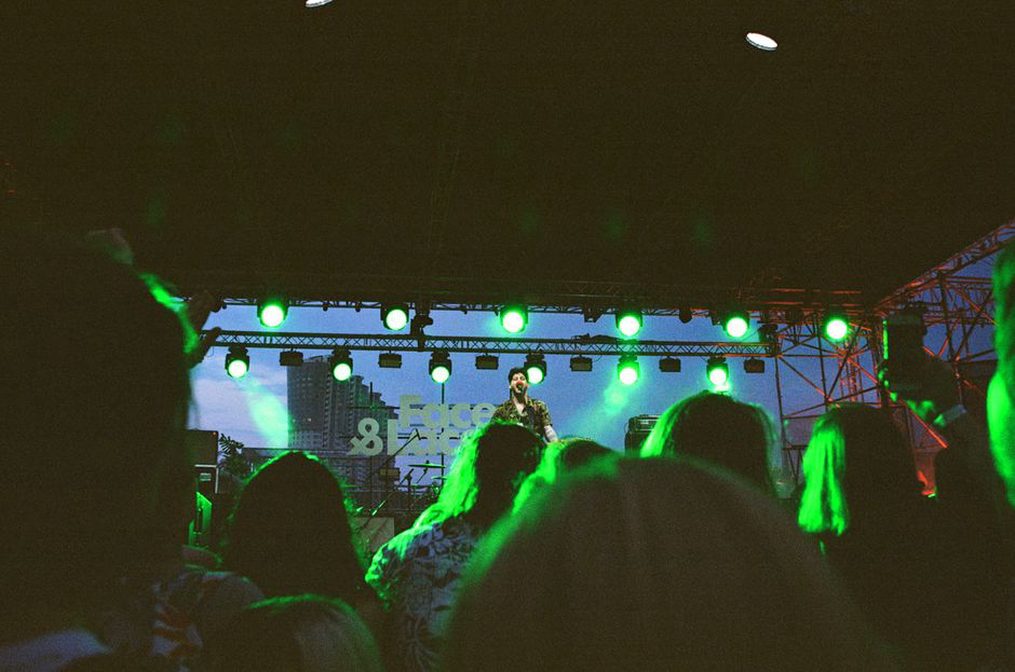
Audience footage tells us things an audio feed cannot: when a singer steps back for a guitar break, where a second guitarist joins a riff, or how much of the stage could be seen from the floor. The frame has limits too. A camera trained on the vocalist cannot tell us what the obscured drummer was doing. Visual work made for circulation rather than straightforward concert capture raises other questions, discussed in the blog's piece on Finnish thrash videos from the late 2000s to the mid-2010s.
Why a rough recording can still be valuable
Clarity is not the only measure of a concert document. A distorted audience clip may preserve the order of two songs, a spoken introduction, or an unexpected stop and restart. It can establish that an arrangement was played in public even when the guitar tone is impossible to judge fairly. Conversely, a beautifully mixed excerpt with the introductions and gaps cut out may tell us little about the shape of the full set.
The useful habit is to ask what a source actually demonstrates. A clear vocal line supports an observation about phrasing; a distant bass-drum thud is poor evidence for an exact kick pattern. Applause tells us an audience responded on the recording, not how large that audience was. Such distinctions matter when a short clip is the only surviving trace of a local show.
Circulation before an archive took shape
In the late 2000s and early 2010s, live recordings passed through different hands. Musicians kept files, audience members uploaded clips, and writers used audio or footage to help recall a show. Physical releases and band-approved posts gave some performances a more stable public form. Other files stayed on old devices or disappeared as accounts and storage media changed. What survives reflects recording and preservation habits as much as the number of gigs played.
For listeners outside a band's home area, a circulating clip offered a chance to hear how its studio attack held up onstage. It could not replace being there, nor was it a neutral advertisement. Viewers heard the song someone happened to record, from that person's place in the room, through that device. More surviving footage does not prove that a band played more often or mattered more locally.
Collectors also need to distinguish a live excerpt from a live release. An authorized album or concert document has a declared form: selected tracks, credits, artwork and a publication history that can be checked. A file labeled with a venue and year may have none of those. The blog's account of Finnish thrash live albums and essential concert documents considers the formally presented end of that range; informal files demand closer questions about origin and completeness.
What the recordings reveal about thrash performance
In the studio, a riff can sound inevitable. Onstage, sustaining it takes visible and audible work. Listen for the drummer marking a turn from a fast beat to a heavier passage, the guitarists closing a unison figure, or the vocalist leaving room for the next entrance. These details speak to arrangement and coordination, not just technical skill.
A song need not come out the same way every night, either. An extended introduction may give the players time to settle into a tempo; a shorter gap may keep a club set moving. A guitarist might vary a solo while the riff beneath it stays put. These are differences worth describing, rather than automatically calling them mistakes or a new official version.
Finnish thrash did not have one sound in this period. Established names, younger groups and bands edging toward other metal styles shared a broad vocabulary but differed in vocals, tempos and groove. A live recording can sharpen those distinctions: a stage, a limited set length and a room to fill put attack and pacing to the test. One recording still cannot stand for a whole national scene.
Reading a recording without overclaiming
When comparing two live sources, start with provenance rather than sound quality. Who released or recorded each one? How much of the performance survives? Is there independent support for the date and venue? Only then ask what each source can represent. A desk feed may be useful for vocal timing; audience footage may better show the length of the breaks between songs.
- Identify the source: distinguish a band-issued recording, a venue feed and an audience capture where possible.
- Check completeness: a single-song upload cannot establish a full set's running order or duration.
- Account for the equipment: microphone overload, automatic gain and poor placement can alter the apparent balance.
- Compare like with like: use clearly identifiable passages when judging a riff or arrangement across clips.
- Record uncertainty: mark an unverified venue, year or song identification as uncertain rather than letting it harden into fact.
The same care helps when a recording conflicts with a printed setlist or someone's recollection. The setlist may show an order that changed onstage; a partial video may miss a song's opening; a witness may remember the dramatic moment more clearly than its place in the set. If the evidence cannot resolve the discrepancy, keep both accounts visible.
The limits of preservation
Digitization can save an aging recording without saving its context. Useful accompanying notes include the source format, the recordist if known, whether the document is complete, the performers' names as credited at the time, and any doubt about the date. Keep original filenames and packaging descriptions, even when they contain errors: they show how the material was first identified. Corrections can sit alongside them instead of quietly replacing them.
Rights and consent matter just as much. Owning fan footage does not grant permission to issue a band's performance as an album, and private rehearsal material calls for particular care. Researchers can discuss such recordings without sending readers to unauthorized copies. Public releases, contemporary notices and documented recollections give published claims firmer footing.
There is a sampling problem, too. Bands whose members, audiences or venues had the means and inclination to record shows tend to leave more evidence. Poorly recorded or unrecorded performances still belong to the scene. An archive can tell us how certain nights sounded and were presented; its surviving holdings are not a census of Finnish thrash concert life.
For one surviving clip, a useful description might be: “One song from a club set, recorded from the audience; date supplied by the uploader but unconfirmed; vocals audible, bass difficult to distinguish.” If a ticket, setlist or band account later turns up, there is room to add what it establishes without rewriting what the clip itself can tell us.