
A mug beside the sink is no problem for an afternoon. It becomes one when nobody knows whether the sink is a temporary drop-off point or where dishes wait indefinitely. Roommates can avoid that uncertainty by agreeing on what belongs in each shared space, where it goes, and how long it can stay out.
The aim isn't to make every room look untouched. Kitchens need room for cooking; living rooms may hold books, games, or music. What matters is whether the next person can use the space without first moving someone else's things.
Agree on the standard before buying storage
Roommates can have very different ideas of “tidy.” One expects an empty counter at bedtime; another thinks it's fine if the food is put away and the dishes are stacked. Rather than asking everyone to “try harder,” walk through each shared area and agree on what it should look like on an ordinary weekday, not just before visitors arrive.
Start with the surfaces and resources most likely to cause friction:
- Kitchen counters and sink: Keep enough space clear for meal preparation, and agree when dishes should be washed or loaded.
- Fridge and pantry: Mark communal and personal shelves, and decide where opened shared food belongs.
- Bathroom: Agree on how many personal products can stay near the sink or shower, and where cleaning supplies go.
- Living room and entryway: Set places for shoes, coats, bags, mail, and things everyone uses.
Make each agreement specific enough to follow. “Wipe the counter after preparing food” is clearer than “keep the kitchen clean.” Take schedules into account, too: someone who works nights may need a quiet way to put dishes away later. Whatever you decide must also respect the lease and building rules, especially in hallways and around exits.
Separate shared items from personal ones
A shared shelf works only when everyone knows what's shared. Identify communal cookware, cleaning products, and household basics, then decide how to pay for replacements. Don't assume that something kept in a common area is free for anyone to use. Give personal items designated shelves or containers, and keep frequently used shared items reachable without shifting someone else's belongings.
If fridge or shelf space is uneven, divide it deliberately instead of letting the first person to move in claim most of it. The shares needn't be identical when needs differ, but everyone should understand the arrangement and be able to revisit it.

Give recurring clutter an obvious destination
Storage works best near the place an item is used or dropped. A shoe rack by the door is more useful than a shoe box across the apartment. A small tray can keep keys and outgoing mail off the entryway surface, as long as someone empties it. In the bathroom, separate caddies can make limited shelf space easier to share.
Before buying bins, clear out things that don't need to occupy a common area. A container won't fix an overflow of duplicate mugs or abandoned packaging. Keep the setup easy to read, too: unlabeled opaque boxes can hide clutter rather than reduce it.
Labels help on pantry shelves, food containers, and drawers several people use. They're less helpful if everyone must sort things in detail whenever they unload the dishwasher. Putting something away should be about as easy as leaving it out.
Create a place for items in transit
Some things do pass through shared rooms: a borrowed book, a parcel awaiting pickup, or a jacket drying after rain. Give them a small, defined spot and agree on a reasonable pickup window. That leaves room for everyday life without turning the dining table into a holding area.
When an object has no agreed home, ask its owner where it should go rather than quietly moving it to their bedroom. People should be able to find their belongings without wondering whether something was moved, borrowed, or thrown away.
Distinguish putting away from cleaning
Organization and cleaning overlap, but they're different jobs. Plates in a cabinet don't clean a greasy stovetop; a scrubbed sink doesn't fix shoes piled in the doorway. Naming the tasks separately makes neglected work easier to spot and divide fairly.
A practical routine has two layers. Each person does a small reset after using a space: returning ingredients, wiping spills, taking belongings off the sofa, or removing hair from the bathroom drain. Less frequent jobs, such as mopping, cleaning the toilet, and clearing expired food, need an assigned schedule. Set the frequency by how the household actually uses the space, not by someone else's checklist.
If chores rotate, write down both the task and what “done” means. To one roommate, “kitchen duty” includes counters, stovetop, and sink; to another, it means taking out the trash. Keep the list manageable, and revisit it if one job takes much longer than the others.
Handle food, dishes, and waste as separate systems
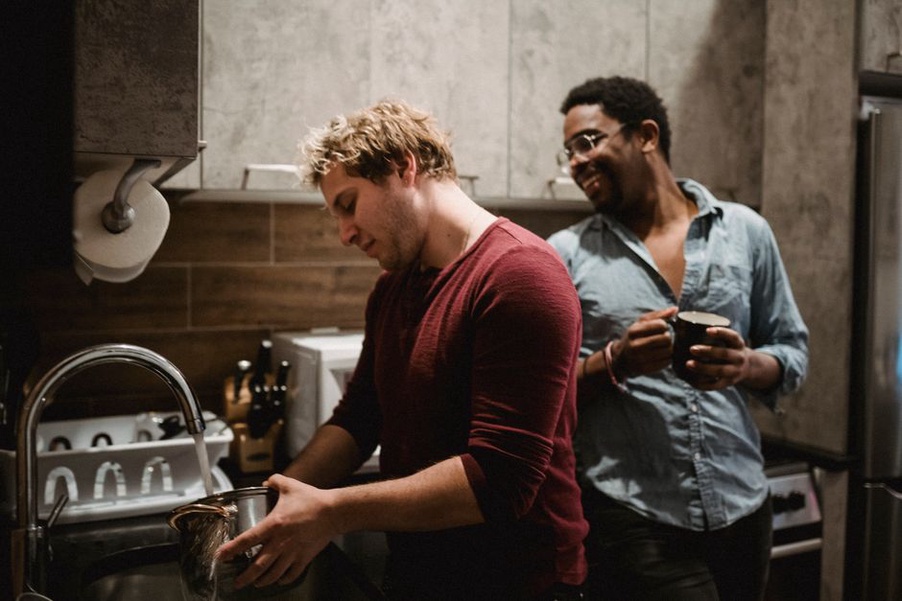
The kitchen needs precise agreements when several people cook in one day. Decide whether dishes get washed immediately, before bed, or within another agreed period. If there's a shared dishwasher, settle who starts it and how clean dishes get unloaded. Otherwise, dirty plates can pile up beside a full machine.
Food storage needs its own routine. Date leftovers when their age or owner isn't clear, keep personal groceries in designated areas, and ask before taking someone else's food. A scheduled fridge check can catch spills and forgotten containers without making one roommate the household food inspector. Agree on what to do with unclaimed food before throwing it out.
Give trash and recycling containers enough capacity for normal use, along with a plan for emptying them. If local sorting rules apply, put a short guide by the bins. When a bag is full, everyone should know who replaces it, where spare bags are, and where the full bag goes. Don't leave waste in a common hallway while waiting for someone else's turn.
Use a system people can discuss and revise
Keep the initial agreements in a short shared note or on a visible household sheet. Record the points that tend to cause confusion: assigned storage, dish timing, cleaning tasks, and how to raise a problem. A long rulebook is easy to forget; a short record is also easier to update when a new roommate moves in or a schedule changes.
When something slips, name the action rather than judging the person. “The pans have been on the stove since Monday, and I need the burners tonight” gives someone a problem they can fix. “You're always messy” is more likely to start an argument about exceptions. Bring up recurring issues at a neutral time, not during a rushed morning or right after a late shift.
Allow for the occasional disruption without losing the agreement altogether. Illness, travel, deadlines, or guests can temporarily affect someone's capacity to do chores. Roommates can trade tasks or set a catch-up time. If one person consistently does more, though, discuss the division directly rather than letting them keep covering the gap.
Make room for different levels of privacy
Standards for shared areas aren't permission to inspect private bedrooms. Roommates may keep their own spaces very differently. The concern is whether belongings, odors, pests, or blocked access affect others. If they do, explain the effect and look for a practical fix. Don't enter someone's room to collect dishes or tidy up without permission.
Adjust the layout when habits keep defeating it
Recurring clutter may point to an awkward layout, not a lack of effort. If coats always land on a chair, check whether the hooks are full or inconvenient. If clean towels sit on the dryer, the linen shelf may be too crowded. Change one part of the setup and see if it helps before adding another rule.
In a small home, prioritize what people use every day. With their owners' agreement, move rarely used possessions out of prime shared storage. Before buying large shelves, agree on their footprint, cost, and who owns them if someone moves out. A compact, stable rack that leaves the walkway open is better than storage that creates another obstacle.
Check in after a couple of weeks of normal use. Which surfaces are still hard to use? Which tasks keep getting missed? Change the smallest thing likely to help. If dishes still collect beside the sink, settle on one clear rule for that spot and make sure the dish rack or dishwasher has room for them.