
Even careful watering can leave a plant with waterlogged roots if its pot has no drainage hole. Excess water needs somewhere to go, and roots need air between waterings. Before buying seeds or plants, check the bottom of each container—and make sure the spot where it will sit can handle a little runoff.
Check the growing spot first
Watch your balcony, patio, doorstep, or windowsill over an ordinary day. Count the hours when sunlight reaches the pot itself, not just the space around it. Tomatoes and peppers generally need at least six hours of direct sun. Leafy greens and many herbs can manage with around four to six hours. A spot that looks bright under a roof may get less direct light than you think.
- Check the practical limits: Find a nearby water source and somewhere runoff will not stain surfaces or drip onto a neighbor’s space.
- Check exposure: Wind can dry pots quickly or topple tall plants. Heat reflected from walls and paving can increase watering needs.
- Check the rules and weight: On a balcony, confirm any building restrictions. Wet potting mix and large containers are heavy; do not assume a railing or narrow ledge can hold them.
If the light is hard to judge, watch the spot for a few days before choosing crops. Plant labels are more useful once you know what conditions you have.
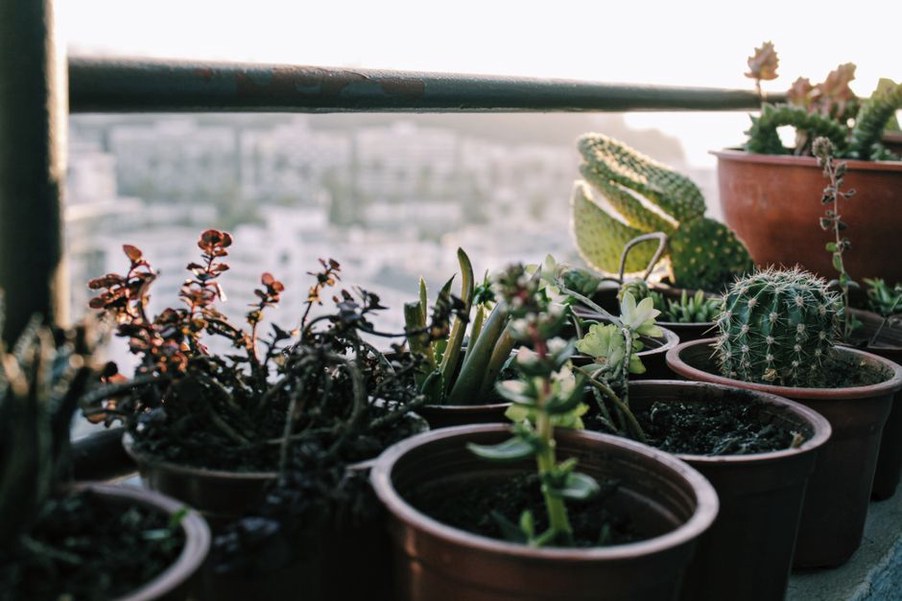
Choose a small, workable first set of plants
Start with two or three containers. That is enough to learn how quickly your spot dries out and how plants respond to its light. Choose plants you will use or enjoy seeing, and check their mature size: a compact patio tomato needs less space than a vigorous full-size variety.
For an edible start, try a leafy crop such as lettuce or chard, plus an herb that suits the light. Basil likes warmth and sun; parsley tolerates somewhat less sun. Mint grows vigorously, so it is usually easiest to keep in its own pot. If you have a sunny spot, a compact pepper or tomato could be a third project. Expect it to need more root room, feeding, and regular watering than a small herb.
Match planting dates to temperature as well as daylight. Cool-season greens can struggle in heat, while frost can damage basil and tomatoes. Check local frost guidance and plant labels before leaving a container outdoors.
Get containers and potting mix that suit the plants
Every container needs drainage holes. A saucer will catch runoff, but empty it after watering so the pot does not stand in water. For a decorative planter without a hole, put a smaller draining pot inside it, then take that pot out to water.
Many herbs can start in pots roughly 8–12 inches (20–30 cm) across, depending on the variety. Leafy greens do well in a wider planter with room for several plants. A compact tomato typically needs a much larger container—often at least 5 gallons (about 19 liters)—and support. Treat those sizes as guides, and check the mature size and container advice on the plant label.
Use potting mix made for containers rather than soil dug from the ground. Potting mix holds some moisture while leaving room for drainage and air around the roots; garden soil can compact in a pot. Leave about an inch (2–3 cm) below the rim so water has room to soak in. Rocks at the bottom do not replace drainage holes. They only take up space the roots could use.
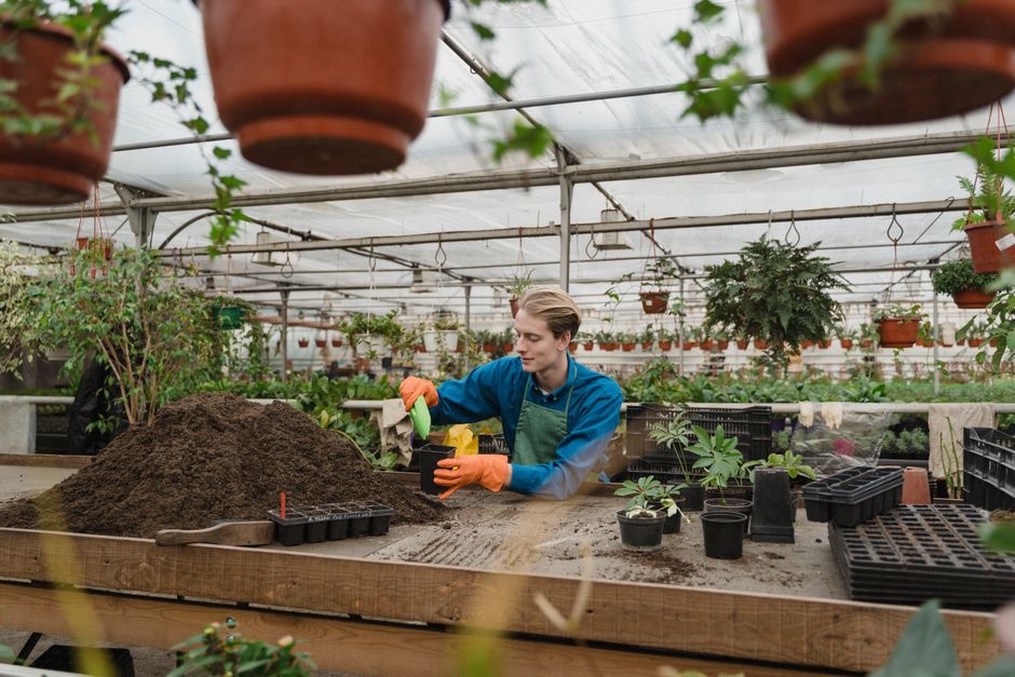
Plant without crowding the roots
- Moisten dry mix: Add water gradually and stir until the mix is evenly damp, not dusty or soggy.
- Set plants at the right depth: Most transplants should sit at about the same soil level as they did in their nursery pots. Follow crop-specific directions for exceptions.
- Leave growing space: Follow the spacing on the seed packet or plant label. Seedlings that fit now may compete as they mature.
- Water after planting: Water slowly until some drains through the holes, then let the excess run away.
For seeds, follow the packet’s sowing depth and thin crowded seedlings as directed. If a transplant’s roots are tightly circling the nursery pot, loosen the root ball gently. Support the plant from below when removing the pot rather than pulling on the stem.
Build a simple care routine
Skip the rule that every pot needs water once a day. Pot size, plant growth, wind, heat, and rain all affect how fast the mix dries. Push a finger about an inch (2–3 cm) into it. If it feels dry there, water thoroughly and let the pot drain. If it is still damp, check again later. A small pot may dry quickly in summer while a large planter stays moist much longer.
Look at the plant, too. Drooping can mean it is thirsty, but persistent wilting in wet mix may point to root trouble. If a plant is stressed, move it out of harsh afternoon sun while you assess it; repeatedly watering already wet soil will not help.
Container plants rely on the nutrients in a limited amount of mix. If the mix includes fertilizer, check the label for how long it feeds plants. Otherwise, use a fertilizer suited to the crop at the package rate—more is not better. Harvest leafy greens and herbs regularly without stripping a plant bare. As you water, remove dead leaves and check beneath the foliage for pests.
Keep the first checklist close to the pots
- Spot measured for direct sun and checked for wind, runoff, and weight limits
- Plants selected for that light, season, and available space
- Containers sized for mature plants, each with drainage holes
- Container potting mix, a watering can, and support for plants that need it
- Plant labels or seed packets saved for spacing, feeding, and harvest guidance
Write the variety and planting date on each pot label. For the first two weeks, check moisture at roughly the same time each day and note when each pot needs water. You will soon have a watering guide for your own balcony or patio, rather than a schedule that ignores its conditions.