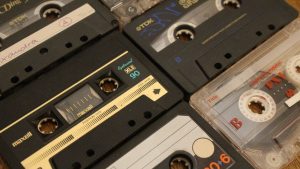
“We can research Finnish thrash releases” gives a prospective customer little to work with. Will the archive identify a pressing, assemble a documented discography, or help find a copy for sale? A service page needs to name the deliverable, the evidence behind it, and where the work stops. A collector, a writer, and a festival programmer might ask about the same band but need very different answers.
Describe the work before describing the archive
An archive’s history can establish credibility, but visitors looking for a service should not have to read through it first. Open with an action and an outcome: “We prepare source-cited release timelines for writers and exhibition teams.” Follow that with what the customer receives—a dated document with a bibliography and notes on unresolved discrepancies, for example. The collecting history can come afterward.
Keep the service index short, but distinguish the jobs it lists. Discography research might compare release credits with contemporary notices. Item identification might involve inspecting photographs of a cassette’s shell and insert. Permission-request support might mean finding a likely rights contact, not granting permission. These services can share a page without being folded into the vague label “research assistance.”
That distinction matters for Finnish thrash releases from the late 2000s through the mid-2010s. A demo, its reissue, and a digital listing may share a title but differ in tracks, artwork, or credits. Say which version the service examines. If you offer “release verification,” specify whether that covers the original edition, later editions, or both.
Give customers a way to judge fit
A list of capabilities does not tell someone whether their request is suitable. State what materials would help, what the finished work looks like, and what falls outside the service. A festival programmer facing a deadline, for instance, needs to know whether a short factual check is possible—not be left wondering if every enquiry becomes a months-long oral-history project.
- Intended use: Say whether the work suits liner notes, exhibition captions, journalism, private collection records, or another defined purpose.
- Inputs: List useful starting materials, such as release photographs, catalogue numbers, scans of credits, or claims needing verification. Make clear whether originals are necessary.
- Output: Name the format and level of detail: an annotated timeline, an item-identification note, or a concise fact sheet with citations.
- Limits: Acknowledge that gaps in surviving records may rule out a definitive answer. Separate evidence-based findings from interpretations that remain uncertain.
Suppose a customer asks whether two cassette listings describe the same edition. The service could offer to compare supplied images, credits, track lists, and documented release information. It should not promise authentication from a low-resolution cover image alone. If the archive cannot inspect a physical copy, that limitation belongs in the resulting report as well as on the service page.
Make evidence standards visible
Explain what sources the work may use: physical releases, contemporary promotional material, archived venue listings, published interviews, or direct correspondence. Just as important, explain what those sources can establish. A flyer documents an advertised show, not necessarily a performance. A release insert records printed credits; it does not, on its own, prove who played on every track.
Show customers how uncertainty will read in the finished work. A sample note might say: “The insert credits this lineup; the available evidence does not establish whether the same lineup played the earlier demo sessions.” That is more useful than quietly choosing one version of events. Readers seeking broad musical context can consult Britannica’s overview of heavy metal, but a general reference cannot verify the details of an underground release.
Lyrics bring another set of distinctions. Transcription, translation, and interpretation are separate tasks; an unclear phrase should stay marked as unclear rather than be filled in by guesswork. The archive’s account of how Finnish thrash lyrics changed across the period may help frame a request, but the service page still needs to say what examining a particular lyric will produce.
Explain process, timing, and cost without false precision
Show what happens after an enquiry. A straightforward sequence tells customers more than a promise to handle every project individually:
- The customer sends the question, intended use, available materials, and deadline.
- The archive checks whether it holds or can access relevant evidence, then proposes a defined scope.
- Both sides agree on the deliverable, fee, timetable, and number of revisions before research begins.
- The archive supplies the work with citations and labels unresolved points.
Do not set a turnaround time on the assumption that every item is already catalogued. Checking one item and building a chronology across several releases take different amounts of work. If prices vary, explain what affects a quote: the number of releases, the source comparisons needed, the condition of supplied material, and any separate work on image permissions. Mention a minimum fee only if one applies. Payment buys the agreed research, not a guaranteed historical conclusion.
Define terms that may be obvious to an archivist but not to a customer. “One revision” could mean correcting or clarifying the agreed deliverable; it should not quietly include research on another band. If urgent work costs extra, say when an urgent deadline can be accepted. Otherwise, customers may assume every request can be rushed.

Separate research access from rights and ownership
Holding an item does not give an archive the right to reproduce its music, artwork, photographs, or lyrics. Keep factual research reports distinct from permission to publish source material. If you can identify someone a customer might approach, describe that as “rights-contact research”; do not suggest you can license material you do not control. Nor is a research service an offer to distribute copies of rare recordings.
Be equally clear about customer-supplied material. Can photographs be reviewed remotely? Does the archive accept physical items, and how would it return originals? If images or correspondence may be retained for its records, seek clear agreement. Someone commissioning research on a private collection may not expect their photographs to become public catalogue images.
Use examples that show boundaries, not invented successes
A labelled hypothetical request makes the service concrete without passing it off as completed work: “Example request: compare two versions of a Finnish thrash demo using supplied insert photographs and the archive’s documented references.” The proposed output could be a table of visible differences, sources consulted, and open questions. Fabricated testimonials, unnamed festival clients, and unsupported claims of settling disputed dates do the opposite.
Say when a request is unsuitable, too. The archive may be able to document releases and advertised performances without being able to value a cassette for resale or confirm a musician’s private recollection. A plain limit saves correspondence and protects the research.
Before publishing, ask someone unfamiliar with the archive to find three things on the page: the deliverable, what determines the quote, and how to request work. If they have to interpret “bespoke support” or search through the archive’s history, replace that wording. A useful enquiry prompt is specific: “Send the release title, the edition you want checked, photographs of both sides of the item, and the claim you need verified.”