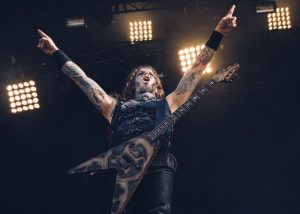
Late-1980s thrash remained a living language for Finnish musicians well into the late 2000s and mid-2010s. The country’s lasting contribution was less a single signature riff or commercial movement than a practical model: play with discipline, work within local networks, record with the means available, and avoid confusing nostalgia with imitation.
Outside Finland, the country’s heavy-music reputation is often framed through melodic death metal, gothic metal, folk metal, or the earlier international profile of bands such as Stone. The newer thrash generation developed alongside those better-known traditions. Groups including Lost Society, Prestige, and a wider group of independent regional acts showed that fast, sharply defined metal could still find an audience through club bills, rehearsal-room exchange, small labels, and physical releases.
A legacy of method rather than a fixed sound
“Finnish thrash” does not describe one uniform style. Classic Bay Area thrash, German speed and thrash, crossover, traditional heavy metal, and Finnish extreme-metal sensibilities all fed into the music. Much of the scene shared a balance of aggression and control: riffs were clearly separated, rhythm sections had to hold together through quick changes, and arrangements often favored memorable transitions over sheer density.
That distinction matters when production can make almost any performance sound huge while smoothing away the details that give thrash its momentum: palm-muted accents, cymbal placement, bass movement beneath a guitar figure, and the brief pause before a new riff. Players active during the revival years often treated those details as central to the style rather than as decoration.
The approach has influenced bands beyond those that identify strictly as thrash. Speed-metal, blackened heavy-metal, crossover, and traditional-metal musicians can borrow its underlying methods without copying any Finnish band note for note:
- write riffs that remain distinct at high speed;
- use shifts in rhythm and register for impact rather than relying on tempo alone;
- leave room in the mix for drums and bass to define the attack;
- build sets around songs that can be played reliably in a club;
- treat demos, EPs, and small-run physical editions as meaningful records of a band’s development.
Precision, space, and the continued value of rehearsal
Finnish thrash’s tightness was not simply the result of studio editing. In a small-scene setting, bands had to make songs work in rehearsal rooms and on compact club stages before they could rely on expensive recording sessions. That encouraged close collective timing. A fast passage had to lock in, a stop had to be shared, and a vocal entrance had to cut through a loud backline and imperfect monitoring.
This rehearsal-first discipline remains relevant. Digital recording has lowered the barrier to release music, but it also allows performances to be assembled from fragments. The Finnish example suggests another priority: record a band that already understands its physical dynamics. Studio polish should support the performance, not substitute for it.
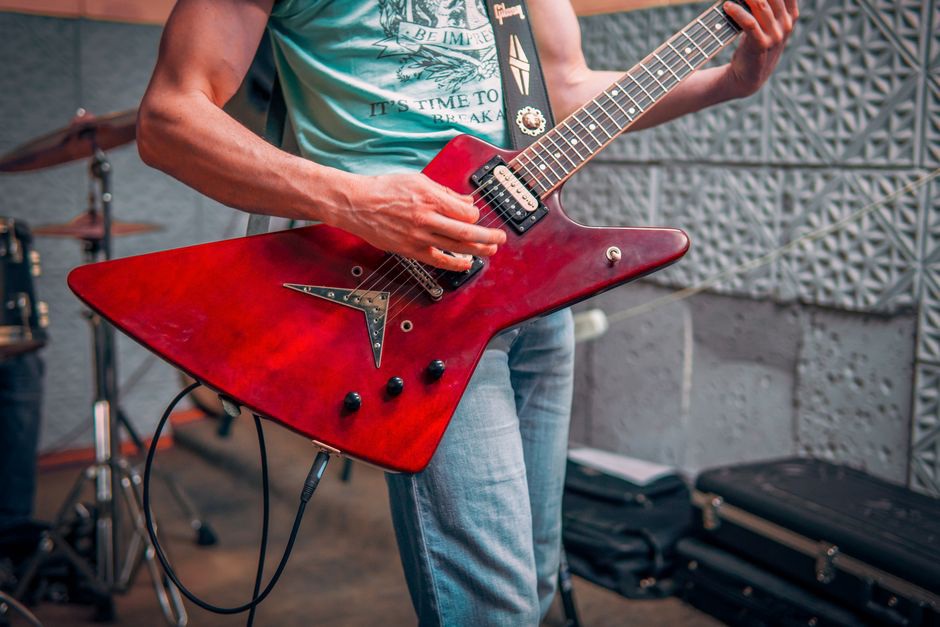
The same principle applies to space. Finnish thrash from this period could move at extreme speed, yet speed rarely carried a song on its own. Mid-tempo passages, open-chord breaks, half-time drums, or a short bass-led transition made the return of a fast riff hit harder. Heavy bands working at high tempos still use similar devices, whether they draw from hardcore, death metal, or black metal.
Why clean articulation still matters
Thrash is sometimes reduced to down-picked guitar, shouted vocals, and double-time drumming. That misses its compositional character. A memorable song usually lets the listener follow a sequence of riffs: a main figure, a variation, a contrasting section, a bridge, then a return that feels earned. When every instrument occupies the same saturated frequency range, that sequence becomes difficult to hear.
Finnish recordings from the late 2000s and early 2010s varied greatly in budget and finish, but the stronger releases generally preserved separation. Guitar tones could be abrasive rather than glossy, drums natural rather than triggered, and bass more audible than in mainstream metal. Such choices helped the songs retain their architecture. Producers and self-recording artists can take the lesson without trying to reproduce an old record: clarity should serve the riff rather than add surface sheen.
From local infrastructure to international circulation
The scene’s influence also rested on infrastructure. Finnish thrash bands did not have to wait for broad media attention to establish an identity. They could begin with a demo, a local support slot, a self-financed release, or a small-run cassette, then gradually build relationships with promoters, fellow bands, independent labels, distros, and fans. The process was often slow, but it produced audiences attached to particular records and live line-ups rather than a brief online trend.
European touring strengthened that pattern. Club circuits and festival appearances brought Finnish acts into contact with audiences already invested in underground metal’s physical culture: merchandise tables, independent mail order, record shops, fanzines, and collector communities. The exchange worked both ways. Finnish bands brought their own sense of rhythm and arrangement abroad while absorbing speed-metal, crossover, black-thrash, and old-school heavy-metal currents active elsewhere in Europe.
Lost Society became the clearest international example of a younger Finnish band taking thrash vocabulary to a larger audience. Their early work showed technical ability and youthful urgency without treating classic thrash as museum music. Their visibility did not make them representative of every local approach, but it encouraged listeners abroad to look beyond familiar national categories and explore the wider Finnish underground.
The community mechanisms behind that process are examined in the account of how Finnish thrash built a loyal fanbase without conventional marketing. Its relevance is simple: lasting attention can grow through consistent releases, dependable live performances, and direct relationships even when mass promotion is limited.
Physical releases as musical memory
Finnish thrash’s legacy remains especially visible in the value listeners place on recordings as objects. CDs, cassettes, vinyl editions, patches, flyers, and show posters are more than collector items. They preserve context: changing logos, personnel credits, rehearsal-era songs, independent label addresses, artwork decisions, and the sequence in which a band’s sound developed.
Streaming platforms tend to flatten a catalogue. A debut demo, limited EP, and later full-length can appear side by side with little indication of their original circumstances. Physical editions restore some chronology. They may show that a group began in a rawer speed-metal mode, introduced more melodic leads, tightened its arrangements, or moved toward heavier and more polished production.
What collectors can learn from small editions
Collectors should not assume that rarity automatically means historical importance. A small pressing may be obscure simply because it circulated narrowly. Its value as evidence lies in what it documents. Useful details include:
- Release information: catalog number, year, format, label or band imprint, and credited recording location.
- Personnel: line-up credits can clarify which musicians performed during a particular stage of a band’s history.
- Artwork and layout: visual decisions can place a release within a tape-trading, punk, traditional-metal, or extreme-metal aesthetic.
- Song sequencing: early versions of songs may differ substantially from later album recordings.
- Provenance: inserts, receipts, or contemporary flyers can be useful, though they should not be treated as proof of unverified claims.
A careful collection becomes a small archive rather than a trophy shelf. Document matrix details, inserts, condition, and known release information, while avoiding speculation about private pressings, disputed dates, or rumored connections.
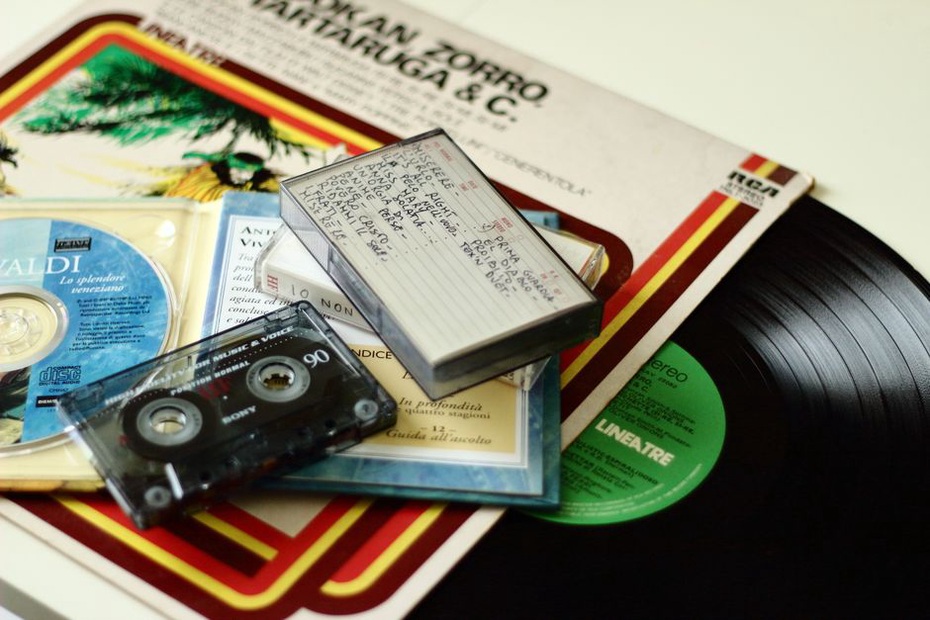
For a release-by-release perspective on how demos became more fully formed albums, Finnish Thrash Albums of the Late 2000s: From Demos to Full-Length Identity provides a useful companion to this broader legacy.
Live culture as a test of authenticity
Thrash resists passive consumption. Its structure invites a physical response—headbanging, movement, shouted choruses, and the shared recognition of a familiar riff—while its technical demands quickly expose weak ensemble playing. Finnish club culture gave bands a regular test: could the material hold a room without studio enhancement or a large production budget?
The answer often lay in pacing rather than spectacle. A strong local bill could place fast material beside mid-tempo crushers, leave room for brief tuning or equipment changes, and avoid exhausting the audience with uninterrupted sameness. Support slots mattered because they put newer groups before listeners who had come for another act but already understood the etiquette of heavy shows. Repeated encounters built familiarity long before wider recognition arrived.
That remains relevant to performers in any local metal scene. Online clips can introduce a band, but they cannot create the trust built when a group arrives prepared, starts on time, supports the other artists on the bill, and performs with the same force heard on record. Finnish thrash’s club-level legacy rests partly on these ordinary forms of reliability.
Classic aesthetics without historical cosplay
Denim, patches, logos, skull imagery, hand-drawn flyers, and physical media were familiar elements of the late-2000s revival. Their importance was social as much as visual. A jacket could signal interest in particular scenes, labels, or older bands; a hand-made poster could show that a gig had been built through local effort. The aesthetic helped listeners identify one another where underground music had little mainstream visibility.
Its limits matter just as much. A classic visual vocabulary cannot compensate for generic songwriting. The Finnish bands that remain interesting did not merely recreate the surface of 1980s thrash. They chose elements of that tradition—speed, sharp riff changes, irreverence, leather-and-denim imagery, and hand-made presentation—and placed them within the conditions of their own era: affordable digital recording, international online discovery, small independent production, and mixed bills with adjacent metal styles.
Referencing the past works when it signals a genuine musical lineage and is backed by strong material. It becomes empty when every choice exists only to imitate an imagined earlier decade.
Where the influence is heard now
The legacy is heard most clearly in musicians’ choices rather than in a tidy list of direct descendants. Bands across Europe and beyond still favor riff-forward writing, dry rhythmic attack, intelligible low-end movement, compact song forms, and a live-ready sense of tempo. Some push these traits toward crossover; others combine them with black metal, speed metal, or traditional heavy metal. Finland’s place in that international exchange comes from the consistency with which local scenes treated craft and self-sufficiency as connected values.
For musicians studying the period, compare a demo with a later album version of the same band’s material. Listen for whether the difference comes from added layers or stronger arrangement: a clearer drum break, a tighter riff transition, a more deliberate vocal entrance, or a bass part that gives the chorus movement. Those details explain why Finnish thrash still matters as a practical musical legacy, not merely a chapter in genre history.