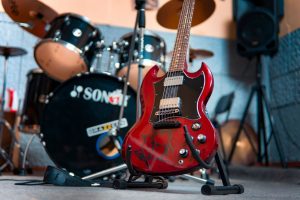
Finnish thrash lyrics of the late 2000s through the mid-2010s were rarely simple exercises in 1980s nostalgia. The riffs were fast, the refrains barked, and the visual language familiar, but the words often carried a colder, more immediate pressure: damaged public life, alienation, recurring images of war, ecological anxiety, intoxication, and the absurdity of daily routine. In the best songs, those ideas had to strike at thrash speed, with the force of a snare hit.
It makes more sense to read these lyrics alongside the arrangement and delivery than as detached poetry. A repeated title line may function less as a complete statement than as a rhythmic weapon. A verse may rely on clipped images because there is little space between rapid guitar figures. That economy helps explain why Finnish thrash lyrics can seem blunt on the page yet become potent in performance.
Threat, decay, and systems beyond individual control
Social criticism remained one of thrash metal’s most durable inheritances. Finnish bands of this period often returned to institutions and systems that reduce human agency: militarism, bureaucratic indifference, commercial manipulation, surveillance, pollution, and a social order felt as impersonal or punitive. These subjects were not uniquely Finnish, nor do they amount to a single national political programme. What matters is how local musicians adapted thrash’s established distrust of power to their own time and surroundings.
War imagery requires particular care. Bombs, battlefields, uniforms, dictators, and ruined cities can signal literal anti-war writing, historical reference, or a metaphor for everyday coercion. A song’s position is usually clearer in its verbs and point of view. Lyrics concerned with command, obedience, profit, casualties, and aftermath are generally criticizing violence and power rather than celebrating them. By contrast, an exaggerated combat scene may simply serve the genre’s taste for cinematic intensity without making a detailed political case.
Apocalypse as a usable thrash language
Apocalyptic language allows a short song to connect private fear with collective disaster. Poisoned ground, collapsing cities, infection, fire, and extinction may suggest environmental damage, political breakdown, addiction, or emotional exhaustion. Thrash has long relied on these images because they fit its musical grammar: abrupt shifts, relentless momentum, dissonant chord shapes, and vocals built for alarm.
Still, a catastrophic lyric is not automatically a prediction or a manifesto. In underground metal, disaster imagery can also provide aesthetic cohesion. It can give a demo, cassette, or album its own world, linking titles, cover art, song names, and stage presentation. The useful distinction is between lyrics that identify recognizable targets and consequences and those that use destruction mainly to create an atmosphere of menace.
Personal rupture beneath the public themes
Collective anger often sits beside more intimate material. Isolation, betrayal, mental strain, self-destructive habits, and frustration with repetitive work or social expectations can appear without the confessional detail associated with singer-songwriter traditions. Thrash usually turns inner conflict outward: the self is hunted, trapped, poisoned, broken, or at war. The approach preserves the music’s physical urgency while allowing vulnerability to appear indirectly.
These lyrics are not always easily divided into “political” and “personal.” A narrative about someone crushed by routine may imply criticism of working life or consumer culture. A text about paranoia may point toward media saturation, state power, or drug use without settling on a single meaning. That ambiguity can be useful, allowing a refrain to work as both a crowd chant and an expression of private distress.
Language choice: English reach, Finnish texture
English was useful to Finnish thrash groups seeking contact with the wider European underground. It placed their releases within an international tradition shaped by American, British, German, and South American thrash, while making lyrics more accessible outside Finland. The language also suited the exchange networks around physical releases, touring, fanzines, and festivals.
English-language lyrics can have a productive roughness. Non-native phrasing may produce unusual word order, compressed grammar, or unexpectedly stark combinations of words. That is not automatically a flaw. The better question is whether a line works musically: does it fit the riff, create a memorable sound, or sharpen the mood? In a shouted chorus, thrash often values attack and clarity over literary polish.
Finnish-language material creates a different effect. Finnish can sound percussive and dense in rapid vocal phrasing, while its long words and inflectional endings encourage different rhythmic solutions. It also places a song more firmly in local speech and humour. A Finnish lyric may carry slang, irony, or cultural associations that flatten in English translation. Translation can establish basic meaning, but it cannot fully reproduce rhyme, alliteration, vowel patterns, or the social tone of a chosen expression.
For the musical foundations behind this verbal delivery, the blog’s account of how Finnish thrash riffs drew on classic metal, punk, and local tradition helps explain why concise, percussive vocal lines fit so naturally within the style.
How sound changes the meaning of a lyric
A lyric’s subject is only one layer of its meaning. The same words can register as accusation, black comedy, despair, or defiance depending on tempo, vocal tone, and arrangement. Several common devices illustrate the point:
- Gang vocals turn an individual statement into a communal demand, warning, or release of tension.
- Stop-start riffs give key words space to land, often stressing a command, accusation, or title phrase.
- High-speed verses can convey panic, information overload, or uncontrolled rage.
- Half-time passages often make a lyric feel heavier and more deliberate, even when the language is simple.
- Lead-guitar breaks may interrupt a narrative, but they can also prolong its mood: chaos, triumph, dread, or exhaustion.
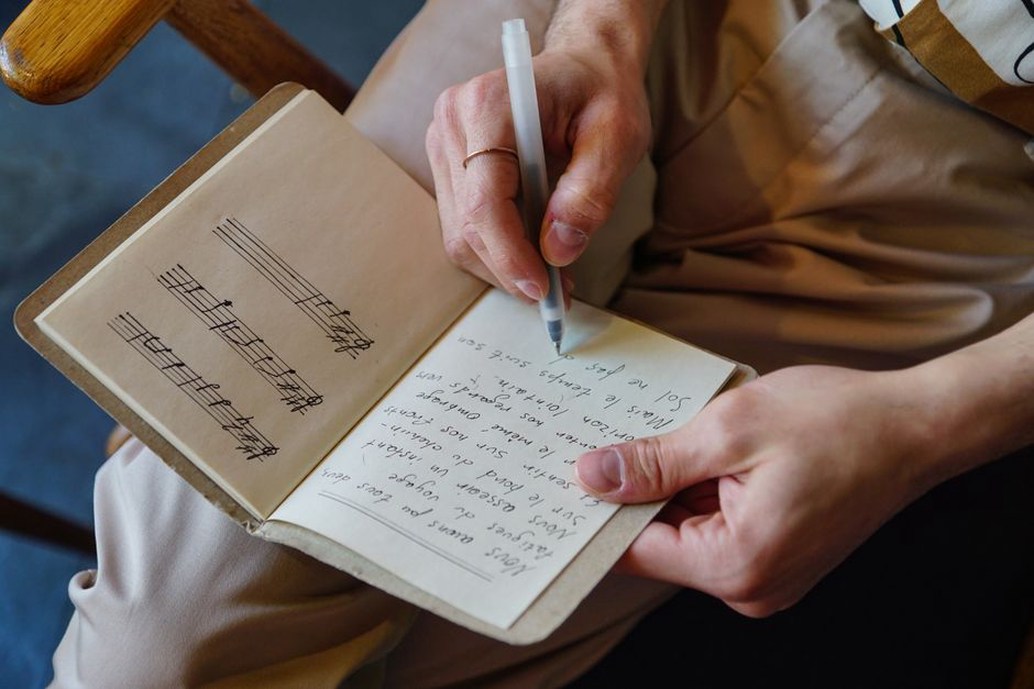
This is also why transcription matters. Lyric sheets, original inserts, authorized reissues, and band-approved postings are stronger sources than crowd-supplied transcriptions, especially when harsh vocals obscure consonants. One misheard word can reverse a song’s meaning or make a coherent verse seem nonsensical.
Recurring genre devices without reducing songs to clichés
Thrash lyrics often use direct address, imperative verbs, compressed narratives, and memorable noun phrases. “You,” “we,” and “they” establish conflict quickly. Their apparent simplicity is functional: an audience can catch a refrain in a noisy room, and a vocalist can articulate it over dense instrumentation. Repetition serves the same purpose. It creates hooks and gives the crowd a role in the song.
| Device | Common effect | Useful reading question |
|---|---|---|
| Second-person address | Confrontation or accusation | Who is being addressed: a person, authority, or the listener? |
| Catalogues of damage | Escalation and urgency | Do the images point to one issue or build a general atmosphere? |
| Dark humor | Distance from horror or hypocrisy | Is the joke aimed at victims, or at the system producing the harm? |
| Historical imagery | Scale and moral gravity | Is history invoked literally, symbolically, or exploitatively? |
A practical method for interpreting a song
- Begin with an authorized lyric source, if one exists, and note the release format and edition.
- Identify repeated words, title phrases, pronouns, and verbs before assigning a broad theme.
- Listen for structural changes around those lines. A chorus, breakdown, tempo shift, or gang-vocal entrance often signals emphasis.
- Compare the text with the artwork and track sequence, without assuming that every cover image supplies a literal plot.
- Place the release in its scene context. DIY circulation, live repertoire, and overseas audiences could all shape language and presentation.
That final step benefits from an understanding of the networks behind the recordings. The history of Finnish thrash collectives, revival networks, and fragmentation provides context for why common imagery and shared stylistic references circulated between bands without making their lyrical voices identical.
When documenting a specific track, preserve the exact wording, identify the source of any translation, and separate observation from interpretation. “The chorus repeats an image of contamination” is verifiable. “The song condemns a specific event” needs support from the text, credits, or a reliable band statement. That distinction matters especially for small-run Finnish releases, where a lyric sheet may prove as valuable to future listeners as the recording itself.