
Don't choose a dish that needs constant stirring at 7:00 p.m. if that's when guests arrive. Save the last half-hour for warming food, dressing the salad, putting out drinks, and answering the door. If the menu asks more of you, change it rather than counting on working faster.
A casual dinner doesn't need matching plates or several courses. Guests need somewhere to sit, something to drink, food they can eat, and a host who can leave the stove. Make the important decisions early, then leave room for small delays.
Decide what kind of evening you are hosting
Set an arrival time and an approximate time to eat. They don't have to be the same. If friends arrive at 6:30 and dinner is at 7:00, there's time for coats, drinks, and a late arrival before hot food has to wait. Let guests know if you expect to sit down promptly, especially if they're coming from work or arranging childcare.
Confirm the head count before shopping, and ask about allergies and dietary needs rather than relying on what someone ate last time. A quick message asking if there's anything they can't eat will do. If a restriction affects the whole menu, choose dishes everyone can share where practical. Otherwise, plan a complete alternative serving, not just a side dish. Keep labels from packaged ingredients in case a guest needs to check them.
Decide how much help you want. If someone offers to bring something, give them a defined, low-risk job: bread, a ready-to-serve dessert, or a nonalcoholic drink. Don't make dinner depend on a dish arriving at precisely the right time or temperature. It's also fine to say you have everything covered.
Build a menu around the bottleneck
Before picking recipes, work out what's scarce: oven space, burners, room in the fridge, serving dishes, or your attention. A main, two sides, and dessert can be easy when most of the work is done ahead. The same meal becomes difficult if every dish needs finishing in the last ten minutes.
Give each dish a job
- Main: Choose something that can rest briefly or be reheated gently, such as a braise, baked pasta, stew, or substantial grain dish.
- Fresh element: Add a salad, herbs, sliced vegetables, or something else crisp that comes together quickly.
- Filling extra: Serve bread, potatoes, rice, or a similar side if the main needs it. One is usually enough.
- Dessert: Make it ahead, serve fruit with yogurt, or buy one you like. It doesn't need its own cooking deadline.
Check the equipment as well as the recipes. If the main needs the oven until serving, skip a roasted side that calls for a different temperature. If a guest can't eat the main, make sure their alternative doesn't require a separate pan at the busiest moment. Fewer moving parts give you more room to handle a late guest or a slow-cooking ingredient.
A dinner party is a hard time to test an unfamiliar centerpiece. If you want to try something new, pair it with familiar sides and a simple dessert. Read the recipe all the way through first; chilling, rising, and resting times are easy to miss.
Work backward from the doorbell
A short written timeline stops little jobs from landing all at once. Start with the arrival time and mark the steps that have to happen on schedule: turning on the oven, starting a grain, reheating the main, dressing the salad. Move everything else earlier.
Two or three days before
Confirm the guest count, dietary needs, and arrival time. Set the menu, check what you already have, and write a shopping list by store section. Count chairs, plates, forks, glasses, and serving utensils. It's easier to borrow a chair now than when someone is standing in the doorway.
Check what needs thawing. Frozen meat belongs in the refrigerator, not on the counter. If fridge space is tight, think about where both the ingredients and the finished dishes will go before you shop.
The day before
Buy nonperishables and most fresh ingredients. Make a dessert or main that benefits from an overnight rest, if it fits the menu. Wash produce, mix dressings or sauces, and clear fridge space for covered dishes. Gather the serving bowls and utensils so you aren't hunting for them during dinner.
Clean what guests will use: the eating area, table, counters, and bathroom. Empty the bin if it's overflowing. Leave the cupboards alone. If you have twenty minutes, a clear table and clean bathroom matter more than reorganized shelves.
On the day
Finish anything that can safely wait until serving. Prepare salad ingredients, but keep the dressing separate so the leaves stay crisp. Set out plates, napkins, and water glasses. Chill drinks, or find another place for them if food has taken over the fridge. Check the recipes and set an alarm for anything in the oven.
About an hour before guests arrive, stop adding jobs. Change clothes, clear enough of the sink for essential dishes, and look over the final cooking steps. That spare time is for the slow-heating pan, the missing serving spoon, or the friend who turns up fifteen minutes early.
Make the room easy to use
Guests should be able to leave their coats, get water, and sit down without needing directions. Clear the entryway and put drinks where people can see them. On a small table, move condiments and spare bottles to a nearby surface. Try the seating arrangement beforehand; a chair may fit beside a cabinet but still be awkward to get out of.
Use enough light for people to see their food and one another. A lamp can soften a harsh overhead light. Candles are optional; if you use them, keep them away from sleeves, napkins, and serving dishes. Keep background music quiet enough for conversation. If you're sharing favorite records, save closer listening for after the meal.
For friends with a shared interest in Finnish thrash, a few records can give the evening its own character without turning dinner into a listening session. Keep the volume low and the sleeves away from food and drinks. Choosing music shouldn't become another last-minute job.
Keep food safe without hovering over it
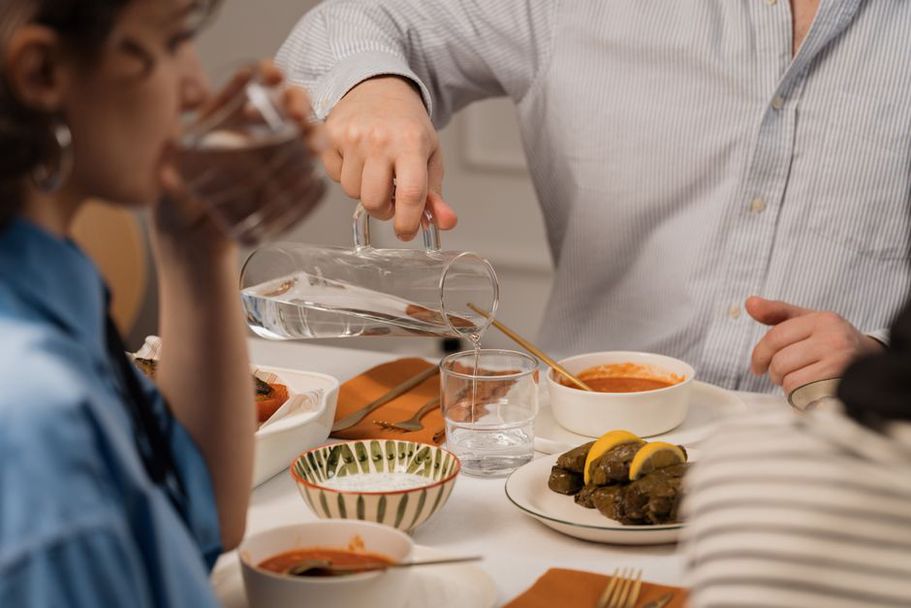
Make-ahead food still needs care. Refrigerate perishable dishes promptly in covered, shallow containers, which cool more readily than a deep pot. Reheat hot dishes thoroughly before serving and follow any applicable package instructions. Keep cold dishes chilled until needed, especially in a warm room. An informal evening isn't a reason to leave perishable food out for hours.
Give shared dishes serving utensils. If a guest has an allergy or another restriction where cross-contact matters, use separate utensils. When you're unsure about a prepared ingredient, offer its label for them to check or provide an alternative. That lets them choose without having to explain the restriction again.
Give the last half-hour a strict limit
Keep a short arrival-time list in sight: heat the main, dress the salad, put out water, turn on a lamp. Four jobs are manageable. If you've written twelve, move some earlier. Put out a snack only if dinner is still a while away; olives, crackers, or cut vegetables will bridge the gap without spoiling the meal.
If food is late, tell guests when you expect to eat and offer a drink. There's no need to narrate every kitchen problem. A willing guest can pour water or bring bread to the table. Keep hot or time-sensitive jobs yourself unless you've explained exactly what needs doing. A useful delegated job has a clear finish.
Serve from the kitchen if the table is narrow or a hot pan would be awkward to pass. Use shared bowls if there's room and everyone can reach them. You can mix the two.
Plan for the ordinary things that change
Someone may arrive late, skip a drink, or eat less than expected. You don't need a second dinner to account for it. Keep a late guest's portion covered and stored appropriately until they arrive. Have water available and make the nonalcoholic option easy to find. If someone must leave early, offer them dessert before they go without changing everyone else's pace.
Don't plan to wash every pan before sitting down. Scrape or soak what's likely to be difficult later, then leave the rest. A clear bit of counter for plates matters more than an empty sink. Once dinner is served, stay at the table long enough to eat your own portion warm.
For a 7:00 p.m. arrival, you might start reheating at 6:15, put out water and glasses at 6:30, and dress the salad at 6:45. Leave the last ten minutes free for the door. Put the serving spoon beside the finished main before guests arrive, and you won't have to look for it when everyone is ready to eat.