Set the bedside lamp where a guest can reach it without getting out of bed. Then look at what else they can reach: is there room for a phone and glasses, and can they find the light switch easily? Those small checks tell you more about a room’s comfort than a pile of decorative cushions.
Start with a clean, usable space
Before making the bed, clear the surfaces and walk into the room carrying a bag. Your guest needs somewhere to set it down, a clear path to the bed, and space to unpack a few things. For a stay longer than one night, empty a drawer or leave several hangers. If the room also serves as an office or storage space, move paperwork and fragile items rather than expecting a visitor to work around them.
Wipe down the bedside table, switches, and handles, and clean the floor beside the bed. Vacuum or dust underneath if luggage might end up there. Air out the room when you can, but skip scented sprays, candles, and fresh fragrance. A neutral-smelling room is easier on guests who are sensitive to scents.
Make the bed adaptable
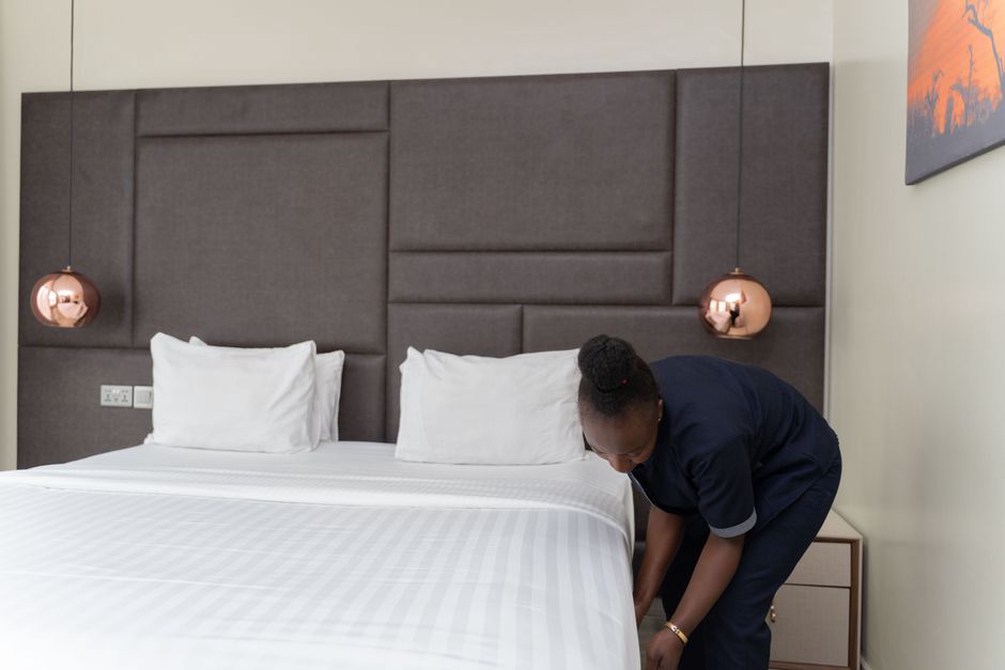
Start with a comfortable mattress, clean sheets, and pillows in good condition. Bedding is easier to adjust when it comes in layers: put a light blanket or duvet on the bed and leave an extra blanket in plain sight. If you know which pillow your guest prefers, use it; otherwise, offer two with different firmness. Bedding that has sat in storage for months should be washed before the visit. Check the mattress protector and pillow covers, too.
For a longer stay, leave spare linens where guests can find them. If they’ll sleep on a sofa bed or air mattress, set it up and try lying on it before they arrive. That’s the time to find a center bar, an air leak, or a slope. Keep the route to the bathroom clear, especially if the bed is in an unfamiliar part of the house.
Manage light, temperature, and sound
Let guests control as much of the room as possible. Curtains or blinds should give them privacy and keep out unwanted early light. A small night-light in the hall can help with bathroom trips without lighting up the bedroom. After dark, test the bedside lamp and check that its switch is easy to find.
Show guests how to adjust the radiator, fan, or thermostat if they can use it. If they can’t, leave a fan or extra blanket and let them know they can ask you to change the temperature. Check for drafts around the windows and see whether the room gets stuffy with the door closed. Street noise and household schedules may be beyond your control, but predictable noise is worth mentioning before bedtime. Offer earplugs if you have them; don’t use them in place of fixing a disturbance you can address.
Put essentials within easy reach
Leave enough space beside the bed for a lamp, water, glasses, and a phone. Point out an accessible outlet. If you provide a charging cable, check that it works and fits your guest’s device. A small wastebasket and tissues spare them a search through the house. Where there’s no convenient outlet, an appropriately rated power strip may help, provided it isn’t overloaded and its cord stays out of walking paths.
- For belongings: Clear a shelf, drawer, or section of closet, and provide a hook for a coat or robe.
- For the morning: Leave a glass or carafe of drinking water and explain where guests can make tea or coffee.
- For an unexpected need: Point out spare towels and toilet paper so guests don’t have to ask.
- For getting around: Identify the bathroom and any stairs or doors that are tricky in the dark.
There’s no need to stock the room like a hotel minibar. Leave only what you can keep in good order; an untested charger or a dusty tray of expired snacks is no help.

Give guests privacy and clear house information
Check that the door closes properly and its latch works. At night, turn on the room lights and see whether the curtains are see-through. Ask before entering during a stay, even if you normally keep something in that room. If a pet usually sleeps there, arrange another spot for the pet rather than asking your guest to make that decision.
On arrival, briefly cover the Wi-Fi name and password, bathroom location, shower controls, clean towels, and exterior door lock. A short, accurate note can help a tired guest remember the details. Mention anything that will affect their stay, such as a shower that takes time to warm up or an early household departure. Offer to explain unfamiliar appliances instead of leaving them to guess.
Make bathroom access straightforward
If the bathroom is shared and mornings are busy, agree on timing. Give each guest a clean bath towel and somewhere to hang it to dry. Clear space for a toiletry bag, and check that soap, toilet paper, and a working hand towel are available. A few unopened spare toiletries can help when someone forgets an item; you needn’t supply products they haven’t asked for.
Adjust for the person and the length of the stay
An overnight visitor may need little more than a ready bed and directions to breakfast. Someone staying a week will appreciate laundry arrangements, more storage, and a clear invitation to use the common areas. Ask about important needs beforehand without pressing for an explanation. Pet or fragrance allergies, difficulty with stairs, or a preference for a quieter room may change your plans. Don’t assume that a room is accessible because it looks welcoming: check whether your guest can safely reach the bed, outlet, bathroom, and light switches.
Just before they arrive, carry a bag into the room and go through the ordinary motions: set it down, switch on the lamp, close the curtains, and find the outlet. If a chair blocks the drawer when you open it, move the chair before the doorbell rings.