
A clipped consonant hits with the snare; the vowel cuts off before the next downstroke. A Finnish thrash singer can make a riff feel faster without changing its tempo. The trick is not sheer harshness. The voice has to work as a rhythm instrument while carrying words through guitars, bass and drums competing for space.
There is no single Finnish thrash vocal sound. The first-wave records of the 1980s and the late-2000s revival offer points of comparison, but bands have favoured different mixtures of barking, raw shouting, rough-edged singing and gang vocals. Some passages edge toward death metal. Listen closely and those choices say something about speed, language, recording conditions and the demands of a full set.
From a sung note to a rhythmic attack
Classic thrash vocals sit somewhere between conventional melodic singing and an extreme-metal growl. A singer might hold a recognisable pitch with a gritty edge, then bark through a crowded verse. Words such as shout, rasp and growl describe the sound, not the precise anatomy behind it. Distortion can be produced in different ways, and a recording cannot tell us whether a method felt comfortable or could be sustained night after night.
Those listening terms are still useful. A bark has a short, forceful onset and little sustained pitch. A rasp keeps more of the sung line, which helps with a long chorus or held ending. A low growl makes pitch less prominent and can pull a passage toward death-thrash; a high scream cuts above the guitars but usually works better as an accent than as the delivery for every syllable of a rapid verse. None of these descriptions is a fixed category.
The Finnish first wave is better heard as a range than as a template. On Stone’s recordings, sharply articulated vocals bring urgency to intricate thrash playing without shadowing every guitar note. A.R.G. and National Napalm Syndicate show other shapes a forceful delivery could take across bands and recordings. Later groups drew on international thrash shouting as well as local predecessors. What matters is less whether a newer singer sounds like an older one than what each voice does against the riff.
Timing, breath and the shape of the riff
Why the spaces matter
At speed, fitting lyrics into a bar becomes an arrangement problem. A stream of double-time syllables can blur, especially under busy cymbals. Short bursts leave room for a guitar accent, a drum fill or a breath, and the next entrance can hit harder for it. Over a slower, palm-muted passage, a longer vowel may give the riff weight without adding another note.
The first word need not land on the first beat. An early syllable pushes into the bar; a late entrance lets the riff lurch ahead before the singer catches up. A repeated phrase placed squarely with the snare is easier for a crowd to follow. Such decisions make the vocal part an arrangement rather than words set over a finished instrumental.
- Short attacks: fit around rapid picking and kick-drum patterns that leave little room for held notes.
- Held endings: draw attention to a chord change or turnaround.
- Call-and-response gaps: let the voice answer a riff or leave room for a backing shout.
- Rest points: punctuate the lyric and give the singer a place to breathe during a long set.
Those rests become especially important onstage. A studio take can be stopped; a club set cannot. Singers who also play guitar or bass have to coordinate consonants with picking and fretting, sometimes simplifying a line or moving it away from the busiest part of the riff. That is not an inferior version of the song. It reveals how the song works in performance.

Harshness is not the same as volume
A recorded vocal can sound fierce without the singer simply shouting at full force. Microphone distance, compression and the mix’s frequency balance all change how loud it seems. More force does not automatically bring clearer words; it may make pitch, diction and endurance less dependable. Tone alone is no basis for declaring a singer’s technique safe or unsafe.
Contrast within a song often does more than constant distortion. An open, pitched phrase can mark the chorus after a grainier, tightly packed verse. A scream at the end of a line works almost like a cymbal crash. A lower voice can darken a breakdown even if the guitars stay in the same tuning. Finnish thrash musicians have used these shifts without treating maximum harshness as a measure of authenticity.
Try comparing a repeated chorus with the verse before it. Does the last vowel run longer? Do the consonants come through more sharply in the verse? Is that scream doubled, or is one exposed voice carrying it? Those observations tell us more than calling the whole album “aggressive.”
Language, consonants and intelligibility
Much Finnish thrash uses English lyrics, in keeping with the international musical vocabulary in which the style developed. English brings its own rhythmic possibilities: reduced vowels and shifting stress let some syllables compress, while consonant clusters can snag at high speed. Finnish-language lyrics work differently. Long vowels and consonants can carry meaning through their duration, and stress generally falls on the first syllable. Set against rapid riffs, those features can give a line a different pulse.
Neither language guarantees intelligibility in a loud mix. It depends on where the singer puts the stress, how long the vowels remain audible and whether the arrangement leaves a gap for the voice. Careful enunciation can vanish under cymbals; a rough shout can get a phrase across if its key words hit open spaces. Printed lyrics tell you what was written, not quite how it was sung.
Accent deserves the same care. A Finnish singer delivering English need not imitate some supposedly standard thrash voice. Pronunciation changes vowel colour, rhyme and the force of a shouted word; hearing those differences as flaws misses part of the performance. Nor can accent by itself prove a band’s influences or intentions.
Gang shouts and shared emphasis
Several voices shouting a short phrase do more than thicken a lead. When the words hit strong beats and then stop, the chorus becomes a collective rhythmic event. Loose unison adds texture; closely aligned overdubs make a sharper hit. In a small venue, a phrase recognisable without backing tracks can invite the room to join in. On record, it can mark a clean break from a densely worded verse.
A group-sounding part does not necessarily mean the band sang together in one room. One musician can record several tracks, and production can make a few voices seem like a crowd. Without credits or a reliable account of who sang, the arrangement is firmer evidence than a guess about personnel. Hear what the layers do: reinforce a lyric, widen a refrain or briefly set off an exposed lead.
What recording choices reveal—and conceal
Finding space for a voice
Thrash guitars often bite in the same upper-midrange frequencies that make consonants audible. A mix can give the voice room through level, equalisation or the arrangement itself. Spread-apart double-tracked guitars may leave the centre open; compression can hold sudden peaks in check. Reverb or delay extends a phrase, though too much ambience smears fast words. These are general production choices, not a claim that every Finnish record was made the same way.
Independent releases from the late 2000s and early 2010s differed in resources and finish. A dry vocal can feel close to a live performance; layers can enlarge a chorus while hiding some of the singer’s individual grain. Documented live footage offers a useful comparison for phrasing and backing parts, provided you account for different microphones, acoustics and mixes. A rough audience recording is particularly weak evidence of someone’s range or stamina.
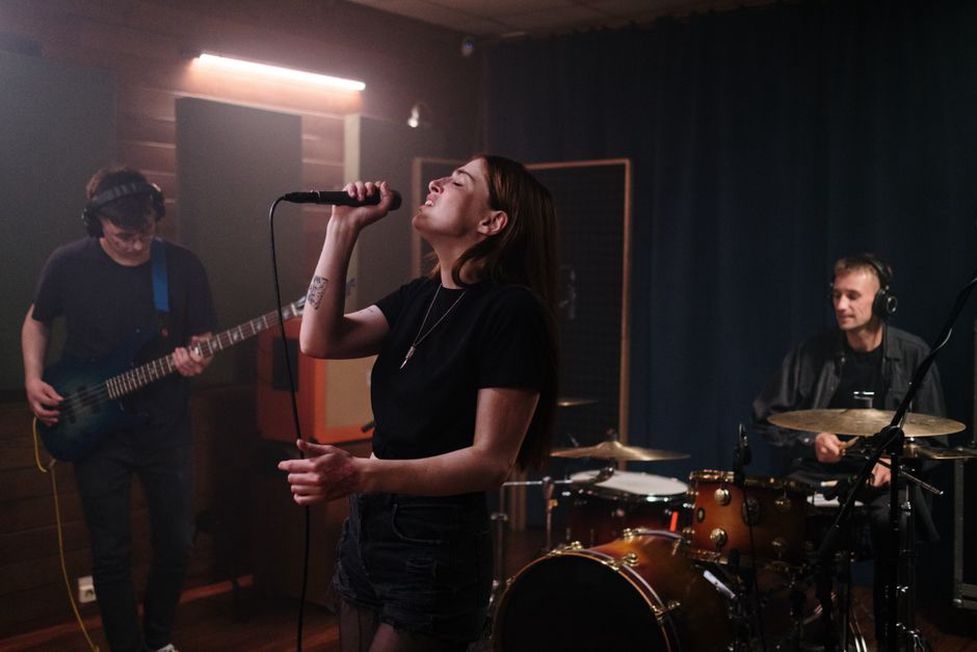
Personnel can change the sound as much as production. A new vocalist may place melodies differently, need more or less room for lyrics, or adapt older material onstage. A guitarist adding backing vocals can alter a chorus without changing a word. For documented personnel context rather than guesses based on timbre, see Line-Up Changes in Finnish Thrash Metal, 2000s–2010s.
Listening across the revival without inventing a single sound
The late-2000s to mid-2010s revival renewed interest in fast riffs and older thrash aesthetics, but its singers did not approach the microphone alike. Lost Society’s early recordings offer a clear example of high-energy shouted phrasing against tightly arranged, fast-moving instruments. Other Finnish bands in and around thrash brought varying amounts of melody, grit and extreme-metal weight. A genre label helps you find the record; it cannot tell you what the voice does between verse and chorus.
Dates complicate comparisons too. An early demo and a later album by the same act may differ because of the arrangement, personnel, recording conditions or changes in the singer’s approach. At a festival, the vocal has to carry over stage monitors and a large space rather than sit inside a studio mix. That chronology belongs beside close listening. The Finnish thrash revival timeline supplies period context without asking one vocal style to represent the whole scene.
When the sources exist, put a verse, a chorus and a live performance of the same song side by side. Listen for the first syllable against the drums, the length of each line’s last word and the point where backing voices enter. If the live chorus sounds bigger, ask what changed: the singer’s melody, a crowd response or the space left by the guitars? Each can produce that impression, but each tells a different story about the song.