Classic thrash metal didn't just echo through Finland in the late 2000s and early 2010s. It was absorbed, pulled apart, and put back together with a kind of Nordic precision that felt entirely its own. Bands from Helsinki, Tampere, and Turku treated the Bay Area template not as a museum piece but as a living technical language—one they could speak with a Finnish accent. Slayer's angular riffing, Metallica's structural ambition, Testament's rhythmic complexity: all of it became raw material, not a final destination.
This didn't happen by accident. Plenty of musicians in the Finnish thrash revival had spent their formative years in death metal, black metal, or hardcore punk. When they turned to thrash, they carried with them instrumental disciplines and aesthetic sensibilities that reshaped the classic framework. The down-picked gallops and chromatic dive bombs stayed, but now they passed through a colder, more atmospheric lens. Guitar tones grew sharper and more brittle. Bass lines carried a pronounced mid-range growl. Drum patterns often incorporated the relentless double-kick precision more common in Scandinavian extreme metal.
The Bay Area Blueprint and Its Finnish Translation
To understand how classic thrash shaped Finnish bands, you have to identify which parts of the original movement proved most durable. The Bay Area sound of the 1980s rested on several identifiable pillars: palm-muted, syncopated riffing that alternated between tight staccato bursts and open-chord aggression; lead guitar work that prized melodic development and technical flash in equal measure; rhythm section interplay that treated the bass as a distinct melodic voice rather than a root-note anchor; and vocal delivery that ranged from shouted street-level urgency to half-sung, half-spoken narratives.
Finnish groups internalized all of these elements but applied them selectively. Lost Society, whose debut Fast Loud Death landed in 2013, showed a near-encyclopedic command of early Exodus and Nuclear Assault riffing styles. But the production on that record—tight, compressed, surgically precise—owed as much to modern Finnish engineering standards as to any vintage analog warmth. You could hear the influence in the riff construction. The execution, though, reflected a different set of studio practices. Guitars were layered with a clarity that exposed every pick attack, a choice technically impossible during thrash's first wave. It became a hallmark of the Finnish approach.
Other acts took a more selective route. Axegressor, from Turku, built their sound around the raw, punk-inflected edge of early German thrash—Sodom and Destruction were clear reference points—but their rhythmic vocabulary included blast beats and d-beat patterns that pointed toward broader extreme metal fluency. The classic influence showed up in the riff shapes and vocal cadences, but it wasn't the whole story. This hybrid approach became characteristic of the scene: classic thrash provided the skeleton, while the musculature came from other subgenres.
Riff Architecture and the Role of Melody
One of the most significant ways classic thrash shaped Finnish bands was through riff architecture. The foundational thrash riff typically relies on chromatic movement, tritone intervals, and rapid down-picking that creates a percussive, almost mechanical momentum. Finnish guitarists embraced this vocabulary but often extended it with melodic ideas drawn from traditional heavy metal and even folk music.
The result was a riffing style that could pivot from razor-edged aggression to mournful melody within a single phrase. This wasn't the neoclassical shredding that characterized some American thrash lead work. It was something more restrained and atmosphere-conscious. A riff might begin with a classic Slayer-esque chromatic descent, then resolve into a minor-key arpeggio carrying a distinctly Nordic melancholy. The rhythmic attack and harmonic aggression came straight from classic thrash. The melodic sensibility belonged to a different tradition altogether.
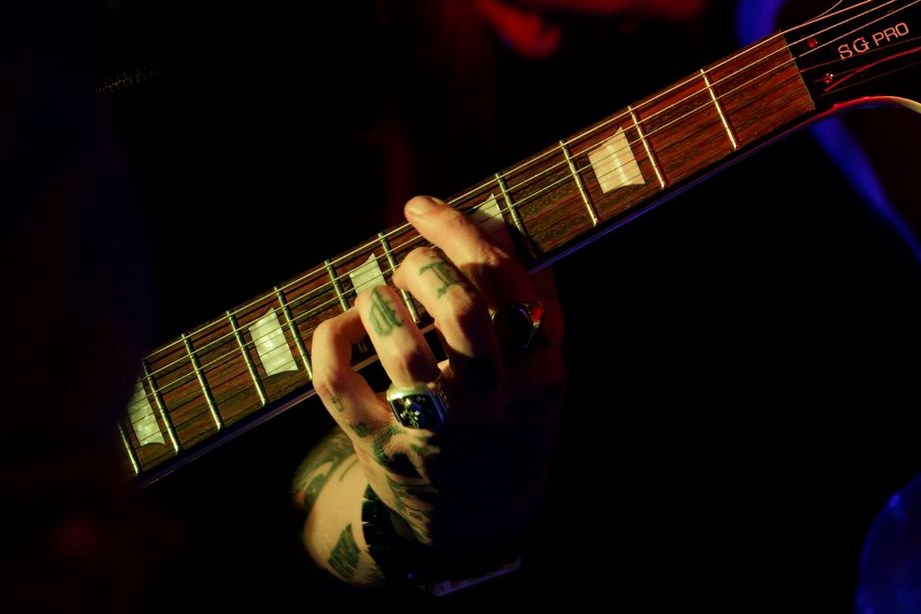
This melodic dimension also surfaced in the lead guitar work. While many classic thrash solos emphasized speed, scalar runs, and whammy bar acrobatics, Finnish lead players often prioritized phrasing and emotional contour. You could hear the influence of Kirk Hammett's more lyrical moments and Alex Skolnick's jazz-informed lines, but refracted through a sensibility that valued space and dynamics over pure velocity. Solos were integrated into the song structure rather than bolted on as obligatory showcases—a compositional choice reflecting the broader Finnish emphasis on songcraft over display.
Vocal Delivery and Lyrical Perspective
Classic thrash vocal styles exerted a strong pull on Finnish singers, but here too the influence was adapted rather than replicated. The shouted, reverb-drenched delivery of early Metallica and the snarling aggression of Tom Araya were obvious templates. Finnish vocalists, however, frequently incorporated a deeper, more guttural timbre that betrayed their death metal backgrounds. The result was a vocal approach that could shift between thrash's rhythmic bark and a lower, more menacing growl without losing intelligibility.
Lyrically, the classic thrash preoccupation with social decay, institutional corruption, and existential dread found a receptive audience in Finland. But Finnish bands often approached these themes with a more introspective, less overtly political tone. Where American thrash frequently aimed its critique outward at specific institutions or figures, Finnish lyrics tended toward the abstract and the psychological. The influence was thematic as much as musical: classic thrash had demonstrated that heavy music could carry serious ideas, and Finnish bands embraced that legacy while developing their own voice.
Production Aesthetics and the Question of Authenticity
The classic thrash records of the 1980s were defined partly by their production values—or, depending on your perspective, their lack of them. Albums like Kill 'Em All and Bonded by Blood captured a raw, live-in-the-room energy that became central to thrash's identity. Finnish bands in the 2000s and 2010s faced different circumstances. Digital recording technology had democratized access to professional-quality production, and the lo-fi aesthetic of early thrash was now a deliberate artistic choice rather than a budgetary necessity.
Most Finnish thrash acts opted for a middle path. They sought to retain the visceral impact of classic thrash production—the sense of a band playing together in a real space—while taking advantage of modern clarity and separation. Drum sounds were powerful and precise, with kick drums that punched through dense guitar walls. Bass guitars occupied a distinct frequency range rather than disappearing into the mix. Vocals sat forward but not unnaturally so. This approach honored the spirit of classic thrash production without fetishizing its limitations.
The influence on Finnish production aesthetics was philosophical as much as technical. The goal wasn't to recreate the sound of 1986. It was to capture the same sense of urgency and physicality that made those records compelling in the first place. Finnish engineers and producers, many of whom had grown up on classic thrash themselves, understood that the genre's power lay in its directness. They worked to preserve that directness even as they employed tools and techniques unavailable to their predecessors.
The Role of Cover Songs and Tribute Culture
One concrete measure of classic thrash's influence on Finnish bands can be found in the prevalence of cover songs. Throughout the late 2000s and early 2010s, it was common for Finnish thrash acts to include covers of classic material in their live sets and occasionally on studio releases. These weren't casual choices. They functioned as statements of lineage and as technical challenges. A band that could credibly perform Slayer's "Angel of Death" or Metallica's "Battery" was demonstrating not just reverence but competence.
This practice also served an educational function within the scene. Younger musicians who hadn't experienced the classic thrash era firsthand learned its vocabulary by playing these songs. The covers acted as a bridge between generations, transmitting the rhythmic and harmonic language of classic thrash to players who would then incorporate it into their original material. The influence was both direct—in specific riffs and structures that appeared in new compositions—and indirect, shaping the technical standards and musical expectations of the community as a whole.
Live Performance and the Cult of Energy
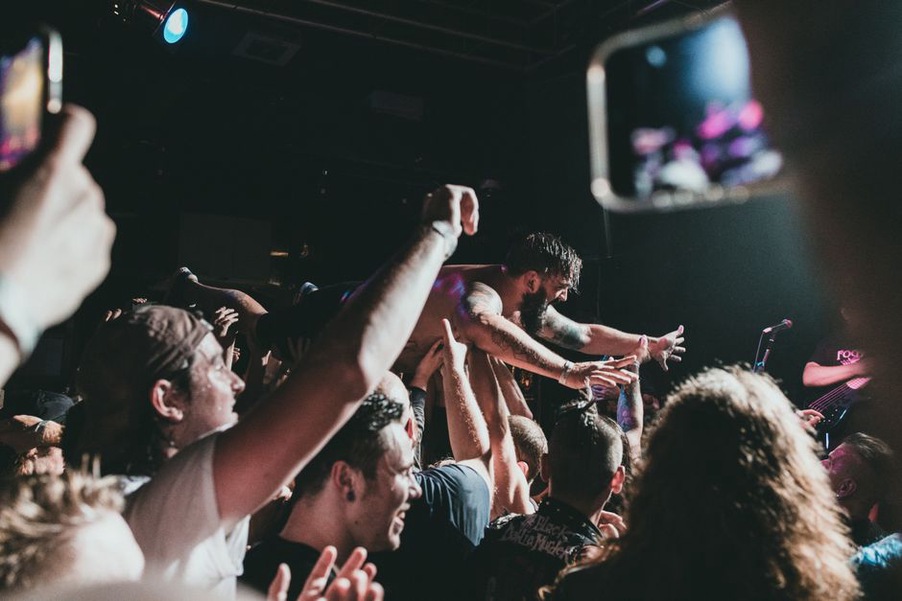
Classic thrash established a performance paradigm that Finnish bands adopted wholesale: the show as a physical event, not merely a presentation of recorded material. The fast tempos, the synchronized headbanging, the mosh-friendly breakdowns—all of these became standard features of Finnish thrash concerts. Bands understood that thrash was, at its core, a live genre, and they built their stagecraft accordingly.
Yet here too, Finnish groups introduced their own sensibilities. The classic thrash show often emphasized chaos and unpredictability. Finnish performances, while no less intense, tended toward tighter, more controlled execution. This reflected the broader cultural value placed on technical precision within the Finnish metal community. A band could whip a crowd into a frenzy without sacrificing the tightness of their performance—a balance that classic thrash acts hadn't always achieved but that became a point of pride for their Finnish descendants.
The influence extended to the physical layout of shows. The small club gigs that sustained the scene—at venues like Helsinki's PRKL Club or Tampere's Vastavirta—recreated the intimate, high-energy conditions under which classic thrash had originally thrived. No barrier between band and audience, no security buffer to absorb the kinetic exchange. This was thrash as it had been experienced in the Bay Area clubs of the early 1980s, and Finnish bands recognized its importance.
Discographic Evidence and the Archival Impulse
The influence of classic thrash on Finnish bands is documented not only in the music itself but in the physical artifacts of the scene. Independent releases on CD and vinyl often included liner notes that acknowledged specific influences, and the visual design of album covers frequently referenced the aesthetic language of classic thrash—hand-drawn illustrations, apocalyptic imagery, and logo designs built on angular, aggressive letterforms. These choices weren't superficial. They signaled participation in a tradition and helped situate Finnish releases within a broader historical context.
Collectors and archivists within the scene played a crucial role in preserving this lineage. The foundations and evolution of Finnish thrash metal can be traced through meticulous discographic work that maps the relationships between classic influences and local innovations. Demo tapes, seven-inch singles, and limited-run CDs from this period now serve as primary sources for understanding how classic thrash was received and reinterpreted in Finland. The archival impulse itself—the desire to document and preserve—was arguably another legacy of classic thrash culture, which had always placed a premium on the physical object as a carrier of meaning.
Community, Continuity, and the Transmission of Influence
Perhaps the most profound way classic thrash influenced Finnish bands was through the creation of a shared musical language that facilitated community. When musicians from different cities and different backgrounds could reference the same riffs, the same albums, and the same performance traditions, collaboration became easier. The creative synergies that emerged within Finnish thrash metal were built on this common foundation. Side projects, split releases, and festival lineups all depended on a network of mutual understanding that classic thrash had helped establish.
This influence wasn't static. As Finnish bands developed their own voices, they began to influence one another, creating a secondary layer of reference points that existed alongside the classic canon. A young guitarist in 2012 might cite Lost Society or Axegressor as influences, but those bands had themselves been shaped by classic thrash. The transmission of influence became a chain, each link forged from the materials provided by the previous one. Classic thrash was the starting point, not the endpoint. Finnish bands took what they needed and built something new on the foundation it provided.