A Finnish thrash release from the late 2000s or early 2010s could begin as a handful of songs recorded between school, shift work, and rehearsals. It might then emerge as a modest CD-R, cassette, or self-financed CD sold at the next local show. That scale did not imply a lack of ambition. For many bands, releasing music independently was the practical way to be heard, document a working line-up, and build enough momentum for stronger bills, support slots, or a short run of European dates.
The DIY character of Finnish thrash recordings was defined less by a single sound than by a series of decisions: where to rehearse, how to record, who would mix the material, how much stock to order, and how copies would reach listeners. Those choices shaped the finished music as much as any preferred 1980s riff style. They also help explain why releases from the period differ so sharply in polish while often sharing urgency, purpose, and close ties to local metal communities.
DIY meant control, not necessarily isolation
Independent recording is often imagined as four musicians working alone with cheap equipment. That certainly happened, but collaboration was more common. Bands drew on friends with recording experience, rehearsal-room contacts, small studios, local promoters, graphic artists, photographers, and other groups willing to trade bills or recommendations. A self-released record could still involve professional services; it remained DIY because the band organised and financed the process rather than passing those decisions to a larger label structure.
This distinction matters when listening to recordings from the period. Finland had long had a strong metal infrastructure: rehearsal spaces, technically capable musicians, specialist media, and an audience accustomed to heavy music. A young thrash group could find an affordable engineer nearby or borrow suitable equipment without major-label backing. The results were often more focused than the stereotype of the “raw demo” suggests.
DIY also let bands work at their own pace. They could record a short demo to test a new singer or a changed direction, issue an EP when a full album was out of reach, or document a set of songs before line-up changes stalled progress. That flexibility mattered in a scene where musicians balanced band activity with study, work, long distances between towns, and other obligations.

From rehearsal tape to finished release
Most independent recordings began with a practical question: what did these songs need to prove? A demo might establish tight riffs, fast drumming, and a convincing vocal style. An EP could introduce a more defined identity. A debut album had to hold attention beyond its first rush of speed. The answer shaped everything from studio time to track selection.
Pre-production was often the hidden advantage
Limited studio time made rehearsal essential. Thrash relies on collective precision: rapid down-picked guitar figures must lock to kick-drum patterns, sudden tempo changes need to hold together, and lead parts cannot blur the momentum of the rhythm section. Bands that arrived with settled arrangements, understood tempos, and rehearsed transitions could make convincing recordings on restricted budgets.
Rehearsal recordings also revealed problems that were easy to miss in a loud room. An intro might run too long, a chorus might fail to return with enough force, or two riffs might compete for the same space. Fixing such issues before paid studio hours began was more than a saving measure. It encouraged the concise, attack-driven writing associated with classic thrash while leaving room for each band’s own strengths and tastes.
Recording in stages
Instead of tracking every instrument live, many groups recorded in layers: drums, rhythm guitars, bass, vocals, leads, and smaller details. That allowed corrections, though it could also make a performance feel stiff when a band pursued precision at the expense of energy. Some records retained minor rough edges because they conveyed the group’s force better than heavily edited takes would have.
Vocals carried particular weight. Finnish thrash singers drew on several traditions—rasped hardcore-influenced delivery, high metal shouts, barked commands, and more melodic approaches—and low-budget sessions left those decisions exposed. Without elaborate production to conceal weaknesses, phrasing and conviction became central to the record.
Production choices under real constraints
DIY releases were not defined by lo-fi sound alone. The real challenge was deciding where limited time and money would matter most. A band might accept a plain guitar tone to spend longer recording drums, or cut back on overdubs so the mix kept its definition. In fast music, clarity often matters more than density.
| Production decision | DIY practical concern | Effect on a thrash recording |
|---|---|---|
| Drum tracking | Room quality, microphone availability, editing time | Determines whether blast-like momentum and snare attacks remain distinct |
| Rhythm guitars | Time for double-tracking and retakes | Creates weight, but excessive layering can obscure riff detail |
| Bass presence | Mixing skill and monitoring conditions | Can reinforce fast riffs or vanish beneath guitars if neglected |
| Vocals | Stamina, suitable microphone, coaching or self-direction | Shapes the record’s personality and lyrical intelligibility |
| Mastering | Cost and access to a trusted specialist | Balances playback across CD, vinyl, headphones, and venue systems |
The strongest self-directed releases turned limits into aesthetic decisions. Dryer guitar tones could sharpen palm-muted patterns. Less processed drums could make a performance feel immediate. A restrained mix could leave room for bass runs or a lead break. None of these traits guarantees quality, but independent production is best judged against the music’s aims rather than the surface finish of a large-budget record.
Finland’s climate and geography also affected the work behind physical releases. Moving equipment or meeting collaborators could require careful planning across long distances, while small print runs reduced the risk of storing unsold stock. Digital distribution made music available beyond a band’s home region, but physical formats remained important as merchandise, collector objects, and tangible evidence of progress.
Physical formats as working tools
Cassettes, CD-Rs, professionally pressed CDs, and later vinyl editions served different purposes in the DIY economy. A short cassette run or CD-R was inexpensive and quick to circulate. A professionally manufactured CD carried a greater sense of permanence and was easier to sell at shows or send to magazines, promoters, labels, and radio contacts. Vinyl usually required more money upfront, so it tended to suit material that had already found an audience or a partner willing to share the cost.
Packaging was part of a release’s practical role. Credits named the people who recorded, mixed, mastered, photographed, or helped finance it; lyrics made themes legible; contact details enabled correspondence before social media became the main point of contact. A folded insert or simple booklet could be economical while still showing a band’s connection to familiar thrash imagery: urban decay, warfare, horror, satire, or hand-drawn aggression.
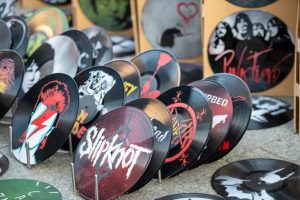
Artwork and sound were often developed together. The connection between visual presentation and underground identity is explored in this study of Finnish thrash-metal artwork from 2008 to 2015. For independent groups, a coherent presentation could make a small release easier to spot on a merch table crowded with discs and patches.
Release work extended beyond the studio
Finishing the master was only one part of the process. DIY bands often handled release administration themselves: compiling credits, checking artwork files, approving test copies, setting prices, packing orders, and carrying boxes to gigs. The work was mundane but important. A delayed pressing could affect a release show; a typo in a catalogue number or contact address could complicate later documentation; poor storage could damage stock before buyers ever saw it.
Promotion depended on direct contact. Bands sent review copies to fanzines and specialist outlets, posted material through their own channels, shared bills with compatible groups, and used live sets to introduce songs before release. Local radio also had a distinct supporting role during this period; the account of how local radio supported Finnish thrash metal in the late 2000s and early 2010s explains why airplay could matter even for small independent acts.
Concerts created a feedback loop that recordings alone could not provide. A song that drew a strong live response might become the centrepiece of an EP. A rough mix heard through a venue PA could show that the low end needed work. Sales after a set were more than commercial exchanges: they indicated which formats listeners wanted, which artwork caught attention, and whether the band had made an object people wanted to keep.
How to approach these recordings as a listener or collector
Independent releases reward careful listening and accurate cataloguing. Scarcity may reflect a tiny pressing, but rarity alone does not establish importance. Better questions are contextual: Was it an official band release? Does it document a distinct session or simply repackage earlier material? Do the credits, date, format, and track listing match across copies? Has a later label edition altered the mastering, artwork, or bonus content?
- Check the release credits: Personnel and studio information can place a recording within a band’s development.
- Separate demos from reissues: A later edition may preserve early material, but it is not the same as the original item that circulated at the time.
- Listen for arrangement rather than polish alone: Riff construction, ensemble timing, and song pacing often reveal more than surface volume.
- Document provenance: Keep inserts, order confirmations, or show flyers as contextual records, not as substitutes for verified release data.
- Support legitimate channels: Buy from bands, labels, established retailers, or second-hand sellers who identify editions accurately.
For archival purposes, record the exact format, matrix or catalogue information where applicable, track sequence, credited line-up, and cover-art differences before filing a copy away. A cassette with a photocopied insert and a later digital compilation may contain the same songs, but they belong to different moments in the music’s life—and reflect different forms of DIY labour.