
A Finnish thrash bill in the 2010s rarely belonged to a single, clearly defined festival circuit. The same band might play a municipal summer event, a metal-club weekend, a larger open-air festival, or a European showcase with a Finnish date nearby. For revival-era groups, each setting served a different purpose: a packed late-night club slot could strengthen a local following, while an afternoon set at a broad metal festival introduced the band to listeners who had come primarily for death metal, traditional heavy metal, or international headliners.
The period makes more sense when viewed by scale and function, rather than through the idea of a national calendar devoted solely to thrash. Finland had large metal gatherings with broad programming, smaller independent events, and festival weekends built around venues. Thrash moved through all of them, supported by listeners who saw fast riffs, old-school visual cues, physical releases, and live intensity as parts of the same culture.
Thrash as a strand within Finland’s festival culture
Finland’s metal-festival scene was already well established by the 2010s. Large summer events could place extreme metal, traditional heavy metal, hard rock, progressive acts, and newer hybrid styles on the same bill. That breadth created opportunities for Finnish thrash bands, but it also shaped reception. A thrash set had to establish itself quickly through sharply articulated picking, a rhythm section capable of turning fast passages into a shared pulse, and songs with memorable transitions rather than speed alone.
This differs from a scene organized around one annual, genre-specific event. Finnish thrash musicians often gained from sharing bills with adjacent styles. Death metal audiences recognized discipline and aggression; speed-metal and traditional-metal listeners responded to lead guitar work; punk-informed crowds understood the directness of shorter, harder-hitting material. Genre boundaries remained, but they were often porous in the live setting.
The historical background matters. Finland’s earlier heavy-metal traditions included internationally visible acts and locally influential underground bands, while the late-2000s revival drew selectively on that heritage. The link to classic reference points was more than decoration. It shaped guitar tones, song construction, denim-and-leather aesthetics, logo design, and the expectation that a performance should feel physically immediate. Our overview of classic thrash influences in Finnish thrash metal offers useful context for what festival audiences heard in these sets.
What a festival slot could do for a local band
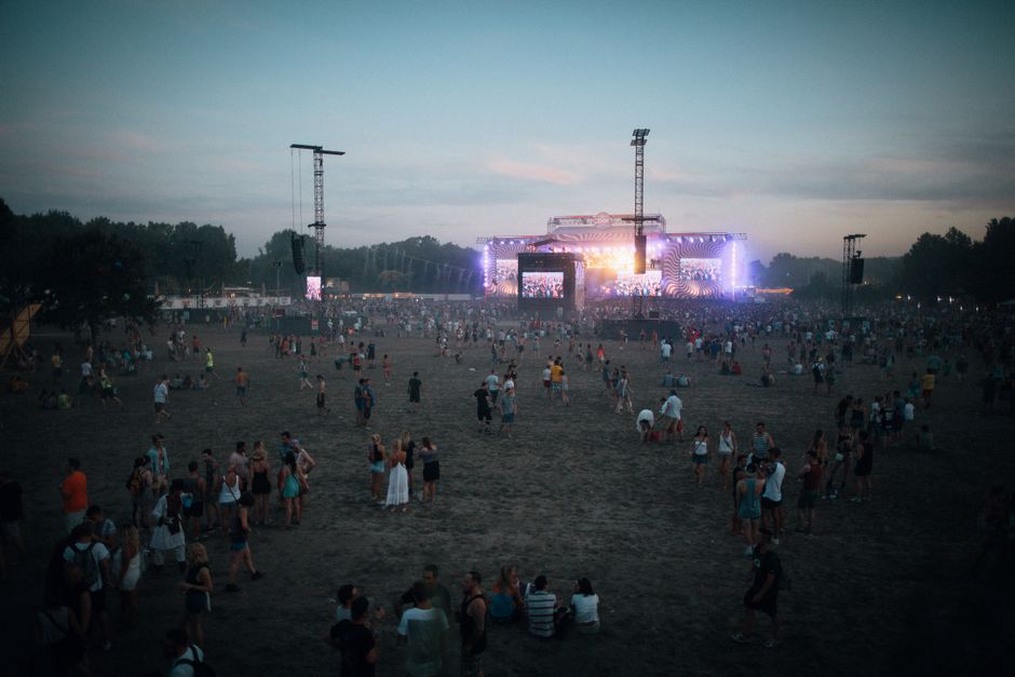
For an emerging group, a festival appearance was not automatically a breakthrough. It was, however, a concentrated test of readiness. Unlike a hometown headline show, a festival set put artists in front of people who might not know a single song. Set times were often short, backline equipment could be shared, and changeovers required discipline. Bands working under those conditions commonly chose songs with immediate openings, identifiable riffs, and little dead space between numbers.
Short sets rewarded arrangement discipline
Thrash is often discussed in terms of tempo, yet pacing mattered just as much at festivals. A 30- or 40-minute set made up entirely of similar fast songs could blur into one sustained attack, particularly for unfamiliar listeners. Strong sets alternated compact speed pieces with mid-tempo passages, melodic leads, or breakdowns that gave the crowd a clear rhythmic entry point. That was not a concession to accessibility; classic thrash itself depends on contrast.
Scheduling also affected sound. Early daytime sets and exposed outdoor stages could make dense guitar parts harder to hear than in a small club. Drummers needed definition rather than mere volume, bass had to reinforce riffs without vanishing in the mix, and vocals had to remain clear enough to mark changes between songs. These practical demands help explain why a tightly rehearsed band could leave a strong impression without elaborate stage production.
Merch tables extended the set beyond the stage
Independent releases circulated alongside live performances. Demos, compact discs, patches, shirts, and later vinyl editions allowed audiences to stay connected with a band after a brief festival encounter. For musicians with small-scale distribution, selling or exchanging physical media at an event could matter as much as the performance itself. It brought artists, collectors, promoters, and other bands into direct contact without reducing the exchange to online promotion.
For archivists, this is also why festival flyers, wristbands, programmes, and dated photographs deserve careful handling. They may help establish a release’s circulation or a band’s active period, but they are not infallible proof of every advertised appearance. Line-up changes, cancellations, and programme revisions were ordinary parts of live music. A responsible archive distinguishes between a printed announcement and a confirmed performance.
Different kinds of Finnish festival spaces
The phrase “festival appearance” hides important differences. Looking at the 2010s by venue type makes the scene easier to understand without imposing a false hierarchy of prestige.
| Festival setting | Typical value for thrash bands | Practical limitation |
|---|---|---|
| Large open-air metal festival | Exposure to broad, mixed-genre audiences and professional production | Short slots, early set times, and competition for attention |
| Independent multi-band indoor event | Closer stylistic fit, direct contact with dedicated listeners, stronger merchandise culture | Smaller budgets and more limited regional reach |
| Venue-based festival weekend | Club sound, late-night energy, and room for local support bills | Capacity constraints and less visibility outside the immediate network |
| Regional summer programme | Access to audiences beyond established metal hubs | Programming could be stylistically diffuse and technically variable |
Large events offered scale, but a smaller indoor weekend could be more culturally important for a thrash act. In a club, the audience was close enough to catch the nuances of a riff, a shouted title, or an abrupt tempo shift. Musicians could watch other sets, meet promoters after load-out, and build connections that led to return dates. Those networks mattered in a country where long distances between cities made repeated travel a financial and logistical concern.
Regional events mattered for another reason: they kept Helsinki from becoming the whole story. Finland’s metal life has long relied on local organizers, rehearsal spaces, youth-culture infrastructure, bars, and small venues in several towns. A festival slot outside the capital could connect bands with audiences and fellow musicians working to their own local rhythms. The live network behind the revival is explored in Finnish thrash metal in the late 2000s and early 2010s: scenes, records, and live networks.
The visual language of the 2010s revival
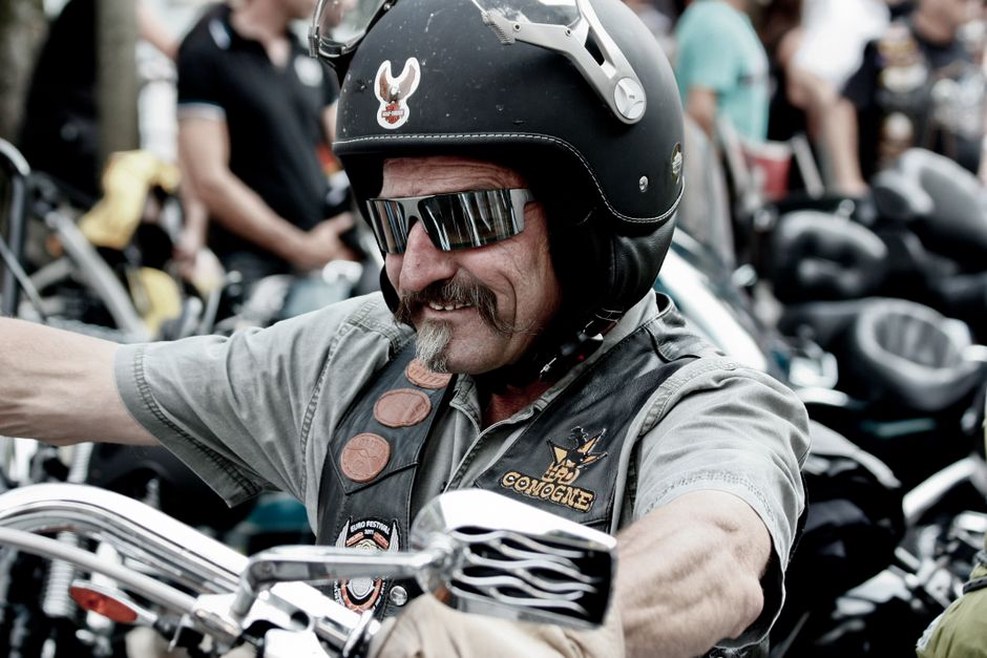
At Finnish thrash-oriented shows, visual cues often signalled affiliation before a band played a note. Hand-drawn logos, skulls, warfare imagery, horror references, distressed type, denim vests, patches, and old band shirts connected present-day performers to the metal vocabulary of the 1980s. This was not always simple nostalgia. The revival used familiar signs to create a shared frame of reference among people with different ages and listening histories.
Festival stages intensified that aesthetic because audiences had little time to identify an unfamiliar act. A readable banner, coherent drum-riser artwork, or a distinctive shirt design could establish a musical identity quickly. The strongest examples matched the sound: a raw speed-metal attack did not require the visual polish associated with symphonic metal, while a technically intricate act could use detail without losing the directness central to thrash.
How European travel changed the meaning of a Finnish date
By the early and middle years of the decade, European touring and festival appearances gave some Finnish thrash bands a broader point of comparison. A group returning from continental dates might bring practical knowledge about set timing, shared equipment, merchandise preparation, and the expectations of audiences familiar with underground metal packages. Those lessons could shape local festival performances without making Finnish thrash a uniform export product.
European connections also placed Finnish events within a wider network of promoters, labels, distributors, and collectors. A visiting band could draw attention to local support acts; Finnish artists could meet collaborators who later helped arrange a foreign date or release. These ties were usually gradual. A healthy scene depended less on headline moments than on repeated small exchanges: a promoter remembering a dependable opener, a label taking a few records for distribution, or a touring musician recommending a local act.
Reading festival evidence without romanticizing it
The archival record of the 2010s is uneven. Major events may have preserved posters, schedules, professional photographs, and press coverage. Smaller promoters often left scattered social-media posts, photocopied flyers, ticket stubs, or audience-shot videos. These materials are valuable, but each answers a different question. A flyer shows intent; a set photograph may confirm presence; a contemporaneous review can describe reception; a physical programme can document billing and date.
A practical method for documenting a festival appearance
- Start with the event name, city, and stated date. Preserve the source as it appeared rather than silently correcting it.
- Separate announcement from confirmation. Mark whether a source advertises a band, reports its performance, or records a cancellation or replacement.
- Cross-check line-ups. Compare flyers, venue calendars, band posts, reviews, and photographs where available.
- Record the performance context. Note stage, billing position, approximate set length, and the release being promoted only when supported by evidence.
- Keep provenance with the item. A scan without information about who supplied it, where it was found, and when it was digitized loses much of its research value.
This caution is especially important when collectors reconstruct local history decades later. Festival posters often list bands in an order different from the final running order; event branding can change from year to year; and user-uploaded recordings are frequently mislabeled. The most useful archive leaves room for uncertainty instead of turning an appealing artefact into a certainty it cannot support.
Why the 2010s remain a useful reference point
The decade shows Finnish thrash as a living local practice rather than a museum reconstruction. Its musicians could draw on familiar riffing methods and visual codes while writing new songs, making independent records, and adapting to festival logistics. These events did not produce one fixed canon of famous appearances. Their lasting value was continuity: a place for new bands to test material, older listeners to compare notes, and records to move hand to hand within a community.
When cataloguing a Finnish thrash festival item from the 2010s, record the city, venue or site, exact event date, source type, and confidence level together. A modest local poster with that information intact may serve future researchers better than a widely shared image separated from its date and provenance.