A Finnish thrash bill in the late 2000s and early 2010s was rarely confined to one town or a self-contained scene. A single show might bring together bands from different cities, rehearsal-room friends, a promoter working with a small-capacity venue, and listeners leaving with newly bought tapes or seven-inches. Those repeated encounters mattered as much as any individual release. They supported recording sessions, overseas trips, and the arguments over style that kept the revival active.
The period was more than a simple return to the 1980s. Finnish musicians drew on classic thrash’s speed, palm-muted precision, shouted hooks, and dark humour, while working within a country where metal audiences were already broad and well organized. Death metal, black metal, traditional heavy metal, crust, and hardcore communities often shared venues, audiences, and sometimes musicians. Finnish thrash grew through that overlap rather than in isolation.
Scenes built through practical cooperation
Much underground activity depended on routine work with real consequences: arranging transport, lending backline, offering visiting musicians a place to sleep, designing flyers, or handling mail orders for a small release. Small labels and self-released editions gave bands a way to put out demos, EPs, split records, and full-length albums without waiting for outside approval. Physical formats were more than nostalgic objects. Cassettes, CDs, and vinyl made music affordable to circulate, exchange with other bands, and document changes in a line-up or sound.
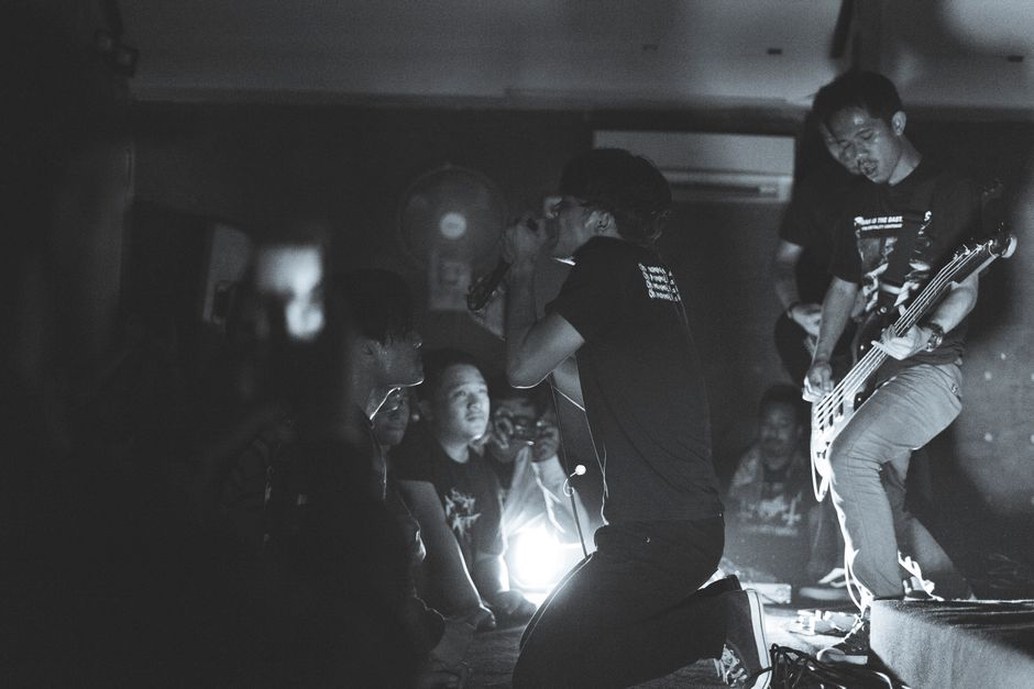
These networks also turned listeners into participants. Someone who first saw a band at a local gig might later write a review, photograph another show, run a distro table, or promote a concert. The line between audience member, organizer, and musician was often thin. Collaboration was not always easy: small budgets, work schedules, long distances between cities, and short-lived projects remained constant limitations. Still, people sharing the work kept the scene moving.
What held the network together
- Local venues: smaller clubs and youth-oriented spaces gave new acts room to test songs in front of an audience.
- Promoters and collectives: independent organizers put together mixed bills, coordinated travel, and connected regional audiences.
- DIY media: fanzines, flyers, posters, reviews, and online posts recorded releases and introduced distant listeners to bands they might otherwise have missed.
- Record culture: distros, label tables, and direct sales supported limited editions and encouraged attentive collecting.
- Shared bills: shows with punk, speed metal, death metal, or black metal acts expanded contacts without removing the differences between those styles.
For a closer account of the print culture that preserved these connections, the history of Finnish thrash fanzines and their underground documentation explains why reviews, interviews, and hand-distributed pages remain useful historical evidence.
A classic language with local accents
Classic thrash offered a familiar musical vocabulary: rapid down-picked riffs, tremolo-picked passages, abrupt tempo changes, sharp snare attacks, gang vocals, and solos driven by urgency rather than polish. Finnish bands used those elements in different measures. One group might favor tightly articulated speed and comic irreverence; another might push toward harsher vocals, darker harmonic turns, or a heavier mid-tempo attack. Punk and hardcore could surface in brief arrangements and direct performances, while Finland’s wider extreme-metal tradition could lend songs a colder mood or rougher vocal texture.
The important distinction is between influence and imitation. A band could borrow rhythmic figures or visual references while still writing songs shaped by its players, equipment, local peers, and recording conditions. Production makes this especially clear. A lean, dry mix can bring drums and riffs to the foreground, while a thicker guitar sound may pull the music toward speed metal or death-thrash. Neither approach is automatically more authentic. Within this scene, authenticity often meant commitment to playing, writing, and releasing music, rather than reproducing an earlier decade with archival precision.
Concerts as a working infrastructure
Live performance turned loose connections into lasting relationships. Rehearsal gave songs their structure, but a local bill showed whether transitions worked, whether a set carried momentum, and whether a new vocalist could hold a room. Support slots for touring acts introduced bands to listeners who might never have sought them out. Finnish groups travelling elsewhere in Europe depended on the same underground hospitality they offered at home: local promoters, compatible bills, shared equipment, and audiences prepared to arrive early for unfamiliar names.
Festival appearances served a different purpose, though they could not replace small rooms. A festival set might lead to foreign contacts and press attention; recurring club shows built the local support that made those opportunities possible. The relationship between the two is explored in Finnish thrash metal’s presence at European festivals from the late 2000s to the mid-2010s, where festival circulation is treated as part of a wider European underground rather than a standalone measure of success.
Why European touring was selective
Cross-border travel mattered, but it was expensive. Fuel, ferry or flight costs, accommodation, time away from work or study, and the risk of poor door income all affected decisions. For a self-financed band, a short run of dates could be more realistic than an extended tour. Touring should therefore be understood through the less visible decisions behind it: which cities were within reach, which promoters had proved dependable, and whether merchandise sales could cover part of the expense.
That practical reality gave personal connections real weight. A promoter who had seen a Finnish group at a festival, received a well-produced demo, or met its members through another band could make an overseas date possible. The same circuit moved records in the opposite direction, helping Finnish listeners find contemporaries from Sweden, Germany, the Baltic region, Britain, and elsewhere.
Reading the scene through its surviving traces
It is easy to romanticize a scene when looking only at favorite albums. A sound historical approach uses several kinds of evidence and recognizes what each source can, and cannot, establish.
| Source | What it can reliably show | What requires caution |
|---|---|---|
| Physical release | Track list, label, credits, catalogue number, format | Exact pressing size unless stated by a dependable source |
| Gig flyer or poster | Advertised venue, line-up, and date | Whether every advertised act performed |
| Contemporary review | How a release or performance was received at the time | Broad claims about popularity or influence |
| Band interview | First-hand intentions and recollections | Memory-based chronology without corroboration |
Collectors and researchers can begin with an item-level record: photograph both sides of a cassette insert, note matrix markings on a CD or vinyl runout where present, transcribe credits exactly, and record where the item was obtained. Match that record with a dated flyer or review only when the details truly correspond. These modest notes preserve the human scale of Finnish thrash: musicians, organizers, and listeners making the next show and the next release possible.