
For a Finnish thrash band, a European run was rarely a clean string of headline dates. In the late 2000s and early 2010s, it was more often a handful of carefully placed club shows, a support slot, a festival appearance, and long stretches on the road between scenes already connected through demos, records, and personal contacts. For groups outside the biggest metal-industry circuits, dates in Germany, the Benelux countries, the Baltic region, Poland, or Scandinavia extended existing underground relationships; they were not guaranteed commercial breakthroughs.
That distinction matters when reconstructing the period. Posters and social-media event pages can make scattered foreign appearances look like a full tour. In practice, Finnish thrash musicians often travelled through informal arrangements: a promoter knew a local band, a label contact recommended a venue, or two groups traded support dates in their home countries. The scale varied, but the aim was consistent: put a new release in front of listeners who cared about fast, riff-driven old-school metal and strengthen ties beyond Finland.
Why European roads mattered to a Finnish revival band
Finland had a strong metal infrastructure, but its population and geography set limits. A developing band could build recognition through Helsinki, Tampere, Turku, Jyväskylä, Oulu, and smaller regional stops, yet the domestic circuit did not always provide enough repeat audiences. Travelling in Europe gave bands access to denser networks of specialist venues, independent festivals, record shops, zines, and promoters used to working with underground metal.
The most useful destinations were not always the largest cities. A small club with a knowledgeable local promoter could matter more than an unsuitable room in a capital. The audience needed to recognise the musical language: palm-muted riffs, abrupt tempo shifts, shouted gang vocals, lead breaks, and a physical crowd response that remained participatory rather than passive. The revival circuit had room for bands whose strength lay in discipline and energy rather than novelty.
Finland’s reputation offered a modest advantage. Overseas listeners often associated the country with a long, varied heavy-music tradition, including 1980s pioneers such as Stone and National Napalm Syndicate, followed by death, black, power, and melodic metal exports. A young thrash act still had to earn its place onstage, but being Finnish could draw initial interest from promoters and collectors.
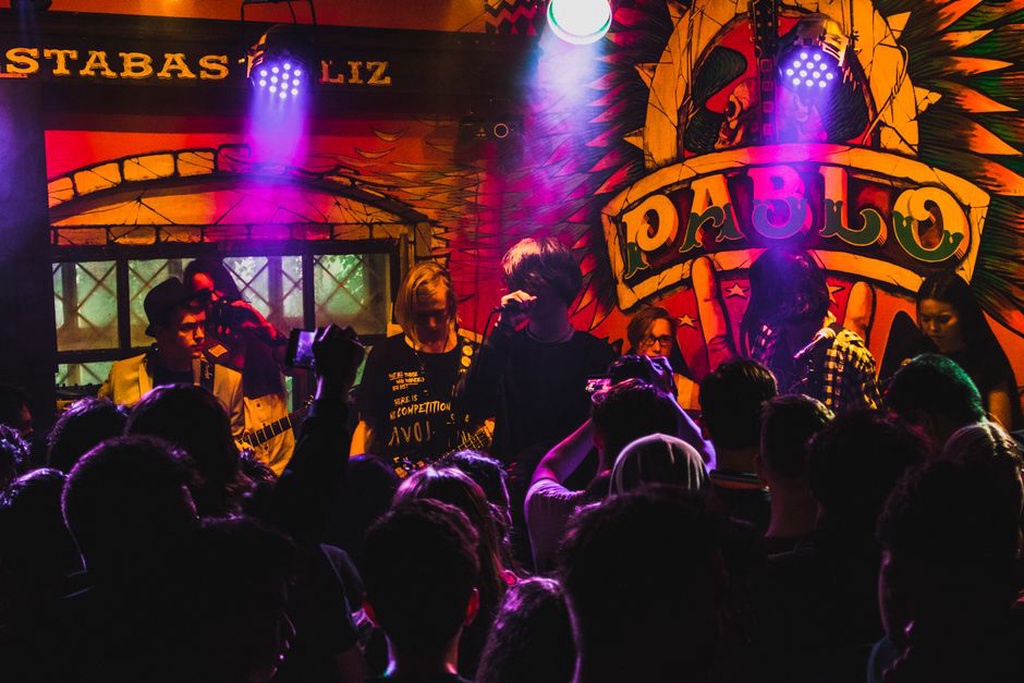
How tours were assembled
The word “tour” covered several different arrangements. Treating every overseas appearance as the same kind of activity obscures how these trips were actually put together.
Short self-booked routes
For many independent acts, the most realistic option was a long weekend or a week away. A band might take a ferry or flight to a transport hub, rent or borrow a vehicle, and play a compact run of dates. This limited time away from work or study and reduced the risk of losing money on poorly attended shows. It still required close planning: border documents, backline arrangements, accommodation, merchandise, fuel, and a route that left enough rest to play properly each night.
Support opportunities
Supporting a better-known Finnish, Nordic, or continental band could be a quicker route into a new territory. Lower billing meant less say over set length and scheduling, but it placed the group before an audience already there for aggressive metal. A focused 25- to 40-minute set often worked well for thrash: long enough to build momentum, without forcing a young catalogue through an extended performance.
Festival-linked travel
Summer festivals could make an otherwise impractical trip possible. One confirmed appearance might justify nearby club dates before or after the festival. Festival bills also brought Finnish bands into contact with promoters, musicians, photographers, and small-label staff from other countries. Those conversations could matter more than immediate payment if they led to a later invitation on better terms.
Exchange shows and scene reciprocity
Reciprocal booking remained one of the underground’s most durable methods. A band from Germany, Sweden, Estonia, or elsewhere would play Finland with local assistance; later, the Finnish group would receive a date in the visiting band’s region. These exchanges depended on frank expectations. Neither side could count on a large fee, but each could offer an appropriate bill, floor space or low-cost lodging, local promotion, and an audience likely to share its tastes.
The logistical reality behind the posters
European travel was costly for bands at the demo, EP, or first-album stage. Performance photos, crowd footage, and a list of cities conceal a string of compromises. Ferries across the Baltic and Gulf of Bothnia were useful connections, but added timetables and expenses. Flights saved time while making amplifiers, drums, and merchandise harder to transport. Road travel allowed more flexibility, but required a dependable driver, fuel money, and enough sleep to keep the playing tight.
| Touring element | Common underground approach | Why it affected the music |
|---|---|---|
| Backline | Use a promoter’s cabinets, drum shells, or shared equipment where possible | Reduced freight costs but limited control over familiar gear |
| Travel | Short regional blocks rather than prolonged continent-wide runs | Preserved money and energy for the performances themselves |
| Merchandise | Carry small, manageable quantities of shirts, patches, CDs, tapes, and vinyl | Sales could offset daily expenses and introduced releases to collectors |
| Accommodation | Stay with promoters, fellow musicians, or supporters | Kept budgets viable while reinforcing scene relationships |
| Promotion | Rely on local flyers, venue networks, zines, forums, and early social media | Attendance depended heavily on trusted local communication |
Merchandise was particularly important. A self-released demo or independently pressed EP could travel farther than a band’s radio reach. Physical releases gave listeners a lasting connection to the performance and could help meet basic costs. They also left a record trail that collectors still use when tracing a group’s activity. For context on the infrastructure behind such releases, see the account of independent labels that supported Finland’s thrash metal revival.
What travelled well: sound, setlists, and identity
Finnish thrash from this period was never one fixed style, but successful live sets usually made their central idea clear early. Some bands favoured tightly controlled, technical riff construction; others pushed crossover force, speed-metal melody, or a raw rehearsal-room edge. Across these approaches, European audiences responded to songs that held their shape at high volume. A memorable main riff, a convincing turn into a chorus or chant, and a deliberate move between speed and half-time weight could win over listeners unfamiliar with the band.
Setlists therefore often favoured direct material over broad discography surveys. The opening song had to establish attack immediately. Clear arrangements helped in rooms with limited soundchecks or unfamiliar monitoring. Longer pieces could work, but only when their changes survived the venue mix. The final slot often went to a fast, recognisable closer or a cover suited to the band’s influences, though there is no basis for assuming every Finnish act worked this way.
Visual identity travelled with the music. Hand-drawn artwork, patched denim, logo shirts, flyers, tape-trading aesthetics, and deliberately unpolished stage presentation signalled membership in a transnational thrash culture. Familiar reference points—Bay Area precision, German speed, crossover bluntness, Scandinavian severity—only mattered when they served original songs rather than substituting for them.
European audiences were not one audience
A useful tour chronicle should not treat continental audiences as a single bloc. Venue conditions, local support bills, weekday timing, ticket prices, and regional preferences shaped every show. A packed underground room could be intensely receptive, while a larger mixed-genre bill might draw a polite but distant crowd. A festival could provide visibility without the intimacy needed for merchandise sales or direct conversation. For bands, attendance alone was a poor measure of a date’s value.
- Promoter reliability: Clear communication, timely load-in details, and agreed backline were often more valuable than optimistic attendance forecasts.
- Bill compatibility: Pairing thrash with speed metal, crossover, traditional heavy metal, or similarly energetic acts usually made it easier for audiences to connect.
- Local continuity: A return invitation or a new contact could make an initially modest show worthwhile.
- Documentation: Keeping posters, setlists, photographs, and release-table notes helps separate verified dates from later recollections.
Documentation requires particular care because underground history is easily distorted. Dates may be announced and cancelled, venue names change, and uploaded flyers can omit supporting acts. The most reliable reconstruction compares contemporary evidence: venue calendars, promoter announcements, band posts, ticket stubs, dated photographs, and press coverage. A poster confirms an intended booking, not necessarily a completed performance. That caution respects the work of musicians and organisers and avoids the false precision that often enters retrospective scene histories.
Touring as a network rather than a finish line
The most significant European trips often produced gradual results. A promoter who saw a Finnish band in a small German club might later offer a stronger date. A shared bill could lead to a split release, a Finnish return show for a foreign group, or a contact at a regional festival. Reviewers and collectors who bought records at the merchandise table could become repeat supporters. Such results were hard to quantify, but they gave independent bands a foothold beyond their home territory.
That networked character is why a touring history should not be reduced to headline milestones. A band could play only a few overseas dates and still participate internationally in a meaningful underground sense. Conversely, a long itinerary was not automatically sustainable or influential. More useful questions are practical: who booked the show, which circuit did it connect to, what release was carried, which bands shared the stage, and whether the trip led to continuing relationships?
How to research a specific Finnish band’s European dates
Collectors and historians can work methodically without treating incomplete archives as proof that something never happened:
- Start with the band’s official discography and identify release periods likely to have prompted travel.
- Search contemporaneous flyers, venue listings, festival programmes, and promoters’ archives for matching dates.
- Compare multiple sources before describing an appearance as confirmed.
- Record uncertainty plainly when the evidence establishes an announcement but not a completed show.
- Preserve geographic context: a Baltic weekend, a Scandinavian support run, and a festival-linked continental trip are different kinds of activity.
Live recordings can add useful evidence when their date and location are documented rather than assumed. The blog’s guide to Finnish thrash metal live albums and essential concert documents is a useful companion for considering which recordings preserve more than a performance: they can retain venue atmosphere, repertoire, and a band’s changing stage attack.
For archival work, retain the original spelling of venues and cities used on a contemporary poster, then add standardised geographic information separately. A file listing the band, date, venue, city, country, billing position, and source type will remain far more useful than an undated photograph labelled only “European tour.”