
On Stam1na’s Uudet kymmenen käskyä (2006), a thrash riff can serve as a rhythmic hook while shifting within a complicated arrangement. Lost Society’s Fast Loud Death (2013) puts the emphasis elsewhere: on a forceful attack, riffs that register quickly and the snap of a classic thrash chorus. Both belong in a history of Finnish thrash, but they are not points on a neat line between old-fashioned and modern. They show different ideas about speed, clarity and how much work a riff should do on its own.
That distinction matters in the late 2000s and early-to-mid-2010s. Finnish players could draw on earlier local thrash, melodic death metal, hardcore and technically exact modern metal. What changed was not a shared set of equipment or a synchronized return to the 1980s. Listen to how each band fits drums, guitars, bass and voice together—and what its recording lets you hear.
What changed when the riff came forward?
Tempo is an easy way to identify thrash, but it tells you little about what a riff is doing. A tightly palm-muted low note can work almost like a second kick drum. Open chords make the same phrase feel larger. Alternating the two creates movement without a change in tempo, and Finnish bands working in and around thrash used that contrast in different ways.
Stam1na, formed in Lemi, built it into densely organized songs. Finnish-language vocals, abrupt shifts and precisely articulated guitars set the band apart from a straightforward recreation of first-wave thrash. A heavy section may draw its force from an interruption: a stop, a displaced accent or a vocal line pressing against the riff. Later releases such as Raja (2008) and Viimeinen Atlantis (2010) give those ideas more room without giving up thrash’s percussive guitar attack.
Lost Society, founded in Jyväskylä in 2010, offers a useful counterexample. Its early recordings put fast picking, prominent leads and shouted vocals into songs with outlines you can grasp quickly. The playing is tightly coordinated, and the recordings give each attack definition. What feels traditional is less the recording itself than the songs’ commitment to immediate riff-and-chorus impact.
For a closer look at how releases and touring connected bands beyond their home scenes, see the blog’s account of Finnish thrash in the global revival. Those connections did not produce one shared sound; they put familiar thrash ingredients before different audiences.
The rhythm section: speed with different kinds of weight
Fast alternate-picked guitars suggest momentum. The drums decide whether it feels restless, steady or crushing. A rapid skank beat drives frequent snare hits beneath the riff; a spacious backbeat gives the guitar room to swing or lends weight to its downbeats. Double-kick passages can intensify either feel, though a constant stream of kick hits may flatten a riff if every subdivision carries equal weight.
That is one reason to listen beyond a record’s fastest songs. A short, near-hardcore rush can sit beside a mid-tempo passage built for head movement rather than maximum speed. In a live room, the distinction is physical: a half-time break lets the audience catch an accent together, while an uninterrupted sprint demands stamina and precision. On record, those choices determine whether the song has contrast or stays in one texture.
Bass matters here, even when it is harder to pick out. Following a palm-muted guitar adds mass to notes that might otherwise sound thin at speed. A separately audible bass attack can mark a transition before the guitars change pattern. Dense guitar production can bury that work. A mix can sound crowded without giving its low end much definition.

Precision did not always mean polish
Close coordination between kick drum and guitar chug became a source of force in modern thrash. But precise playing need not sound polished: exact timing can coexist with a rough pick attack, while a clean recording may expose imprecision rather than hide it. When comparing Finnish releases from this period, listen for the small rhythmic edges the recording keeps intact. They often give a riff its character.
Vocals as a source of rhythmic friction
A thrash voice does not have to sit neatly above the band. A clipped shout can reinforce guitar accents; a stretched syllable can pull against them and stop a repeated riff from sounding identical each time around. Stam1na’s Finnish-language delivery is central to its rhythmic design. You can hear it without translating every lyric: consonants cut into pauses, while held sounds carry across bar lines.
Early Lost Society recordings use more direct shouts suited to short, high-energy phrases. The vocals announce sections and sharpen their contrast rather than extending every intricate guitar pattern. Neither approach is automatically more aggressive. A voice can confront the riff by locking to it or by taking a different cadence.
Backing voices change the scale, too. A group shout on a refrain needs no extra guitar layer to make a chorus feel broader than the verse. In a club, it also gives the crowd a clear place to join in, even if the tempo and basic chords stay the same.
Old-school reference, contemporary construction
“Old-school” points to recognizable choices—rapid downstrokes or alternate picking, abrupt breaks, emphatic solos and shout-along choruses—not to one recording method. An early-2010s band could use them alongside the separation and editing available in a contemporary studio. A clearly defined bass drum, sharply placed rhythm guitars and audible lead lines give a classic-style riff a different immediacy.
There is a trade-off. Instrument separation helps complicated parts register, especially through small speakers or a loud venue system. But if every guitar layer is equally bright and every drum hit equally prominent, a fast song can lose its sense of one phrase rising above another. Dynamics live in small changes as well as quiet and loud sections: a drummer easing off a pattern, a guitarist letting a chord ring, or a bass note left audible after the guitars stop.
Specific listening questions are more useful than a single production label:
- Pick attack: Can you distinguish the rapid notes, or do they merge into a sustained buzz?
- Kick and bass relationship: Does the low end reinforce the riff’s pattern, or become a continuous thud?
- Space around breaks: Does a stop leave a gap that builds tension before the next entrance?
- Lead placement: Can a solo cut through without the rhythm guitars disappearing?
- Vocal distance: Does the singer sound embedded in the band or distinctly in front of it?
These are audible results, not guesses about every microphone or studio decision. They also make comparisons across release formats fairer. A rough early recording can document a compelling arrangement without the frequency separation of a later album.
Why the live room mattered to recorded sound
A concert tests a thrash arrangement. A transition that relies on several overdubbed guitar parts must still communicate when a smaller lineup plays it onstage. Short stops, recognizable entrances and riffs with strong rhythmic outlines tend to survive that test. Late-2000s and early-2010s underground gigs gave musicians chances to hear which passages worked outside the rehearsal room.
That does not mean every Finnish band wrote for the same crowd or venue. A tightly timed festival set rewards songs that establish themselves quickly; a club set may allow a longer build or a sudden change of pace. European touring also placed Finnish groups beside bands with different guitar tones and stage volumes. Those encounters belong to the scene’s history, but they are no evidence that one band borrowed a particular riff from a tourmate.
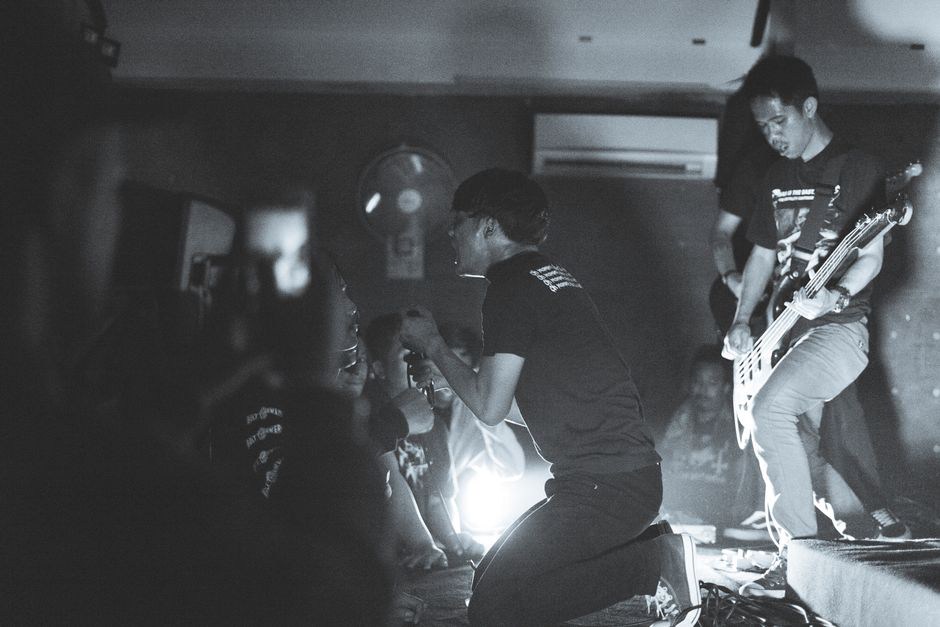
For more on intimate stages, see the history of small rooms that shaped Finnish thrash. Those rooms make one point especially clear: heaviness is not only about low frequencies. A well-timed silence before the whole band returns can hit harder than another layer of distortion.
Reading a change without inventing a single trajectory
The tidy version runs from raw demos to polished albums, then from local clubs to international attention. Listening makes that story harder to sustain. A polished recording may keep ragged vocal phrasing; a younger band may favor a more openly classic thrash structure than an established one. Even within one discography, speed has different jobs. One song races toward its chorus, while another builds tension by repeatedly withholding the full band’s entrance.
Keep formation dates separate from recording dates, too. Stam1na’s mid-2000s albums and Lost Society’s early-2010s debut capture different moments and starting points, not successive stages of one development. Nor can a single fast track speak for an album whose slower passages may show more rhythmic imagination.
Try a minute of Uudet kymmenen käskyä beside a minute of Fast Loud Death, at matched listening volume. Follow the guitar and kick first. Then replay both passages for the vocal entrances: does the voice confirm the riff’s accents or draw your ear elsewhere? That shift in attention says more about the distance between these sounds than a tempo reading alone.