
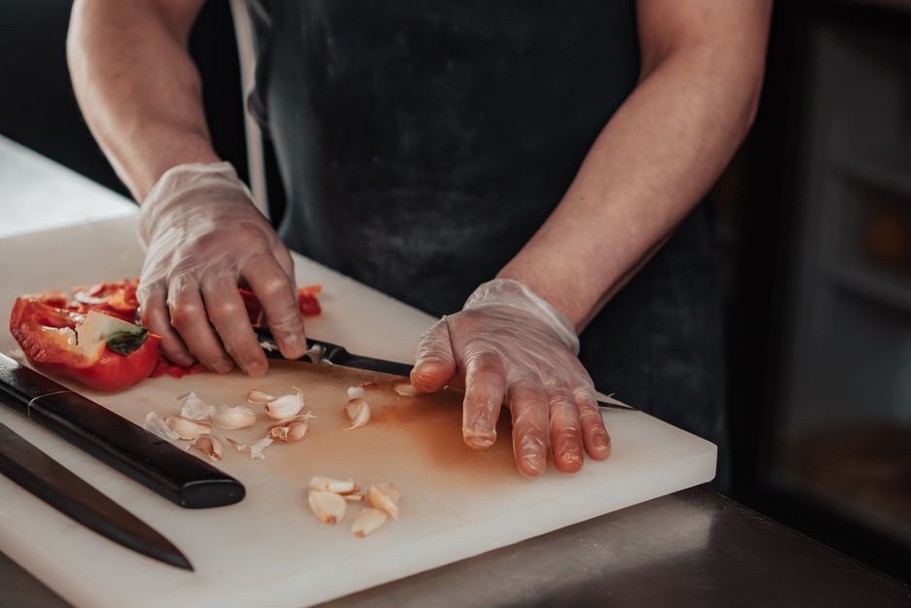
A cutting board needs a clear stretch of counter. In a small kitchen, that spot can quickly become home to mail, clean dishes, and appliances used once a week. Before buying organizers, clear one uninterrupted area beside the sink or stove and prepare a meal there. Notice what you have to move. Those objects, rather than the kitchen’s square footage alone, may be what is getting in your way.
Start with the work, not the storage
A kitchen works better when you can take out ingredients, wash and prepare them, cook, and clean up without repeatedly crossing the room or shifting piles. In a small space, a few extra movements add up. Notice where you reach for a knife, where you set a hot pan, and whether an open cabinet door blocks the dishwasher or a drawer.
Give each regular task a modest working area. Keep your most-used knife and cutting board near the preparation space. Store pans and utensils near the hob if there is a safe place for them, and put everyday plates near the dishwasher or drying rack. The layout does not have to be perfect. It should spare you from carrying things around another person or setting them down halfway because their destination is awkward to reach.
If several people use the kitchen, compare their routines before moving everything. One person may pack lunch while another makes coffee. Keeping mugs and coffee supplies away from the main preparation area can stop both tasks from competing for the same patch of counter.
Keep one section of counter consistently clear
More counter space helps only if you can use it when you need it. Choose a section large enough for a board and a bowl, and keep it free of permanent storage. A kettle used daily may earn its place there; a stand mixer used monthly may be better in an accessible cabinet. Do not tuck it away somewhere so awkward that using it becomes a chore.
Pay attention to what lands on the counter. If mail collects beside the fridge, give it a small tray outside the food-preparation area and empty the tray regularly. If clean dishes sit out because their cabinet is crowded, make room in the cabinet rather than buying a larger drying rack. Deal with the cause of the pile.
A cutting board designed to fit securely across a sink can add temporary work space, as long as the sink remains usable when needed. Never balance a board over an unstable basin or use a stove cover while the burners are hot. A narrow rolling cart can provide another landing spot, but not if it narrows the walkway or blocks an appliance door.
Store things where they are used
An empty shelf is useful only if it suits what you put there. The shelf above the fridge may be fine for a rarely used serving dish, but it is a poor home for the pan you need every evening. Organize cabinets around how often you use things and the jobs they help you do.
Make everyday items easy to reach
Keep daily dishes, glasses, and cooking tools between waist and shoulder height when possible. Store heavy pans low enough to lift without reaching overhead. Seldom-used equipment can go on higher shelves if you can retrieve it safely; you should not need a chair for your daily kitchen routine.
In a deep cabinet, shallow bins or a pull-out shelf can keep items at the back accessible. Clear bins make supplies easier to see, but a sturdy box of the right size can work just as well for packets or baking tools, provided you can lift it out without spilling anything. Before buying a pull-out organizer, measure the inside of the cabinet and account for hinges and plumbing.
Use vertical space selectively
Wall rails and hooks can free a drawer for things that need to lie flat. Hang a few utensils you use often, rather than every tool you own. Keep anything near the hob clear of heat, flames, and steam, and follow appliance clearance requirements. In a rental, a freestanding shelf or removable organizer may be preferable to drilling. Check weight limits and surface instructions before relying on adhesive hooks.
Cabinet-door organizers can hold light items such as wraps or cleaning cloths. Close the door slowly after installing one to make sure it clears the shelves and does not hit glassware. Leave room around plumbing and shutoff valves under the sink: storage should not make a leak harder to spot or a valve harder to reach.
Reduce duplicates before adding containers
Storage products can make crowded shelves look orderly without fixing the crowding. Take out one category—mugs, food containers, or utensils—and see what your household actually uses. A drawer with three can openers still has a capacity problem after you add dividers.
Food containers are a good place to start. Match bases with lids, recycle damaged pieces where local rules allow, and keep a practical range of sizes. Nest containers only if the lids stay easy to find. A small upright divider or one box for lids may help; a system that requires you to empty a shelf for one container will not.
Keep things that serve a purpose, even if you use them only occasionally. A large pot may be needed for a batch of food. The question is whether it needs prime cabinet space. Moving it to a higher or less convenient spot can make room for the saucepan you use every day.
Give drawers and shelves clear roles
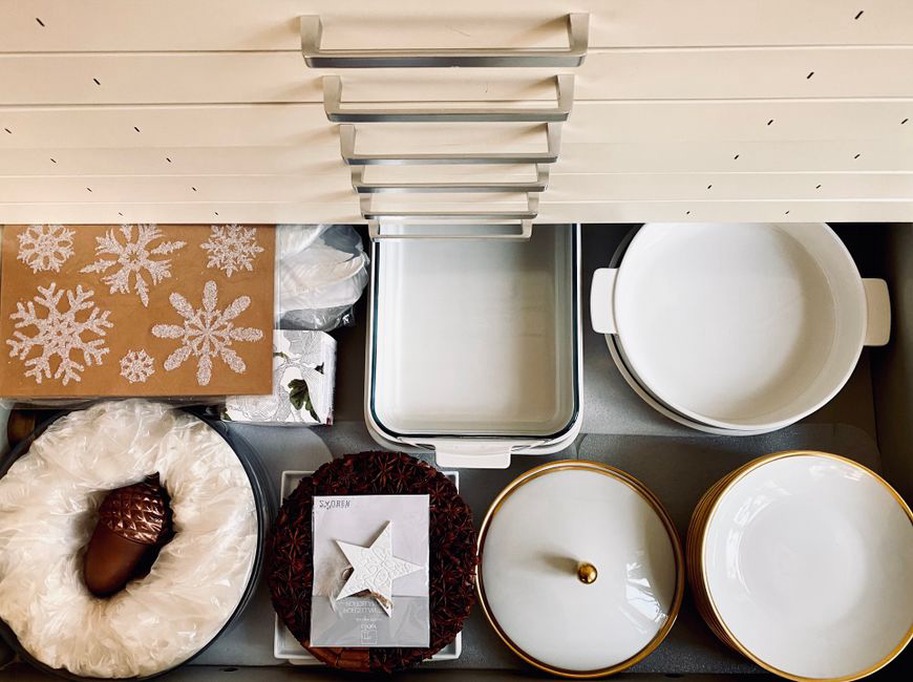
A shallow drawer is often better used for utensils than loose odds and ends. Group everyday cutlery, preparation tools, and small specialty items by task. Adjustable dividers help when they fit, but there is no need to pack the drawer edge to edge with compartments. Leave enough room to lift things out.
On shelves, put frequently used items at the front without stacking unrelated things on top of them. Stack plates with plates and bowls with bowls. Shelf risers can use the height of a cabinet, provided both levels remain easy to reach. If you have to move six mugs to get one, the extra capacity is not helping.
Think through the route dirty and clean dishes take. Keep cleaning supplies within reach of the sink, stored according to their labels, away from food and out of children’s reach. Give towels somewhere to dry instead of leaving them in a pile on the counter. If an open dishwasher blocks the main walkway, unload it when the kitchen is otherwise quiet rather than leaving it open during meal preparation.
Make the sink, bin, and lighting work harder
The sink gets enough traffic without products you rarely use lining its edges. Keep soap, a sponge or brush, and a towel within reach. A compact caddy can catch drips if you empty and clean it. If you wash dishes by hand, choose a drying rack sized for a normal load, not one that permanently takes over your preparation area. Foldable or over-sink designs can help if they fit securely and leave the tap usable.
Put waste and recycling bins where you can discard scraps during preparation without crossing the room. An under-sink bin may be convenient, but it should leave the plumbing visible and the cabinet easy to open. If there is no room for several bins, keep a small, easy-to-empty recycling container near the exit and move its contents to the main recycling area after cooking. Follow local sorting rules rather than planning around an assumed system.
Lighting can make the counter easier to use. A ceiling light may cast your shadow across the worktop while you chop or measure. Under-cabinet task lighting can help; choose fittings suitable for the location and install them according to their instructions. Route plug-in cords away from water, heat, and cutting areas. If the job requires wiring or new fixtures, use a qualified professional where appropriate. You need a clear view of the worktop, not a bright bulb aimed at your eyes.
Choose a few changes in the right order
You may not need shelves, a cart, or a full cabinet overhaul. Start with changes that cost nothing, then see what still gets in the way:
- Clear one preparation surface. Move nonessential appliances and stray items elsewhere for a week.
- Rehome the most-used tools. Put them near the tasks they support, then test the arrangement while making ordinary meals.
- Remove unusable duplicates. Sort one crowded category at a time before measuring for organizers.
- Fix a specific access problem. Add a divider, hook, bin, or pull-out shelf only when you know what it needs to hold.
- Check clearance and safety. Open every affected door and drawer; make sure nothing blocks ventilation, a heat source, plumbing, or a walkway.
After a week, look for the interruptions that keep happening. If you move the cutting board every time you use the kettle, find another home for the kettle. If clean plates pile up, move a less-used item out of their cabinet so the plates have an easy-to-reach place. Make that change before adding more storage.