
Pushing a sofa against the wall can free up floor space, but it will not help much if an arm blocks the doorway or the seat is so deep that the route to the window becomes a squeeze. Before rearranging anything, look at where people walk, where daylight enters, and what you see from the entrance. Those details often shape how spacious a room feels more than its square footage.
Clear the routes through the room
Walk from the doorway to each seat, the window, and any doors beyond the living room. If a side table, floor lamp, or basket makes you turn sideways, move it. In a tight room, one clear route along the furniture usually works better than several narrow gaps between pieces.
Try moving what you own before buying anything. Painter’s tape can show the footprint of a proposed sofa or cabinet on the floor. While the tape is down, open nearby doors and pull out drawers; a layout that looks roomy from above may fail when a cupboard needs to open. If there is space, pulling a sofa a few inches away from the wall can give curtains room to hang freely and make the sofa’s position look more deliberate.
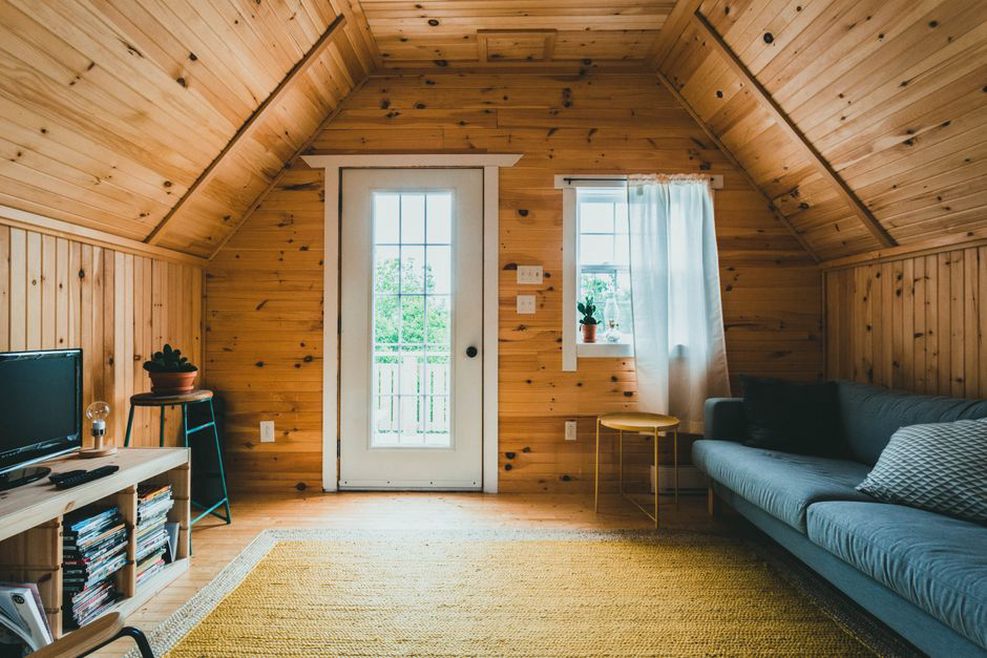
Choose furniture by its footprint and function
A small room does not need miniature furniture everywhere. Several narrow chairs and tables may create more clutter than one comfortable sofa. Measure the room and its doorways, then choose enough seating without blocking the routes through the space. Check depth as well as width: a deep sofa can claim more usable floor than its length suggests.
Furniture with visible legs leaves more floor in view, so the space can feel less blocked. A wall-mounted shelf or narrow cabinet may keep storage out of the walking route. Neither is an automatic fix. Open shelves need occasional editing, and wall-mounted furniture needs a suitable wall and the right hardware.
Make each extra piece earn its place
- Instead of a large coffee table: try a smaller one that leaves easy access to the seating, or nesting tables you can separate when needed.
- Instead of several occasional chairs: consider one chair that works for both conversation and reading.
- Instead of an open pile of supplies: use a closed cabinet, a storage ottoman, or a basket sized for a particular shelf.
Check storage furniture’s actual dimensions before counting on it. An ottoman may hold blankets, but if it blocks the route to the balcony, it has not solved the room’s main problem.
Let daylight reach further
Where possible, keep tall furniture from cutting across a window. Hanging curtains higher and wider than the frame can draw the eye upward and reveal more glass when they are open. Choose a rod and enough curtain width for the panels to stack beside the window rather than over it.
A mirror can reflect daylight, but check what else it will reflect. Aim it at a window or an uncluttered part of the room, not a crowded shelf or a bright lamp at eye level. Directly opposite a window sometimes works; an angle may be better if the reflection causes glare. Test the position before mounting a heavy mirror, and use fixings suited to its weight and the wall.
Light wall colors can make a room feel airy, but paint will not make up for blocked paths. If you prefer a darker color, keep it. Similar tones across large surfaces, furniture, and curtains can make the room feel calmer without painting everything white.
Use lighting at more than one height
One overhead fixture can leave corners dim and the center of the room looking flat. Put a lamp where you need it, perhaps beside the sofa for reading, then consider another light for a dark corner. That gives the room more depth after sunset. A plug-in wall light can free floor space if a lamp base would obstruct a walkway; secure the cord away from traffic.
Choose shades that diffuse light instead of bare bulbs that shine into seated people’s eyes. Lamps with similar light warmth tend to feel more cohesive than a mix of stark white and warm yellow. Every corner need not be equally bright, but being able to see the room’s edges can keep it from feeling smaller at night.
Reduce visual noise without stripping away character
Objects take up attention even when they take up little floor space. Gather small things into a few groups and leave some shelf space empty. Keep daily essentials near where you use them, but give mail, chargers, and remote controls a defined home. A tray can hold the small necessities; it cannot do the job of clearing things you no longer need.
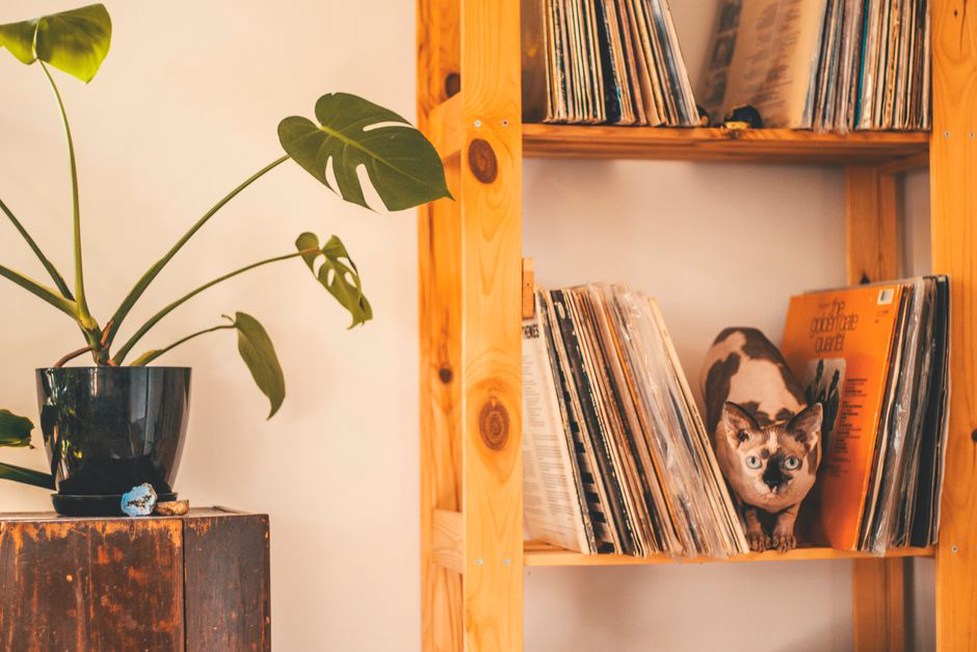
For records, books, or other collections, matching storage units often look tidier than a mix of stacks. Put heavy items on sturdy lower shelves, and do not load shelves beyond their rated capacity. Displaying a selection rather than everything at once lets the collection remain part of the room without taking over.
Keep the floor and sightlines readable
A rug can mark out the seating area, but one that is too small may leave each piece of furniture looking stranded. If possible, set at least the front legs of the main seating on it while keeping door swings and walking routes clear. A simple pattern or low contrast can give the eye a continuous surface. Pick a texture that suits your cleaning needs and any mobility aids used in the room.
Look across the room from the entrance, then look again at seated eye level. If the back of a tall chair hides the window or shelving blocks the longest view, try swapping it with a lower piece. Furniture does not all have to hug the walls; the point is to place tall, solid pieces where they will not divide the room visually.
Change one thing at a time when testing a layout. Move the side table out of the doorway first, then sit in each seat. Can you reach a drink and switch on a light? Can someone pass without furniture being moved? If taking out the table clears the route but leaves one seat without a surface, a small wall shelf beside it may work better than another floor-standing piece.