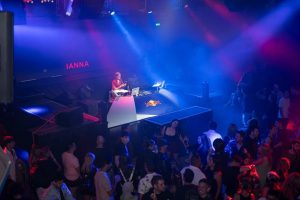
An afternoon festival slot could put a Finnish thrash band in front of people who had come for someone else. The challenge was to make them stop, remember the name and perhaps find the next release. For bands working through the late 2000s and mid-2010s, that chance mattered even when the larger stages belonged to established acts. A club show could draw committed fans; a festival could reach listeners who had never thought to seek the band out.
Large, multi-stage events brought groups beyond their home towns, while smaller festivals could offer an audience already keen on fast, guitar-driven music. Neither guaranteed a breakthrough. A short slot, awkward scheduling or the wrong crowd could blunt its effect. Still, a festival put fans, performers, promoters and media in the same place—an opportunity that attendance figures alone cannot describe.
Why the festival setting changed the audience
Finnish thrash bands could find devoted listeners through local gigs, record trading and online communities. At a festival, they might also reach fans of traditional heavy metal, death metal, punk or more mainstream Finnish metal. Heard between familiar acts, thrash’s speed and clipped rhythmic attack could catch someone who would never have bought a ticket to a small thrash-only show.
Established events show the scale of the opportunity, though their existence is no evidence that every underground band played them. Tuska Open Air Metal Festival’s history documents one of Finland’s prominent metal festival settings. Regional and genre-focused festivals worked with different capacities and expectations. What an event *could* offer is one question; whether a particular band appeared there is another, requiring a dated lineup, programme or other reliable record.
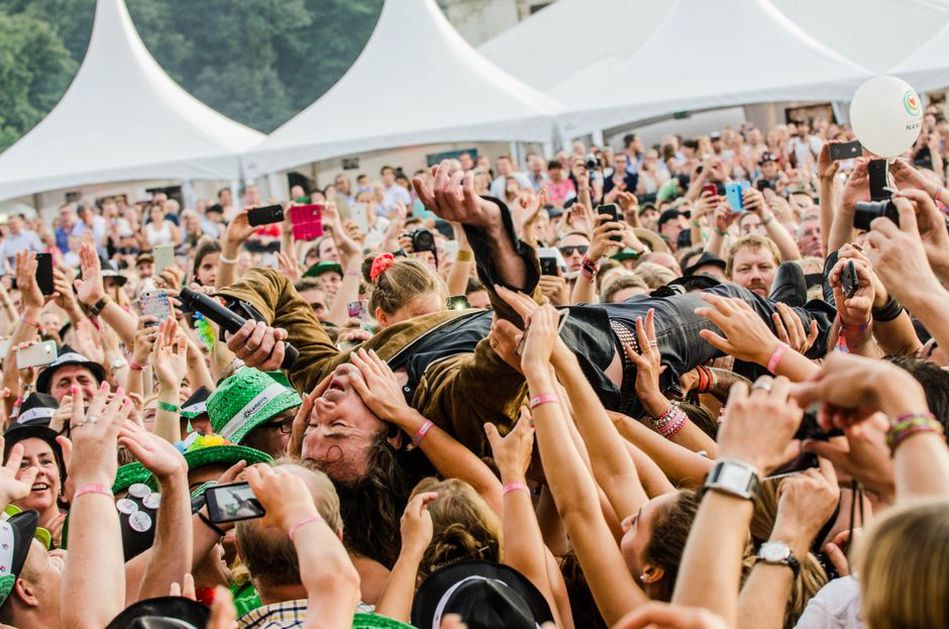
Festival crowds rarely behave like club crowds. People arrive halfway through a set, drift between stages or wait nearby for the next act. For a band, that can be frustrating, but it also gives the first song a job to do. A clear, forceful opening and a stage presence readable at a glance might persuade a passer-by to stay. Someone who hears three songs and looks up the band afterward could matter more than an attentive listener who already owns every record.
The slot mattered as much as the booking
“Played a festival” tells us little about the conditions. An early appearance on a small stage, a late set in a packed tent and a slot opposite a major headliner offer different chances to be heard. Stage location affects foot traffic; set length limits what a band can introduce; scheduling determines who is free to listen. At outdoor events, weather can change the picture again. None of this judges the performance, but it affects how far the music might reach beyond those who planned to be there.
A short set could favour a developing thrash band’s most immediate songs. Speed alone might get lost in imperfect festival sound; tightly arranged stops, memorable vocal lines and riffs that cut through gave new listeners something to remember. There was less room for the slow build of a headline club show. Yet a late slot was not necessarily the better one: an afternoon set at a large event might reach more first-time listeners than a later appearance at a tiny specialist festival.
What a programme can—and cannot—tell us
Archived posters and running orders can establish that a band was advertised, where it was scheduled and which acts shared the event. They cannot tell us how many people watched, whether the set went ahead as planned or what the audience made of it. A photograph shows only what fell within the frame; a fan account preserves an impression, not necessarily a representative response. Read together, such sources offer a sounder account than any one of them alone.
Placement on a lineup may also show how organisers presented a group. Put beside other fast, aggressive acts, a young thrash band might have been easy for listeners to place. A mixed bill could bring a wider but less predictable audience. Neither is a career milestone by itself. More revealing is what can be traced around the appearance: later bookings, coverage, a release in circulation or a return to the festival in a different slot.
From a live set to a recognisable release
Between the late 2000s and mid-2010s, listeners had several ways to follow up after an unfamiliar set. A band could mention an EP or album onstage, sell physical copies at the event, or leave people with a name to search later. The performance gave those routes a point of reference. A recording found after hearing the band live meant something different from an anonymous thumbnail or a catalogue entry.
Merchandise served a practical purpose. A CD or shirt carried the name beyond the festival grounds, even for someone who remembered a riff better than a logo. But sales are only one measure. A listener might hear the band while queuing for food and search for it a week later, leaving no trace in the merchandise tally. A busy table, in turn, tells us nothing certain about long-term listening.
For collectors tracing this period, evidence often establishes proximity rather than cause. A dated festival programme, a release available around the same time and contemporary coverage can show that a band had music to put before new listeners. They cannot show that one festival produced later recognition on its own. Recordings and performances circulated together; Finnish thrash beyond Finland through records, shows and influence follows those routes on a wider geographic scale.
Other bands were part of the audience
Festivals also put musicians in one another’s path, sometimes across city or national boundaries. Watching a set, meeting backstage or comparing equipment problems might lead to a shared bill, an invitation or simply an exchange of contacts. Such encounters are hard to document and should not be turned into invented origin stories for tours. The basic opportunity is clear enough: bands that knew each other only through recordings and posters could meet in person.
For groups without much institutional support, other people in the business could be as important an audience as the fans at the barrier. A promoter could watch a band handle a tight changeover and an unfamiliar crowd. Another musician could hear whether the precision on a recording held up live—a telling test for music so dependent on rhythmic coordination. Familiarity gained that way might matter when someone assembled a later bill, though any specific connection needs evidence.
Visiting international acts offered another point of comparison. Finnish groups could be heard in the same broad setting as established performers, despite occupying very different places on the bill. A local support slot was not an endorsement from a headliner. It did give listeners a chance to hear the band alongside the wider metal circuit.
Finnish visibility and the route outward
A festival at home could reach travellers as well as local fans. A Finnish band appearing elsewhere in Europe could meet listeners with little access to its club shows. Either appearance was a point of entry, not a touring strategy in itself. Travel costs, equipment logistics, set length and suitable future bookings all affected whether the band could build on that attention.
One festival leading directly to foreign demand makes a tidy story, but the evidence usually supports less. An event might have introduced a band to a promoter or fans from several countries. Later dates could show growing reach without identifying its cause: records, recommendations and earlier live work may all have played a part. A festival’s value was partly that it brought those routes together, briefly, in one place.
Distance mattered within Finland, too. A nearby event could be easier to play than one requiring transport, accommodation and time away from work or study. Even a prestigious booking might be hard to sustain if its costs were too high. Smaller regional festivals could provide experience and continuity between more visible appearances, despite leaving fewer traces in international metal writing.
How to assess a festival’s promotional effect
No single figure captures what a festival did for a band. Total attendance is not the audience for an individual set. A poster proves publicity, not a changed career; later popularity cannot simply be credited to an earlier booking. It helps to ask narrower questions:
- Was the appearance confirmed? Compare an official programme or timetable with other contemporary evidence when available.
- Who could reasonably have heard the set? Consider the stage, time and competing performances, not just total festival attendance.
- What could listeners follow up? Look for a release available at the time, documented merchandise or coverage that clearly identified the band.
- Did the opportunity continue? Subsequent dates or repeat invitations show activity, though not necessarily direct causation.
- Whose account survives? Organisers, musicians, reviewers and audience members record different parts of the event.
These questions guard against dismissing a small, poorly documented set that may have reached dedicated listeners—or overstating a prominent festival logo on a band biography. In an underground scene, a name often becomes familiar through repeated encounters rather than one decisive performance.
To investigate a particular appearance, start with the dated programme and the band’s release history. Then check what contemporary reviews and photographs actually establish. If the running order survives, note the set time: that single line may say more about the chance to be heard than the biggest attendance figure associated with the festival.