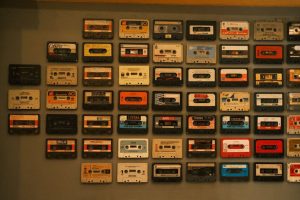
“Was this cassette released before the band’s first European tour?” Before answering, an archivist needs to know which cassette, which edition and which tour the listener means. A later reissue can be mistaken for the original release; an announced show can be mistaken for one that happened. Keep the question in the listener’s words, then work out what evidence would settle it.
In a Finnish thrash archive covering the late 2000s through the mid-2010s, audience research is less about popular keywords than about the points where listeners, collectors and gig-goers get stuck. Their questions may concern a recording and its physical edition, a poster and a remembered performance, or the gap between a familiar “classic thrash” description and what a release sounds like.
Start with the questions the archive already receives
Read contact messages, comments, corrections and recurring discussions around existing entries. Save the wording when you can. “Is this the same demo as the CD version?” calls for an edition comparison. “Where can I buy the CD?” asks about current availability, which a historical archive may not be able to track reliably.
Not every message calls for a new article. One detailed question may reveal a substantial gap; ten similar requests might be resolved by a clearer label on an existing entry. If readers cannot tell whether two track lists belong to separate releases, check whether the archive identifies each list’s format, version and source. A correction there may help more than a feature-length post.
Keep a question log rather than relying on memory. Record when the message arrived, the reader’s wording, the recording or event involved, the type of question and whether an answer is already documented. Leave names and contact details out of the working log unless they are needed and you have permission to retain them. For the later work of collecting corrections after publication, see the archive’s guide to using reader feedback to improve a Finnish thrash archive.
Look beyond direct messages without mistaking noise for demand
Search phrases, forum threads, record-collector discussions and comments on legitimate artist or label posts can show how people describe a problem. Pair a band name with terms such as “demo,” “first pressing,” “track list,” “support slot” or a city name. Try variant spellings and release titles as printed on physical copies. These searches help find questions; they do not make every result a trustworthy source.
A repeated query is not a repeated piece of evidence. If several people ask whether a band played a particular festival, the archive has found an information need, not proof of a performance. A listing may document a booking. A dated photograph, review or credible firsthand account may help establish what happened. If the record supports only “scheduled to play,” say that.
Some questions arrive as remarks. “I can’t tell which year this tape is from” raises a dating problem. “Every write-up calls this old-school thrash” may call for specifics about riffs, drum feel, vocals or production. “I never heard of this hometown show until years later” may point to gaps in surviving local promotion. Turn those remarks into research questions without assuming the answers.
Read questions across different listener groups
A collector may want to distinguish editions; someone new to the scene may want to know how independent releases reached listeners. A former attendee might be checking a venue or lineup, while a musician might ask how a recording combines tightly picked riffs with punk-influenced rhythms. Group questions by what the person is trying to establish, then choose the format and level of detail that fits.
Those groups are only a guide. A collector may also have attended the show, and a simple-sounding question can conceal a difficult archival problem. Someone unsure about a small release may know the music well but have encountered conflicting information on different copies.
Separate audience interest from historical evidence
For each promising question, make two notes: why people ask it and what could answer it. The first might point to a message or recurring search phrase. The second should name material you can examine: packaging, liner notes, archived announcements, contemporary reviews, set lists, reliably dated photographs, or interviews in which a participant addresses the event at issue.
A plausible question can quietly turn into an assumed fact. If several listeners ask why a band changed drummers before a tour, establish the personnel and timing before writing about the change. The reason needs separate evidence. Interest in a question is no license to speculate about musicians’ private lives.
Give each question an evidence status that is easy to scan:
- Answerable: the main claim has support, and its limits can be stated.
- Partly answerable: some details are documented, but the central uncertainty remains.
- Unverified: the question is worth retaining, but the available material cannot support an article-level answer.
- Outside scope: the request depends on current news or availability rather than the historical scene.
“Partly answerable” can still make for a useful entry. The known editions of a release may be described accurately even if its exact recording date is lost. Name the unknown instead of filling the gap with a guessed timeline.
Turn a broad topic into a question you can investigate
“Finnish thrash in Europe” is a subject area. “Which surviving materials document how a specific independent release was presented on a European tour?” gives the research a band, a release and a kind of evidence to look for. It also leaves room for an incomplete answer. Readers should be able to see where the answer begins and ends.
Before drafting, decide what form the answer needs. Competing release dates may call for a short chronology distinguishing recording, announcement, first sale and later edition. A concert question may need an event entry with a cautious status note. A question about sound may call for close listening to named tracks, with audible observations kept separate from claims about influence.
Resist making every question a standalone post. If readers keep missing the difference between a demo and its reissue, add an edition note to the discography entry. If posters substantiate a pattern of local bands sharing bills over several years, a longer feature may be worthwhile. Use the smallest form that makes the evidence clear.
Prioritize the questions that help readers and withstand checking
When choosing what to tackle, weigh how often a question appears, whether it blocks understanding of another entry, what reliable material is accessible, and the consequences of getting the answer wrong. A little-known tape with contradictory year markings may merit attention before a frequently searched backstage story with poor documentation.
A working table keeps the decision visible without treating scores as objective:
| Question | Reader need | Available evidence | Next action |
|---|---|---|---|
| Are these two cassette covers separate editions? | Identify a physical release | Copies or clear scans of both inserts | Compare credits, tracks and printing details |
| Did an announced show take place? | Clarify a concert listing | Poster, but no confirmation yet | Look for dated reviews or credible attendee material |
| Why did a musician leave? | Understand a lineup change | No direct, reliable account | Do not infer a motive |
The evidence column describes a next step, not a guaranteed answer. A scan may omit the cassette shell or the back of an insert. A poster proves a show was advertised, not that the listed lineup performed. Put those distinctions in the research notes before drafting smooths them away.
Check the language of the eventual answer
Once there is enough support to write, draft a one-sentence answer first. If it depends on “apparently,” “probably” or an unnamed source, revisit the claim. A narrower sentence may be sound: “The surviving poster lists the band” rather than “The band played.” In other cases, the answer has to wait.
Check that the draft addresses the original uncertainty. If the reader asked “Which tape came first?”, state what can be established about the sequence near the beginning; do not bury it under a general history of Finnish thrash. If the sequence remains uncertain, explain what the surviving copies and contemporary references do show. Sound, artwork and local context can then show why the distinction matters.
Keep unanswered questions with the precise item still missing. To determine whether a cassette was available before a tour, you might need a dated sales notice or a contemporary mention of copies at a show. Mark the note “release availability unresolved,” not simply “research unfinished.” When a dated insert, flyer or firsthand document turns up, you will know exactly what to check.