“How do I identify which pressing I own?” and “Why do pressing differences matter?” may concern the same record, but they ask for different posts. The first reader needs checks to perform and a way to record an uncertain result. The second needs to know what a pressing is and why collectors distinguish one from another. Put both answers under a step-by-step heading and the background interrupts the search. Offer only background and the first reader is still holding an unidentified record.
That distinction matters in a music-scene archive. Someone comparing credits on two editions of a Finnish thrash release needs a different approach from someone tracing how an independent demo circulated or how local shows relate to later European touring. Dates, recordings and source material might appear in all three posts. The reader’s immediate purpose decides the format.
The difference is the job the post must do
A tutorial helps someone complete a defined task. It sets out the starting conditions, the information needed, an ordered method and a way to judge the result. “How to compare the credits on two physical editions without assuming they have identical packaging” could work as a tutorial: the reader can make the checks and record what they find.
An explainer helps someone understand a subject or relationship. It defines unfamiliar terms, supplies context and separates documented facts from interpretation. “Why a demo, a self-released EP and a later reissue may tell different parts of a band’s history” calls for an explainer. No single operation settles that question.
The distinction is about the post’s main promise, not whether it contains numbered steps or historical paragraphs. A tutorial can explain why a check matters; an explainer can briefly show how an archivist reached an interpretation. The supporting material just should not take over.
| Editorial question | Tutorial | Explainer |
|---|---|---|
| What does the reader leave with? | A completed task or a documented attempt | A clearer understanding of a subject |
| What determines the order? | The order in which actions must be taken | The order in which ideas become understandable |
| What belongs near the start? | Requirements, scope and expected result | Definitions, central distinction and relevant context |
| What makes it trustworthy? | Checkable instructions and honest limits | Evidence, careful distinctions and qualified claims |
| What makes it fail? | The reader cannot complete or verify the task | The reader cannot explain the subject afterward |
These are editorial tests, not fixed templates. A short procedure may help an explainer; a paragraph of context may keep someone following a tutorial from making a false assumption.
Start with the reader’s verb
Finish the sentence “After reading, this person should be able to…” with a precise verb. Check, compare, document, locate and transcribe often suggest a tutorial if there is a repeatable method. Understand, distinguish, interpret and place in context tend to suggest an explainer. Treat the verb as a clue, though: “compare” could describe an interpretive essay with no procedure or finish line.
When a tutorial serves the reader
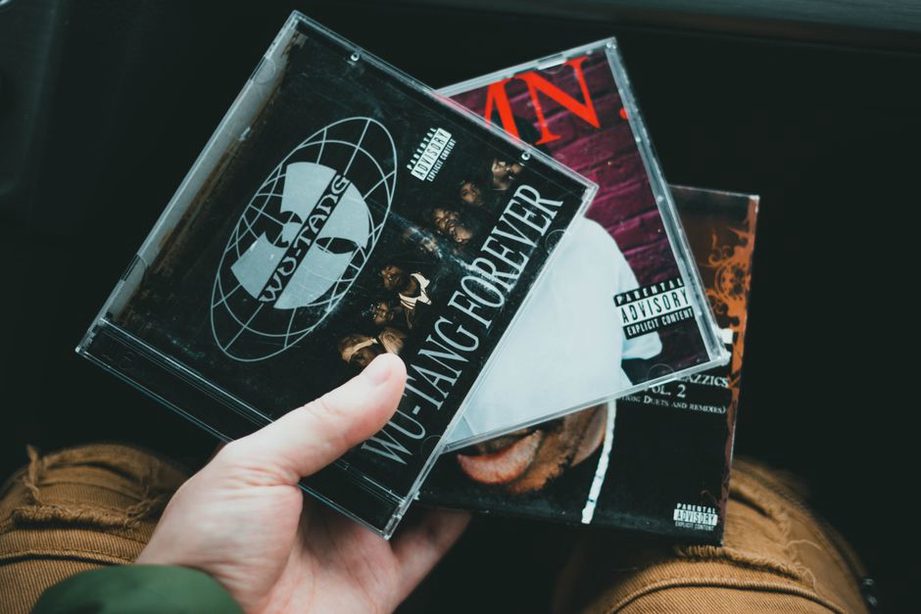
Choose a tutorial when the task has a reasonably clear beginning and end, the reader can carry out the actions, and the method allows for ordinary variation. A collector comparing two CD editions might inspect the packaging, read printed identifiers, note differences in the credits and document anything uncertain. The checks may not yield a definitive identification, but they will leave a usable record.
A tutorial is a poorer fit when its steps would pretend to settle an interpretation. No checklist can establish how every listener heard a Finnish thrash band’s change in sound. You can guide a close comparison of two recordings without presenting one subjective conclusion as the required result.
When an explainer serves the reader
Choose an explainer when the difficulty lies in a missing concept, an ambiguous term or a relationship among events. A post about “independent release,” for instance, could distinguish a self-financed recording from a self-release or distribution through a small label. Those descriptions are not interchangeable in a discography.
An explainer also has room for a story that the evidence cannot neatly settle. Local activity, festival appearances and tours can be placed in chronological context without claiming that one caused another. Show what is documented, what each source can support and where the record is thin. There is no need to manufacture a conclusion.
Test the proposed outcome before drafting
Pair the proposed headline with a concrete outcome. “Finnish thrash demo collecting” names a subject, not a promise. “How to record identifying details from a demo cassette” promises a task. “What demo cassettes can reveal about a local metal scene” promises an explanation. The latter might discuss labels, show connections and surviving documentation without telling readers how to acquire or copy recordings.
Ask four questions of the idea:
- Can the reader act on it? If the task requires a particular object, archive or document, say so. Do not assume every reader owns the release.
- Is there an observable result? A comparison sheet with completed fields is observable. “Appreciate the scene” is not a tutorial outcome.
- Would the same steps work for more than one case? If each case calls for a fresh interpretation of sparse evidence, an explainer or case study may be more honest.
- Where does the post stop? A tutorial can end once the checks are done and unresolved details are marked. An explainer can end when the central distinction has enough support and context.
This keeps an archive post from adopting procedural language just because “how to” sounds concrete. It also keeps a practical answer from disappearing into background. Someone comparing sleeve credits should not have to dig the method out of several pages on the aesthetics of classic thrash.
Build a tutorial around decisions, not just steps
Define the task narrowly at the start. “Compare the printed credits on two editions” is manageable; “determine the definitive history of this release” is not. Say what the reader needs: both editions, or reliable photographs of the relevant packaging; somewhere to record observations; and enough light to read small print. If a check depends on details that may be missing, flag that before the instructions.
For a release-credit comparison, the sequence might be:
- Record the title and identifiers printed on each item, keeping the wording and punctuation as shown.
- Inspect the packaging components separately: cover, booklet or insert, disc or cassette label, and any printed back panel.
- Transcribe the credits under the same headings for both copies rather than relying on memory.
- Mark each difference as a changed credit, a changed spelling, an omission or text that cannot be read.
- State what the comparison establishes—and what it does not establish about recording sessions, personnel or release order.
That last step is essential. A changed sleeve credit establishes a difference between printed editions; on its own, it does not prove when a recording was made or why the credit changed. Give readers a way to mark unreadable text or incomplete packaging. A missing insert is not evidence that a credit never existed.
Keep the order true to the work. Identify the two items before comparing their credits. If the evidence runs out, show what an honest result looks like: “No conclusion from the available packaging.” A method is still useful when it helps someone document a limit instead of guessing.
Practical directions need boundaries, too. A guide to studying independently released music can point readers to lawful copies, authorized streams and publicly available documentation. A hard-to-find recording is no reason to direct them to unauthorized uploads.
Build an explainer around distinctions and evidence
Give an explainer a question it can answer. “The history of Finnish thrash” is too broad for a focused post. “Why a band’s discography may list a demo separately from a later reissue” makes room to define the terms, examine the evidence and explain why the categories matter. Follow the reader’s likely points of confusion, not an artificial sequence of tasks.
You might state the main distinction first, define the terms, apply them to documented material and then address exceptions. A demo can be described by its original format and circumstances of release; a later edition may have different packaging or added credits. Calling both objects “the same release” without qualification can hide that difference. Treating every packaging change as a new recording is just as misleading.
Be precise about sources. An original sleeve can support a claim about its printed credits. A dated advertisement can show how an event was announced. A review can tell us how one writer described a recording at the time, not what every listener believed. Say what the source establishes before drawing a broader interpretation. For a general description of the style, rather than a claim about a particular band, Britannica’s overview of thrash metal is a useful reference point.
Do not bury the answer under definitions. Give the reader the main distinction early, then develop it. If the available packaging cannot establish release order, say that plainly; the limit is part of the answer.
Handle mixed questions without losing the main promise
Some questions ask for a task and a concept at once. “How do I identify a reissue, and why does that matter?” could be a tutorial with a short explanation before the checks. Or it could be an explainer with one brief identification example. What brought the reader there: an item they need to inspect now, or a discography whose edition labels they want to understand?
Split the material when each part needs its own evidence, pace and endpoint. A guide to documenting a cassette’s printed details could sit beside an explainer on what surviving demo formats can—and cannot—tell us about underground circulation. The guide does not need a full history of tape trading. The explainer does not need repeated instructions on where to write a catalogue number.
But a split is not mandatory. Define an unfamiliar term beside the step it affects. If a short example of an archivist checking a claim helps an explainer, include it. Watch for competing promises: a practical title followed mostly by historical context, or a title promising understanding followed by half a post of inspection instructions.
Check the draft against its promised result
Before publishing a tutorial, try it with the materials it says the reader needs. Follow the steps without filling gaps from your own knowledge. Note where an instruction assumes a particular edition, a complete booklet or access to a source that may not exist. Can the reader reach the stated result—or clearly record why they cannot?
For an explainer, check for unsupported leaps. Does each example clarify the central distinction? Keep documented properties of a recording separate from claims about its influence or reception, and cut procedural detail that does not aid understanding. A reader should be able to explain the key terms in their own words afterward.
For a post about two editions with differing printed credits, the final check is concrete. If the promise is a comparison, give readers columns for “Edition A,” “Edition B,” “Where printed” and “Uncertain details.” If the promise is to explain why the credits differ, the printing alone is not enough: identify the difference and say what further evidence would be needed to account for it.