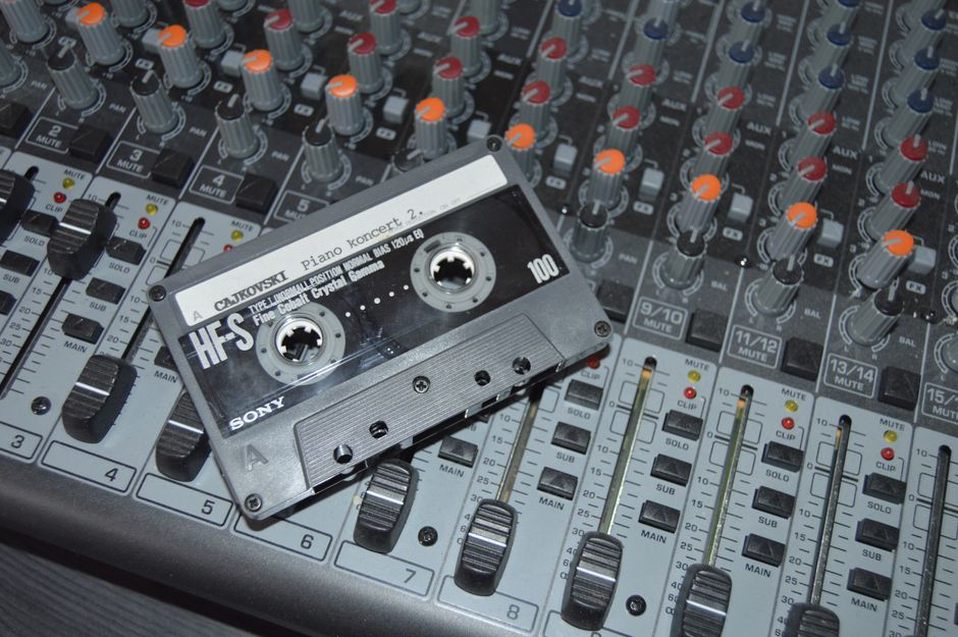
A cassette marked “demo” and an online upload might hold the same Finnish thrash songs, but they leave different evidence behind. The cassette may document one recording session, with a handwritten track list and a small run sold at shows. The upload can travel far beyond those shows; it may also be revised or separated from the packaging that once identified the music. In the late 2000s and early-to-mid-2010s, bands worked with both forms. Files did not simply replace tapes. They changed what a demo could do—and what a listener could know about it later.
What the demo tape had done
For a small thrash band, a demo was a practical introduction. It let promoters, listeners, fellow musicians and potential labels hear songs that might otherwise exist only in a local set. Duplicating and packaging tapes or recordable discs cost time and money, so making a run meant choosing particular versions of the songs to put into circulation. Copies could be handed over after a gig or exchanged through underground correspondence.
The object supplied context as well as sound. A paper insert might name the band and tracks, list personnel or give contact details. Without it, a recording can be hard to identify years later. The track order and running time stayed fixed on each copy. If only a few survive, that may say more about the band's duplication budget than about any plan to make a collector's item.
“Tape era” is too neat a label for this period. Finnish underground metal already used several carriers, and CD-Rs were a common, affordable choice for demos. Cassettes remained in use through small runs, trades and listeners who liked the format. The larger shift was from copies that had to be manufactured and moved to audio that could be uploaded once and heard in many places.
How to identify a demo without relying on its format
- Read the release’s own description. “Demo,” “EP” and “album” tell you how a band or label presented a recording, though the terms were not used consistently.
- Check whether the songs were re-recorded. An early version and a later album version can share a title without sharing a recording.
- Separate the recording date from the issue date. A digital upload made years later does not date the performance it preserves.
- Record the carrier. A cassette, CD-R and download may be separate editions of the same material, not three sets of new songs.
The overlap, not the handover
By the late 2000s, affordable home-recording equipment and digital audio software gave bands more ways to prepare a usable recording without a conventional studio booking. The results varied. A rehearsal capture, a self-recorded demo and a professionally mixed independent release still reflected different decisions about time, equipment and presentation. What widened was the space between an undocumented rehearsal and a manufactured record.
A band could also put a track online before paying to duplicate it. Someone outside its home city could hear it without waiting for a parcel, and a promoter could listen to a shared recording while considering a booking. Later, streaming and download services offered other ways to present finished releases. None of these channels guaranteed an audience. A file still needed a name, some context and someone willing to pass it along.
Physical copies remained useful at gigs. A small stack of recordings on a merch table let listeners support the band and take home something connected to the performance. The online track could keep circulating after that stack was gone. The choice was often which versions to put in each place, and when—not tape versus digital.
What changed for independent releases
Lower barriers, more visible revisions
Uploading a song removed the need to pay for duplication before anyone could hear it. Bands could also correct a track listing, replace a file or add artwork after posting. For someone compiling a discography, that flexibility creates a problem: a page can appear stable even if its audio or description has changed. An old recording posted again years later is not, on its own, evidence of its original release date.
The cost of manufacturing was only part of release-making. Musicians still had to choose the recordings they wanted to represent them, settle the running order, prepare artwork and credits, and tell listeners the release existed. Mixing and mastering mattered in fast, densely arranged music. Digital editing offered more control, but a tightly corrected performance could lose some of the push and pull heard in a rougher take.
The physical edition acquired a different job
Once listeners could sample songs online, a cassette or CD-R no longer had to be their only access to the music. It could stand as a specific edition, with its own cover, sequence and credits. Bands and small labels could make copies for collectors and gig audiences while allowing others to hear the recordings elsewhere. That was not true of every release, though: finding a surviving tape is no reason to assume there was a simultaneous digital issue.
The difference matters when counting a band's output. One session might have produced a limited demo whose mixes appeared online later. Another band might have posted several previews, then issued a physical EP with newly recorded versions. Treating every appearance as a new work inflates a discography; folding them all into one entry hides real changes. Recording, release and edition are worth keeping separate.
Reach expanded, but local relationships still counted
An upload could reach listeners elsewhere in Europe more easily than a demo passed from hand to hand. That possibility is not evidence of a tour or an international breakthrough. Turning distant interest into shows still required contacts, available dates, transport and a workable bill. Nor do play counts show who bought a record, went to a gig or came back for another song.
Local scenes gave recordings much of their meaning. Musicians heard one another at gigs, compared new material with live versions and traded practical knowledge about rehearsals and production. Physical releases could be part of those exchanges; a digital track could introduce the band to someone who had missed the show. A demo handed to a promoter and a link sent afterward might support the same conversation.
Radio offered another way for a recording to reach a listener. A programme that chose a track gave it context and a moment of attention an unattended upload might never get. The distinct role of those programmes is covered in how radio helped Finnish thrash bands reach listeners. Simply making audio available was only one step toward getting it heard.
Did digital recording change the sound?
A rough demo is not proof it was recorded on tape; a precise later release is not proof it was recorded on a computer. A cassette can carry digitally recorded audio, while a download can preserve a noisy rehearsal. Carrier, recording method, mix and performance are separate things.
Finnish thrash musicians in the late 2000s and 2010s could draw on older thrash aesthetics without inheriting earlier production limits. Fast riffs, forceful rhythm playing and abrasive vocals did not depend on tape hiss. Conversely, a rough recording might reflect the space, equipment or time available rather than a deliberate aesthetic. When comparing versions of a song, listen first for changes in tempo, arrangement and performance. Then ask what each production makes easier—or harder—to hear.
Digital tools changed how material could be prepared, too. Members could exchange recordings as they worked out parts, and a drummer or guitarist could replay a difficult passage before a full-band session. That did not replace rehearsing together, especially with tightly coordinated stops and quick transitions. It did leave more intermediate recordings behind: working versions that might stay private, circulate among a few people or, if their origins were forgotten, be mistaken for formal demos.
Reading the surviving record carefully
The surviving archive is uneven. A cassette may have lost its insert. An old file may outlive the page that explained its upload. Artwork might belong to a later edition, while a database date may fail to say whether it refers to recording or release. No single source settles every case.
Start with evidence attached to the edition in question: an insert, a disc face, label information or an archived band description. Compare track lengths and credits before deciding whether a later digital issue contains the same audio. A show flyer that mentions a demo confirms the band used that description at the time; it cannot establish how many copies were made or when each one was duplicated.
Access and authorization are separate matters. Collectors can document packaging, catalogue known versions and identify legitimate editions without sharing recordings against the rights holders’ wishes. A private file of uncertain origin is not automatically an authorized public release. “Cassette edition confirmed; digital issue unverified” records more useful history than an assumed upload date.
For a song that appears twice, list the demo recording with its known carrier and the evidence for its date. Add the later digital appearance separately if it can be verified, and note whether it uses the same take or a re-recording. That small distinction shows both how the music changed and how it reached listeners.