
A Finnish thrash band might have a sharp demo, a dependable rehearsal schedule, and friends ready to buy a cassette, yet remain unknown beyond its immediate circle if it had nowhere to play. Venues turned rehearsed material into a public identity. They provided what mattered most in the late 2000s and early 2010s: a bill, basic backline, a sound engineer, an audience with related tastes, and the conversations that followed the set.
For a revival-minded style built on speed, tight arrangements, and physical crowd response, live performance was more than promotion. It was a test. A song that worked in rehearsal might need a clearer opening riff, a stronger vocal entrance, or less empty space between sections when played to a crowded floor. Finnish clubs, youth centres, bar stages, cultural spaces, and festival side stages gave bands room to make those adjustments in public.
Venues as the working infrastructure of a local scene
A venue’s greatest value was regularity. One major show could draw attention, but small and medium-sized rooms gave emerging bands repeated chances to improve. Promoters could pair a young thrash act with punk, hardcore, traditional heavy metal, death metal, or other underground groups. Such mixed bills reflected how Finnish metal communities often worked: friendships, rehearsal spaces, record shops, zines, labels, and shared audiences connected scenes more than strict genre boundaries did.
That overlap particularly benefited thrash. Rapid palm-muted riffs, shouted choruses, lead-guitar breaks, and abrupt tempo changes could appeal to listeners from several neighbouring traditions. A room hosting hardcore one week and metal the next could bring a band before people who valued speed and intensity, even if they did not primarily consider themselves thrash fans.
Venues also helped modest resources stretch further. Local groups rarely needed elaborate staging to make their point. A functional PA, audible drums, enough monitor sound to stay in time, and a reliable schedule often mattered more than spectacle. Clear sound let audiences hear the rhythmic precision thrash requires. Poor sound exposed weaknesses just as plainly, pushing players to tighten arrangements and organizers to take competent engineering seriously.
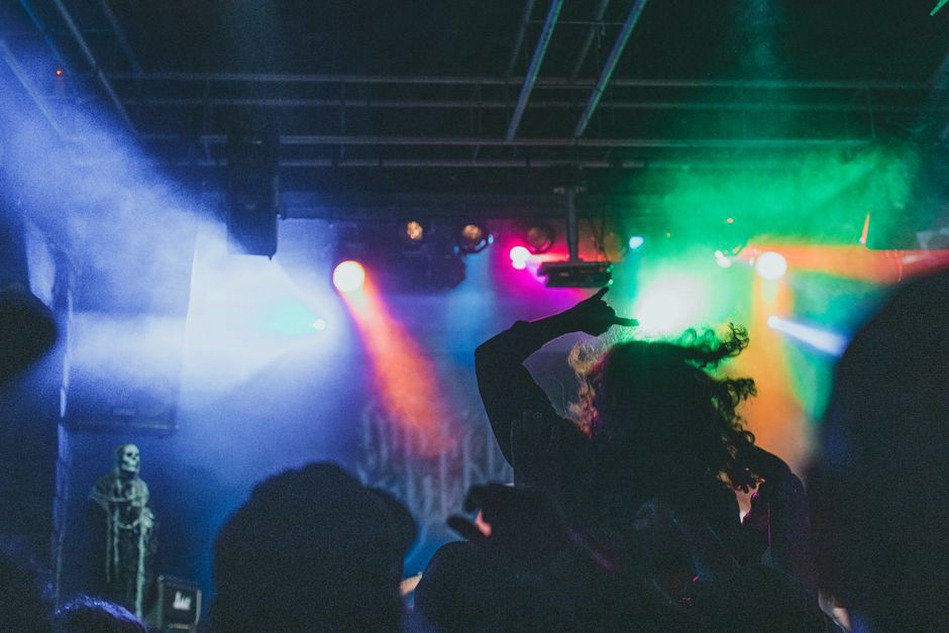
What a dependable room provided
- Access to audiences: Bills introduced local bands to listeners who had not heard their recordings.
- Musical feedback: Crowd movement, attention during new songs, and post-show conversations showed what worked beyond rehearsal.
- Social connections: Musicians met promoters, photographers, zine writers, label contacts, and future touring partners face to face.
- Merchandise space: A table or corner near the stage allowed direct sales of demos, CDs, shirts, patches, and later vinyl editions.
- Proof of activity: A documented local appearance helped when bands approached other promoters or sought a place on a larger bill.
From rehearsal-room discipline to a credible stage band
Thrash metal places unusual pressure on an inexperienced live act. Tempo changes must hit together, riffs cannot blur into one another, vocal cues must remain audible, and even a brief pause between songs can drain momentum. Finnish venues gave players a chance to learn this work under real conditions instead of treating performance as secondary to recording.
Soundchecks formed part of that education. Small stages forced decisions about amplifier volume, drum placement, cable management, and movement. Too much guitar volume could bury the articulation of fast riffs; weak monitor levels could destabilize harmonized passages. These may sound like technical concerns, but they shape the music. A group that learns to retain rhythmic detail onstage is more likely to bring the same discipline into the studio.
Set construction mattered too. Early bills often came with limited playing time, so bands had to choose material carefully. A convincing short set could establish an identity: a brisk opener, a balance of mid-tempo and fast songs, a memorable refrain, and an ending that did not rely on studio overdubs. A 20- or 30-minute slot forced musicians to separate their strongest songs from material that still needed work.
Stage experience also made the difference between imitation and command clearer. Finnish thrash musicians could draw openly on the classic 1980s canon without turning the stage into a costume display. Audiences responded more to conviction, control, and original songcraft than to generic references. Over time, local shows helped bands decide which details—melodic lead work, punk urgency, a particular vocal cadence, or a colder rhythmic feel—could make familiar thrash language their own.
The local bill as a network, not simply a lineup
Concert posters list bands as though each act arrived separately, played, and vanished. In practice, a local bill could create lasting links. One group might lend a cabinet, another share transport, and a third invite a new band onto a later show in another city. Promoters noticed which musicians arrived on time, helped with changeovers, and brought an engaged crowd. In an underground setting with limited budgets, that reputation had practical consequences.
The venue was also where the scene’s physical culture became visible. People exchanged flyers, shared information about forthcoming releases, and looked over shirts, patches, and handmade artwork. Direct merchandise sales did not replace wider distribution, but they could help pay rehearsal fees, recording sessions, or travel costs. For collectors, buying directly from a band created a tangible link between a release and the community behind it.
Documentation often grew out of these meetings. A local photographer might supply live images for a later cassette insert; a fanzine editor could discover a band on a mixed bill; a small label operator might hear a set before asking for a demo. The printed and handmade record of this activity matters because it preserves more than release dates. As the account of how Finnish fanzines documented the thrash revival shows, independent publications captured networks, aesthetics, and local momentum that formal music coverage often overlooked.
Why venue scale mattered
Growth is easy to measure only in terms of larger stages, festival appearances, or international support slots. Those milestones mattered, yet each venue size served a different purpose. A small room offered proximity and repeated learning. A mid-sized club tested whether a band could hold the attention of people beyond friends and familiar faces. A festival or larger hall demanded faster setup, tighter timekeeping, and a performance clear enough for listeners encountering the act for the first time.
| Venue setting | Primary value for a developing thrash band | Typical challenge |
|---|---|---|
| Small club, bar stage, or youth space | Frequent shows, close crowd response, low-risk experimentation | Limited budgets, short sets, variable sound |
| Established city club | Broader bills, better production, stronger promoter networks | Competition for slots and higher expectations |
| Festival side stage or large event | Visibility beyond the immediate local scene | Strict schedules and little room for technical problems |
| Support slot for a visiting act | Contact with new audiences and touring practices | Winning over listeners who did not come specifically for the band |
This progression was never automatic. Some bands remained strong local acts without seeking larger stages, while others developed through recordings and selective appearances. Nor did every venue welcome aggressive music equally. Licensing rules, age restrictions, finances, ownership changes, and neighbourhood pressure could all limit what was possible. Finnish venues did not create a uniform route to success; they offered several entry points for bands and audiences.

Regional circulation and the road beyond Finland
Finnish geography made regional connections important. Helsinki carried obvious weight as a population centre and touring hub, but activity in other cities and towns kept the scene from becoming entirely capital-centred. A band that could return to a familiar regional venue could build recognition gradually, meet other local acts, and learn the logistics of travel without the cost and risk of an international tour.
Domestic routes also prepared musicians for European dates. The relevant skills were basic but decisive: loading equipment efficiently, sharing expenses, adapting to unfamiliar backline, meeting curfews, and delivering a focused set after travel. A recommendation from a local promoter could open a conversation with organizers elsewhere. The move from Finnish club shows to European appearances was seldom dramatic. More often, it grew out of dependable smaller engagements, personal contacts, and recordings that reached the right listeners.
This connection between local infrastructure and cross-border activity sits behind the broader history traced in Finnish Thrash Metal: From Stone to the Late-2000s Revival. The revival did not emerge apart from earlier Finnish metal traditions, but its later bands still needed places to rehearse their public craft, sell independent releases, and build working relationships.
Listening for venues in the music itself
Venue culture can be heard indirectly in recordings from the period. Songs written for a live room often favour recognisable riff entrances, choruses that can be shouted back, and arrangements that sustain momentum without dense studio layering. That does not mean every Finnish thrash release sounds live, nor does it reduce composition to crowd response. It does help explain why some records retain such a direct, uncluttered attack: the material had often been tested in front of an audience before being fixed in the studio.
Collectors and historians can trace that process without treating anecdote as fact. Compare dated gig flyers, venue calendars, contemporary reviews, band-posted announcements, and physical-release credits. Recollections are useful leads, not final proof, especially when identifying early lineups or alleged first appearances. A cassette sold at a show may demonstrate local circulation, but it does not by itself establish a release date or pressing quantity.
When assessing a venue’s role, start with modest evidence: recurring bills across several months, bands that repeatedly appeared together, and later independent releases that credit people first met through those shows. Those details reveal a working scene more clearly than an isolated claim that a single concert “launched” a band.