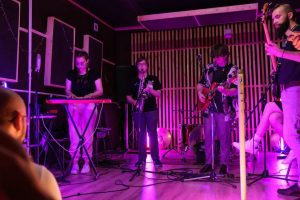
A Finnish thrash gig during the revival years was rarely defined by one headline act or a large room. What mattered was often the bill itself: local bands sharing backline equipment, a visiting European group drawing collectors and touring friends, and a crowd close enough to catch every cue between drummer and guitarist. In the late 2000s and early 2010s, these were the nights when recordings became reputations.
Calling any underground concert “iconic” requires restraint. Attendance figures were seldom preserved, posters sometimes advertised line-ups that later changed, and memories tend to favour the loudest nights. The most reliable way to identify an important Finnish thrash show is through traceable evidence: a dated flyer or venue listing, contemporary photographs or reviews, touring schedules, and the later significance of the artists involved. By that measure, certain types of gigs became recurring landmarks in the country’s thrash revival.
Why the small-room gig mattered
Finland had deep roots in extreme metal, but thrash between 2008 and 2015 did not function as a single national circuit centred on one city. Bands formed in different towns, rehearsed locally, released demos or small-run records, and built audiences one shared bill at a time. Club stages in Helsinki, Tampere, Turku, Jyväskylä, Oulu, and other regional hubs became meeting places for fans of speed metal, crossover, death metal, and traditional heavy metal.
The strongest nights did more than recreate the 1980s look of denim, patches, and high-top shoes. They showed whether a young band could hold momentum in front of listeners who knew the genre’s standards. Tight stops, coordinated tempo changes, an audible bass, and a vocalist who could carry a chorus mattered as much as visual attitude. A short support slot could turn a cassette-trading acquaintance into a committed local following.
Finnish acts such as Ranger, Forced Kill, Amok, Terveyskeskus, and Explosive moved through overlapping underground networks while taking different musical paths. Ranger’s early speed-metal and thrash attack, for example, appealed to listeners after raw, unpolished heaviness. Other groups leaned into crossover bluntness, harsher extreme-metal edges, or more traditional riff writing. That contrast was the point of a mixed bill: listeners could hear where thrash met adjacent styles and where it pulled away from them.
Landmark formats rather than inflated legends
It is more accurate to identify the concert formats that repeatedly shaped the scene than to treat every well-remembered local show as a historic event. Each offered musicians and audiences a different kind of opportunity.
Release celebrations and first full statements
A record-release show was one of the clearest milestones available to a DIY band. Before streaming made every new track instantly accessible, even a modest physical release gave the night a focus. Fans could buy a cassette, CD, or vinyl copy, hear the songs performed in sequence, and compare the live sound with the recording. These shows mattered especially for groups moving beyond demos toward an album or EP that could circulate outside Finland through distros, labels, and mail-order networks.
Ranger’s rise is a useful example. The Helsinki band’s early recordings established a rough, fast, old-school identity, but live appearances made that identity clear beyond the record sleeve. Their 2015 album Where Evil Dwells arrived after years of local and international groundwork. By then, Ranger were more than a young band using retro-thrash motifs: they were a live act whose attack, pacing, and visual presentation had been tested in front of audiences.
A release show also demands an important archival distinction. The date printed on a record does not automatically establish the date or venue of its launch concert. When reconstructing an event, collectors should keep release information separate from gig documentation and avoid attaching an attractive but unverified story to either.
European touring packages in Finnish clubs
International touring bills gave Finnish bands another kind of landmark night. A support slot was not simply promotional exposure. It required equipment discipline, quick changeovers, a workable set length, and the ability to win over people who had come for another group. For local promoters, pairing Finnish acts with touring bands also eased the isolation that can surround a small national revival.
These shows mattered because European thrash and speed-metal audiences were linked through overlapping circuits of venues, independent labels, record stalls, fanzines, and word of mouth. A Finnish band that played convincingly alongside visitors could carry that recognition into later shows abroad. Visiting musicians and fans, in turn, brought Finnish releases, names, and impressions back to their own scenes.
Tour support was never a guaranteed career breakthrough. Some bands gained lasting international attention; others played a strong opening set and remained focused on local activity. The historical value lies in the exchange itself. A room holding a few dozen people, or a few hundred, could create contacts that conventional advertising could not.
Festival appearances as concentrated proof
Festival slots posed a different test. A club crowd may arrive ready for fast, abrasive music; a festival audience is more varied, less patient, and often moving between stages. Finnish thrash bands had to establish their character quickly. An opening riff, the first tempo shift, and the clarity of the sound mix could determine whether a passing listener stopped or moved on.
Major Finnish metal festivals and smaller independent events served different purposes. Larger festivals offered scale, professional production, and access to listeners outside the local underground. Smaller events could be more musically focused and socially close, giving bands, label representatives, and collectors time to talk. A festival appearance becomes historically meaningful when it fits into a band’s documented progression, not merely because it took place outdoors.
For a broader discussion of performance mechanics rather than individual event claims, Finnish Thrash Metal Live: Stage Presence, Setlists, and Club Culture examines the club-level habits that made these appearances work.
What audiences heard in the room
Recordings from the period can suggest speed and aggression, but a live room exposed other qualities. Finnish thrash groups often used deliberately raw guitar tones, sharp snare sounds, and riffs built for physical response rather than studio detail. The best gigs were not necessarily the fastest. A band needed enough shape in its set for the crowd to recognise a recurring motif, a shouted refrain, or a sudden half-time section.
| Live element | Why it mattered at revival-era gigs |
|---|---|
| Short, purposeful sets | Support bands could establish their sound without exhausting a small crowd. |
| Shared gear and quick changes | Kept multi-band bills moving and made limited budgets manageable. |
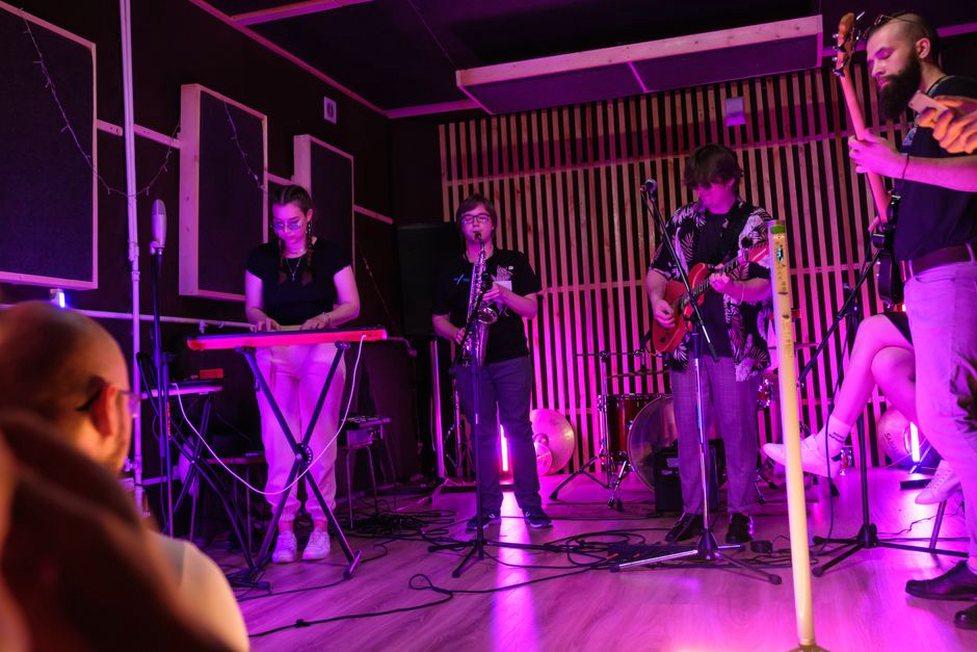
| Audience-level staging | Reduced distance between performers and listeners in compact venues. |
| Merchandise tables | Connected the show to physical releases, labels, and later correspondence. |
| Mixed-genre bills | Brought thrash into contact with speed metal, punk, death metal, and black metal audiences. |
The visual side was functional in the same way. Patched jackets, old band shirts, worn instruments, hand-drawn flyers, and stark cover art signalled affiliation, but the music had to justify the signal. A crowd could forgive a rough PA more readily than loose playing or a set built from generic genre gestures. The strongest Finnish acts used familiar vocabulary while adding a distinctive rhythmic push, vocal character, or circle of collaborators.
How a gig became part of the record
Underground concert history survives unevenly. A touring poster may confirm that a date was planned without proving that every listed group performed. A social-media post may preserve a photograph but omit the venue or date. A later interview can be vivid while blending several events together. Such sources remain useful, but they need to be read for what they can actually establish.
A practical method for verifying a remembered show
- Start with the strongest fixed detail. A venue name, month, tour title, or the release being promoted is more useful than “around 2011.”
- Compare independent sources. Match a flyer or listing with a band’s archived schedule, a contemporary review, a photo set, or a promoter announcement.
- Check the line-up carefully. Bills changed, substitutes appeared, and names were sometimes added to early posters before confirmation.
- Separate observation from interpretation. “The poster lists three bands” is a fact; “this was the scene’s defining night” is an interpretation that needs wider support.
- Record uncertainty. If sources conflict, note the conflict rather than selecting the more dramatic version.
This approach matters especially to collectors. A flyer, ticket stub, setlist, signed copy, or venue stamp gains historical value when it is tied to reliable context. Provenance does not need a grand story; even a brief note recording who acquired an item, where, and when can prevent confusion later.
Beyond Helsinki: regional circulation and return shows
Helsinki naturally drew touring acts, press attention, and a dense concentration of venues, but it should not stand in for Finland’s entire live map. Thrash bands depended on regional routing. A run of dates across several cities helped musicians build stage endurance while giving local organisers reciprocal reasons to book one another’s bands. The return show could matter more than the debut because it showed that a group could bring people back after the first novelty had faded.
Regional audiences also influenced a band’s pacing. In a familiar hometown room, musicians could take risks, play newer material, or extend the set with a deeper cut. At an unfamiliar stop, a concise selection of the strongest songs was usually the wiser choice. This balance between loyalty and mobility kept Finnish thrash from becoming a purely nostalgic exercise. The music was continually tested in rooms with different acoustics, support acts, and audience expectations.
The independent infrastructure behind those routes also deserves attention. Small labels and distributors turned local contacts into exchange networks by carrying records to shows, passing on booking leads, and circulating information about new bands. Independent Labels and the Finnish Thrash Underground provides useful context for the label-and-distribution side of that relationship.
Listening back without turning the past into mythology
Live recordings that were officially issued or directly shared by artists can be valuable documents of the period, but they are not definitive substitutes for being in the room. A board recording may capture instrument separation while missing the crowd; a phone recording may preserve a chorus of voices while distorting the guitars. Posters and photographs add visual evidence, yet they remain snapshots rather than complete histories.
A stronger approach places a performance alongside its surrounding material: the release being supported, the bands on the bill, the venue’s usual scale, and the next documented steps in the artists’ activity. This explains why a compact club set can matter as much as a festival appearance. In repeatable, imperfect, well-connected gigs, Finnish thrash players learned to make classic influences feel immediate.
When cataloguing one of these events, record the full bill and venue alongside the source type—an original flyer, dated photograph, review, or first-hand note. If the evidence does not settle the date, mark it as approximate rather than filling the gap with a more satisfying version of the story.