A week can be fully booked before Monday starts, even when the calendar shows gaps. Meetings, travel, meals, and interruptions take time; an unfinished task seldom takes exactly as long as you hoped. Start with the week you actually have, then decide what fits. Twenty quiet minutes at a familiar point each week can be more useful than an elaborate planning system you dread keeping up.
If you maintain a Finnish thrash-metal archive, the question might be whether there is time to check a release date, examine a physical sleeve, and write a listing—or only to check the date. The same approach works for study, household administration, and other ongoing projects: make fewer commitments, define them clearly, and keep unfinished or unverified work somewhere you can find it.
Give the routine a dependable appointment
Choose a planning slot that follows something you already do. Friday after closing your workday or Sunday after looking at the coming week’s calendar could work. The day matters less than having a reliable cue and enough information to make decisions. Allow 20 to 30 minutes to begin with. If that feels hard to protect, try ten.
Keep the plan in one main place: a notebook, a calendar paired with a short task list, or a plain document. You need to see fixed appointments, tasks you could choose, and commitments you have made for the week. Keep those categories distinct. A long list of possibilities is not a schedule, and a calendar entry should usually mean the time is genuinely reserved. Work without a slot can stay on the task list.
If your week changes often, pick a backup planning window. It is there for the weeks when the usual appointment falls through, not as a second mandatory review. That way, a disrupted Friday does not require a new system or a burst of motivation.
Review the previous week before adding new work
Look at last week’s calendar and commitments first. Mark what you finished, what still matters, and what no longer needs doing. Resist copying every unfinished item into the new week. A task that keeps rolling over may be vague, dependent on someone else, or simply less important than you thought.
Give unfinished work one of four destinations:
- Do it this week: It matters now, and there is a realistic chance to work on it.
- Break it down: The next physical or intellectual action is unclear.
- Wait: Progress depends on a reply, document, or other outside condition.
- Drop or defer it: It does not deserve space in this week’s limited capacity.
The review also helps you tell a poor plan from a disrupted week. If an urgent obligation took away a scheduled archive-writing session, you may need to leave more open time. If the session was available but “research Finnish thrash” never got started, the task may be too broad. “Compare the catalogue number on the sleeve with the label’s printed listing” gives you somewhere to begin.
For archive work, revisit unresolved claims before deciding what to publish. A concert date does not become verified because its draft has spent a month in the queue. Put it on a verification list and note what evidence is missing. You can keep the lead without filling the gap with a guess.
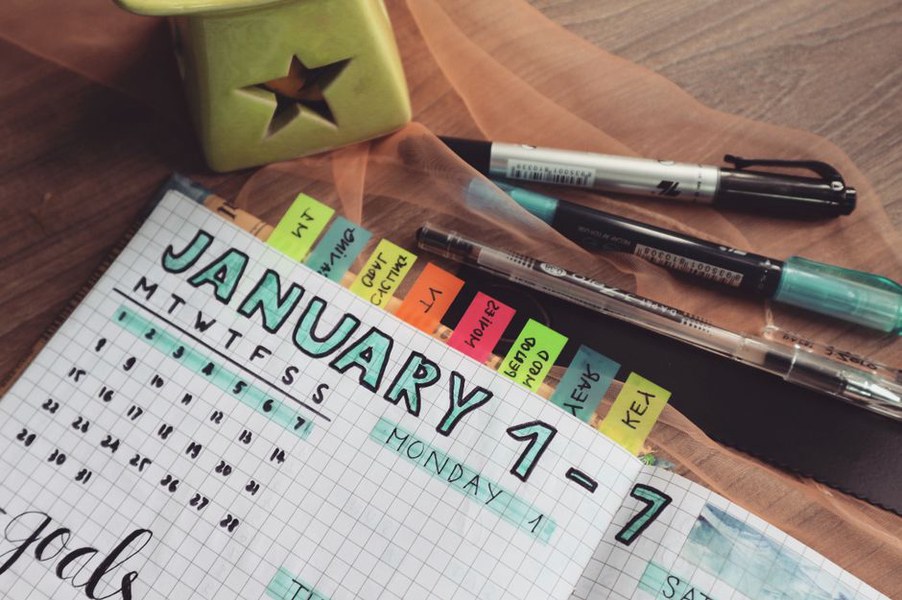
Plan around capacity, not ambition
Next, look ahead. Enter fixed commitments first: appointments, shifts, travel, deadlines, and personal obligations that affect your time or energy. Then find the blocks you could actually use for focused work. An open hour between meetings may be worth less than an uninterrupted hour at home.
Choose a few weekly outcomes—finished results rather than vague intentions or time spent. “Publish a release listing with a checked track list and source notes” is an outcome; “work on the archive” is not. In a busy week, one substantial result and a few small maintenance tasks may be plenty. Let available time determine the number, rather than a rule about having three priorities.
Estimate effort in broad terms: short, medium, or substantial is enough. Compare the total with the usable time you found, including setup and follow-up. Locating a record, taking legible notes, checking spellings, and saving citations may take longer than drafting the paragraph. If every open block is already spoken for, take something out. Delays and ordinary life need space too.
Reserve calendar blocks for work that needs protected attention or has a deadline, such as examining a sleeve or drafting a listing. Keep flexible errands on a separate list if assigning them exact times would only mean constant rearranging. An unassigned block can remain available for overflow.
Separate the next action from the larger project
Keep large projects visible, but give the weekly plan actions you can start. “Document independent releases from a period of the Finnish scene” is a worthwhile long-term project. This week, you might transcribe the credits from one sleeve and flag illegible names for a second check. Another action might be to compare two available sources for a release year and record any disagreement.
Start each action with a verb and give it a finish line. If you cannot tell when it is done, narrow it further. You will spend less time deciding where to begin when you sit down, and you will know when to stop. More work can go into the current week if there is room; it need not creep in automatically.
Use evidence and dependencies to set the order
Some work has to wait for other work. Before writing about a release, you may need to confirm which edition you have. Before describing a concert, you may need a reliable dated source. Mark those dependencies while planning. A task blocked by missing evidence belongs on a waiting or research list, not in a writing block that assumes the information is ready.
Flyers, physical releases, label material, and contemporary coverage of an underground scene can be incomplete or contradictory. Britannica’s overview of the historical method is a broader reminder to identify and evaluate sources rather than treat them as interchangeable. For a weekly plan, that means noting what supports a claim, what remains uncertain, and what you need to check before drafting around it.
Put the steps in an order that lets one lead to the next:
- Locate the physical release and photograph the relevant credits for your own notes.
- Transcribe names and track titles, marking anything unclear.
- Check a second reliable source for uncertain details.
- Draft the listing using only details you can support.
They do not all have to happen this week. If a source is unavailable, finishing the first two steps and recording the obstacle is progress. Do not invent a release date, performance, or musician’s history just to make a planned page look complete.
Make the weekly session short enough to repeat
The ordinary version of your routine needs to be manageable. Follow the same sequence each week: perhaps five minutes reviewing unfinished commitments, five looking at the calendar, ten choosing outcomes and next actions, and a few more reserving work blocks. Change the timing to suit your week.
Keep a capture list for ideas and requests that arrive between sessions. Writing something down is not a promise to do it immediately. If a reader sends information about a possible gig, record the lead and any source they supplied. At the next review, decide whether verification fits the coming week. Deal with genuinely urgent matters sooner, but do not let every new input displace work you have already chosen.
When time is scarce, use a minimum version: check the calendar, choose one important outcome, and write down its next action. It gives you a way back after illness, travel, or an unexpectedly full week. Rebuilding an elaborate plan after a disruption may only make it easier to skip another session.

Check the plan briefly during the week
A weekly plan cannot anticipate everything. Take a minute or two each day to see what is scheduled, find the next action for your main outcome, and notice changed deadlines or dependencies. This is a small course correction, not another planning session.
When new work arrives, compare it with what is already on the calendar. If it takes priority, decide what it replaces; keeping both in place makes the schedule misleading. If it can wait, add it to the capture list. When you move a task, a few words about why—“awaiting reply,” “time estimate too low,” or “appointment added”—may help you spot a pattern later.
Match work to the kind of attention you have. Transcription may need a longer, protected block, while correspondence might fit into shorter sessions. An empty low-energy period is not necessarily the right time for work that needs your sharpest judgment.
Improve the routine with small observations
After several weeks, look for recurring friction instead of grading yourself by completed boxes. Are tasks too large? Are you scheduling hours you do not have? Does your planning slot keep getting interrupted? Could you request missing evidence earlier? Change one part of the routine at a time so you can see whether it helps.
Keep the plan separate from the record of your work. The plan says what you intend to do; source notes and completed listings show what you checked. For readers interested in how verified material is arranged, Clear Navigation for a Finnish Thrash Metal Archive covers the separate job of helping visitors find their way through an archive. Your weekly list can stay plain and private.
Suppose next week gives you two free evenings, each with about an hour of usable attention. Instead of promising a full discography update, use the first to transcribe one release’s credits and the second to check uncertain spellings against available evidence. Put “draft listing after checks” on the later-project list. When that first evening comes, you already know which record to pick up, where your notebook is, and what to check.